
- Author
- Colin Randall
- Subjects
- History - WW1, WWI operations
- Tags
-
- RAN Ships
- HMAS Encounter I
- Publication
- June 2025 edition of the Naval Historical Review (all rights reserved)
Colin Randall discusses the loss of the German ship in 1917
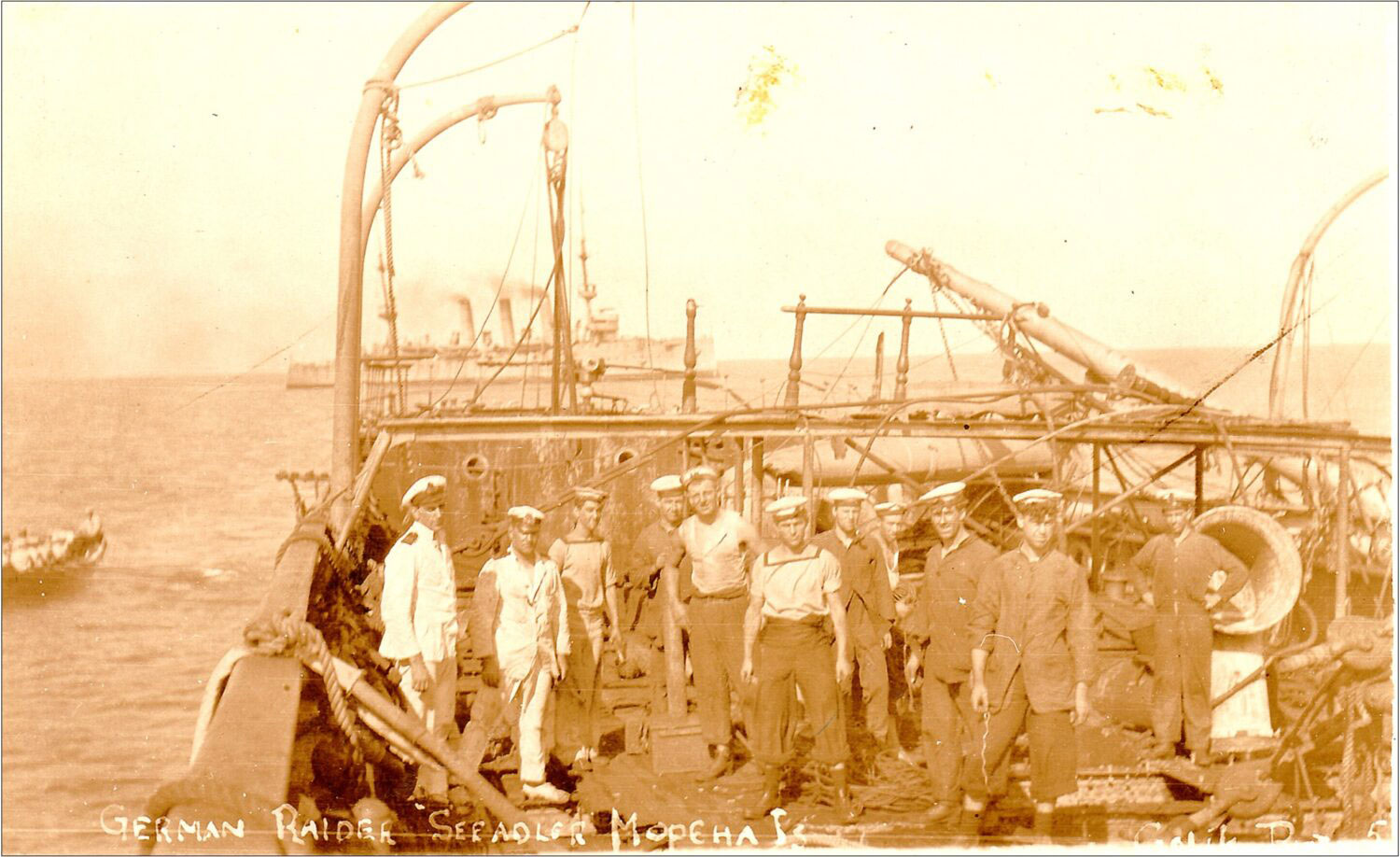
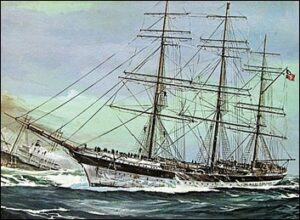
The enemy raider Seeadler sailed from Germany in December 1916 and during an extended cruise in the Atlantic and Pacific Oceans, captured and sank 14 Allied merchant ships and sailing vessels. By July 1917 Seeadler had been at sea for seven months and required essential maintenance. Seeking a remote location Kapitanleutnant Felix von Luckner chose the island of Mopelia (sometimes spelt Mopeh’a) in the Society Group, off which the ship anchored on 31 July. Unfortunately, on 2 August, the ship dragged its anchor and drifted onto a coral reef.
Von Luckner and his crew escaped from the wreck and attempted to pass themselves off as shipwrecked Swedish mariners, but they were captured and became prisoners of war, placed in a POW camp in New Zealand. Von Luckner’s career in Seeadler and his antics as a prisoner of war are not the subject of this history of HMAS Encounter, and those wishing to know about his career should read the book ‘The Sea Devil’ by Lowell Thomas for a more detailed, although somewhat dramatised account of the ship’s career and her very interesting captain.
The wreck of Seeadler on Mopelia Island was soon reported and Encounter was dispatched to investigate the wreck and look for other members of her crew. As well, the Japanese protected cruiser Hirado was sent to Fiji to search that area for a suspected second raider and the Australian cruiser HMAS Brisbane was also sent to the Solomon Islands on a similar anti-raider mission.
Encounter arrived off Mopelia Island on 9 November 1917. Chief Petty Officer Ernest Stidston who was serving in the cruiser at the time recorded the following in his diary:
9 November 1917 – 1000, Encounter arrived Mopelia Island. We could see the German raider Seeadler on the reef between two islands. She had been set on fire before being abandoned and was practically gutted. Officers and men went aboard and found two 4.1-inch guns intact and some ammunition that escaped the fire. Through field glasses, huts could be seen on the island. Commander Wilmot, the Chaplain (Vivian Ward Thompson), and Sub-Lieutenant Harris set out to search the settlement that the Germans had built. They found a considerable amount of stores, enough to last some time.


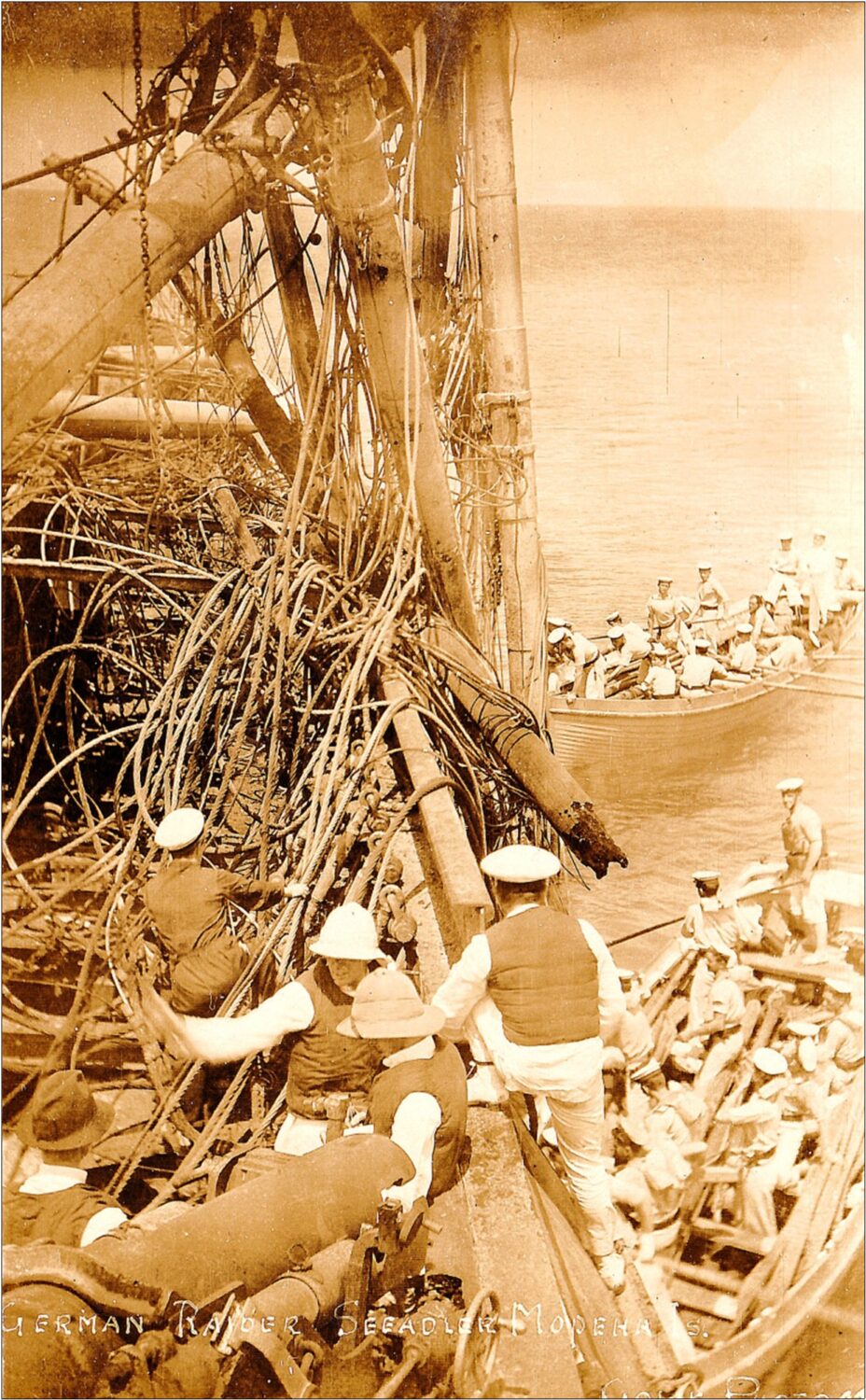

10 November 1917 – A working party under Engineer Commander Brand and Lieutenant Commander Matheson boarded Seeadler and brought off one 4.1-inch gun and miscellaneous ship’s gear.
11 November 1917 – 0600, A party went aboard the ship and put a charge of explosives in the remaining gun mounting and destroyed it. At 0900 we sailed for Tahiti, 260 miles away.
Encounter reached Tahiti three days later. While there her steam pinnace was sunk when run down by a large motor yacht, but fortunately unlike an earlier 1909 incident, there were no casualties. This was the last ‘excitement’ in Encounter’s varied war career. She returned to Sydney and went into refit in December 1917. In the New Year, with the possibility of another German raider becoming active, she carried out regular patrols in Western Australian waters from April to July, and then cruised between Fremantle and Sydney for the remainder of the war. On 18 November 1918 she was dispatched to Samoa and the surrounding islands to provide assistance during a major outbreak of influenza.
Her wartime crew consisted of 475 personnel. She carried only 21 ‘permanent’ officers (i.e. not including officers under training) which consisted of the Captain, Executive Officer (often called the Commander), five seaman Lieutenants (including the Navigator and Gunnery Officer), Engineer Commander, Engineer Lieutenant, Engineer Sub Lieutenant, Chaplain, Surgeon, Staff Paymaster, Assistant Paymaster, Chief Artificer Engineer, three Gunners of whom one was a Torpedo Specialist, Carpenter and two Artificer Engineers.
Of note is that many men spent their entire war service in Encounter (affectionately known as the ‘Old Bus’) and that she was generally a happy ship. There were, however, many in her crew who longed for more activity. Officers posted to her considered they were serving in a second-rate ship and longed for a draft to one of the more modern Australian cruisers then serving in the North Sea. Encounter’s desertion rate amongst the younger members of her crew was high with many leaving to join the AIF in order to undertake more ‘fulfilling’ active service.