- Author
- A.N. Other
- Subjects
- Ship design and development, Australian Warships
- Tags
-
- RAN Ships
- None noted.
- Publication
- March 2025 edition of the Naval Historical Review (all rights reserved)
by Dr. Joe Straczek
They’re called hull numbers, others call them pendant numbers, some refer to them as pennant numbers.
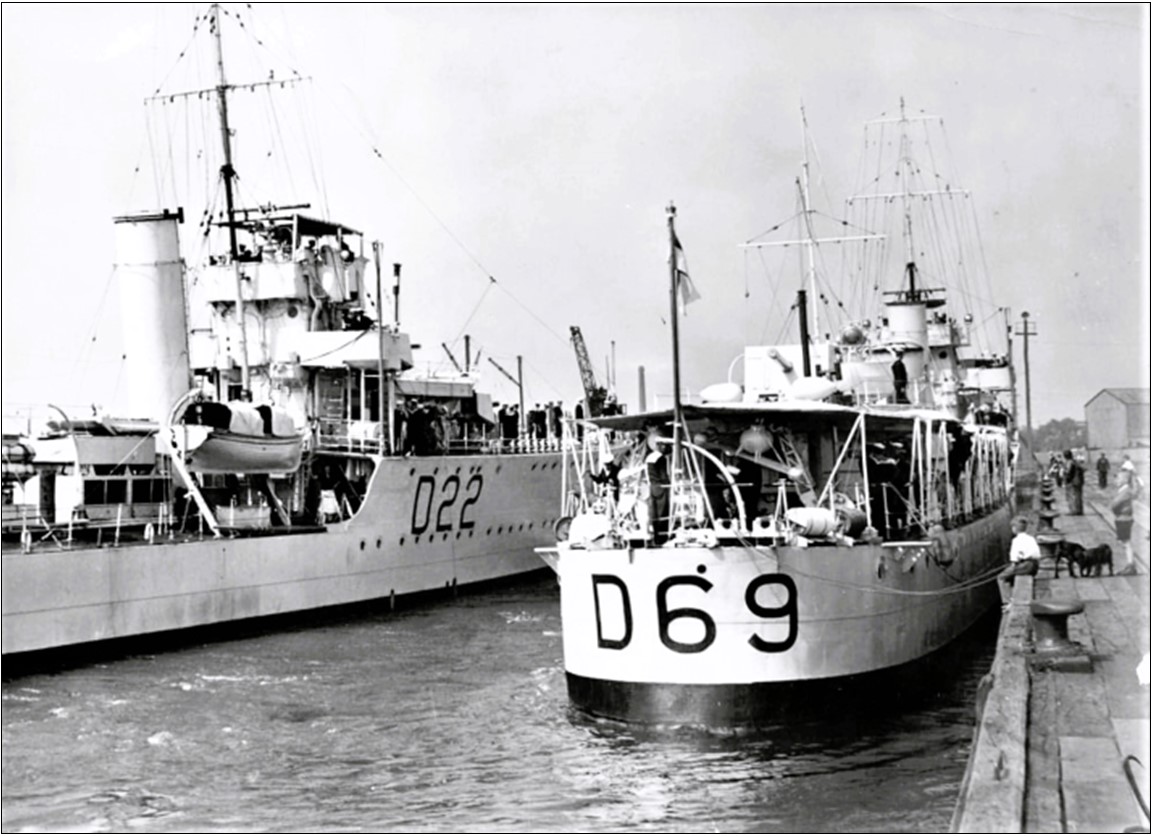
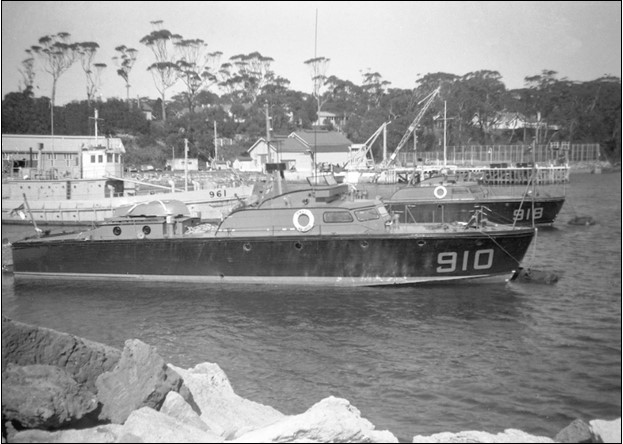
During the first one hundred years of the Royal Australian Navy (RAN), its ships have been identified by their overall class, their own individual name, and of course their side or hull number. Numbers began to be used about 1915, during the Great War, when the larger units were allotted pendant numbers for the first time.
Early numbers
The battlecruiser and first RAN flagship, HMAS Australia, carried the numbers C6 in 1915, O9 in early 1918 and then, just 81 from April of the same year. The numbers were not painted onto the sides of the ships, but instead used as a type of recognition and an extension of the more traditional flag or visual signaling system between the various vessels.
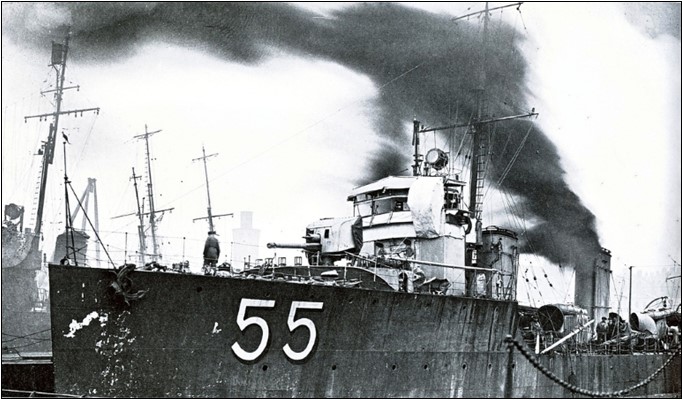
The two smaller Chatham class light cruisers, HMA Ships Sydney and Melbourne, also were allotted such numbers, the former receiving A1 in January 1918, then, 52 in April. Melbourne received 86 and then, 93 respectively. Their sistership HMAS Brisbane does not appear to have been allotted any numbers. Other Great War ships with pendant numbers and that actually displayed them, were the six River class torpedo boat destroyers, with numbers 50, 55, 61, 67, 70 and 79. Like the larger ships, all numbers were all allotted by the Royal Navy.
During their brief commissions, the two tiny submarines, AE1 and AE2, were identified by 80, then 1 and 81, then 2, respectively. Their support (depot ship), the 3,476-ton HMAS Platypus was in January of 1918 also known via her number C8. At the same time, the fleet oiler Kurumba was allotted X36. However, of all of the former colonial warships still in use, as well as smaller men-o-war and requisitioned vessels, none were allotted numbers.
Mid-war period
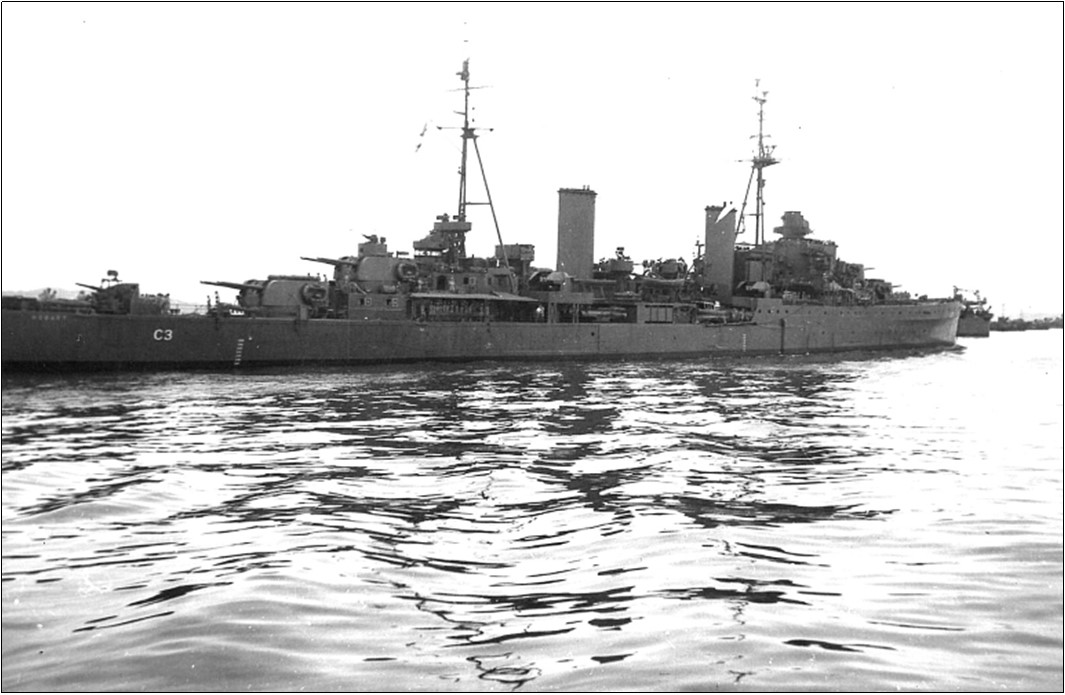
The mid-war period, 1919– 1939, witnessed a ‘renaissance’ in hull numbers with the light cruiser Adelaide, then the larger County class units, Australia and Canberra, being allotted I47, I84 and I33 respectively. The same I (for India) system was retained for the three Modified Leander class light cruisers commissioned in the mid to late 1930s.
Sydney, Hobart and Perth were identified by I48, I63 and I29. In 1940, these three ships and the two Counties, had their I pendants replaced by D pendants. Many additional number changes were implemented during the war years from 1939 to 1945. (for full details refer; Australian and New Zealand Warships 1914-1945).
Early Names
To most readers the names of some Australian naval vessels are easily noticed. Names such as Sydney, Melbourne, Kanimbla and Anzac have become familiar due either to the service rendered by the ship or publicity given to it by the media.
Other names such as Cerberus, Harman, Norman and Swordsman may not be as easily recognisable by the public, whilst a third group of names, (sourced from RAN archival files and small boat registers), such as Elephant, Wag and Cockroach would only draw blank stares and surprised expressions. Yet all of these are names of vessels which have served in the Australian Fleet since 1901. If these are all names of naval vessels how then were they selected and why?
The process of naming RAN ships has been an evolutionary one. When the decision was made to acquire a Fleet unit no formalised process or instruction for selecting names existed. The names for some of the ships were seen as automatic selections, Australia for the battlecruiser and capital cities for the light cruisers. The submarines AE1 and AE2 followed the British system of carrying numbers only. The A in front of the E class designation indicated they were Australian vessels.
Ships that were transferred from the Royal Navy invariably kept their names, as did the majority of requisitioned craft during the two world wars. The Second World War in particular saw the introduction into the Navy of some of its more colourful and unusual names.
Ship’s names committee
During the 1960s, a ship’s name was chosen by the Ships’ Names, Honours and Awards Committee. This committee selected the names and recommended them to the Chief of Naval Staff. Initially the Chief of Naval Staff approved the names. This changed however, and the Chief of Navy, as he is now known, instead recommends names to His/Her Excellency the Governor-General.
In 1995 the Navy adopted a series of guidelines in order to bring a degree of uniformity to the naming of naval vessels. These guidelines stated that:
– surface combatants were to be named after Australian cities, towns, districts or previous ships of the type,
– submarines would carry names with an Australian connection or names of previous naval vessels,
– survey and other marine science vessels would be named after large coastal or off-shore features, such as islands, individuals who have contributed to the knowledge of our maritime environment or previous Australian vessels employed in the marine science role,
– smaller attached marine science craft could also be named after foreign vessels which have contributed to the exploration of Australia’s coast,
– amphibious warfare ships would be named after Australian combined operations or previous ships of the type,
– mine warfare vessels were named after Australian rivers and bays or previous vessels of the type,
– support ships carried the names of previous support ships or naval establishments,
– tugs and harbour craft would be named after Australian flora and fauna or previous vessels of the type and
– commissioned and non-commissioned establishments could carry names which were connected with either the area the establishment was located or the function of the establishment. They could also carry a name that had been in previous naval service.
Later numbers
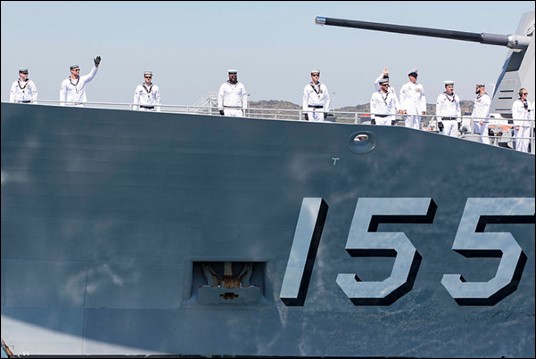
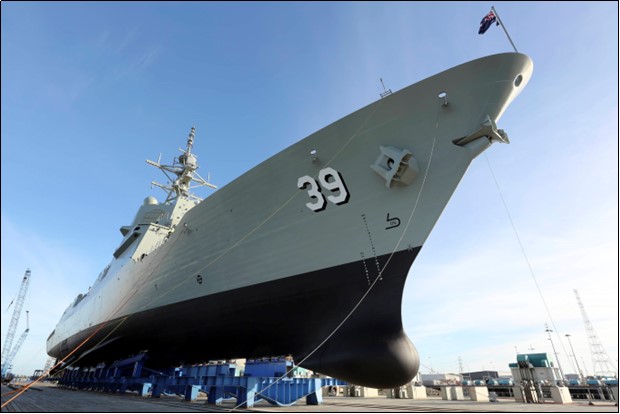
The use of hull numbers by RAN fleet units and auxiliaries was wide spread during the Second World War, with most, if not all vessels, down to the smallest boats, allotted distinctive numbers for recognition purposes and overall planning.
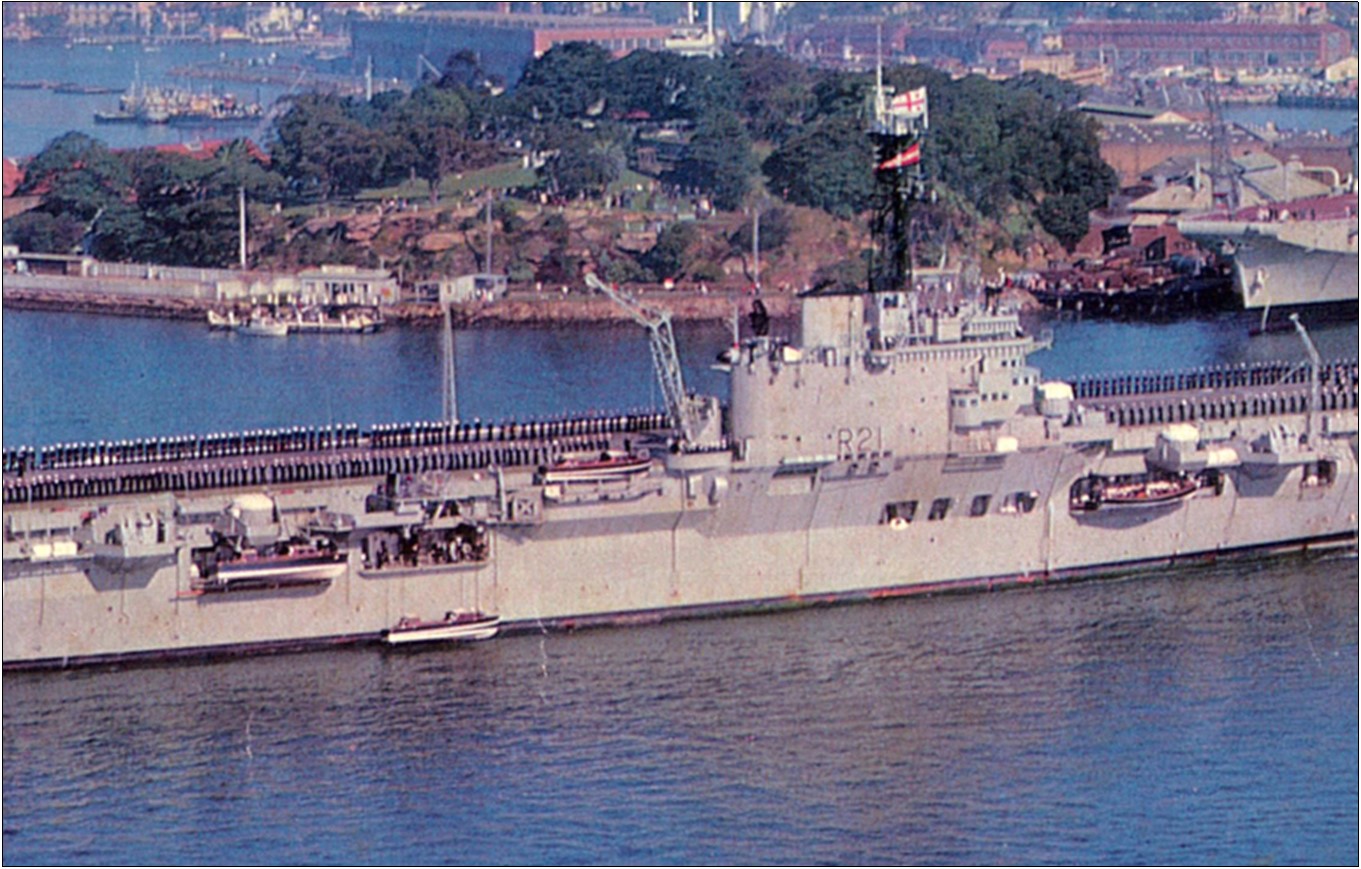
This pattern of hull numbers has remained constant since the end of the Second World War, initially with the ships carrying their own distinctive pendants of letters and numbers, including:
– carriers (R),
– destroyers (D),
– frigates (F),
-minesweepers (M),
– patrol boats (P), and,
– auxiliaries (A).
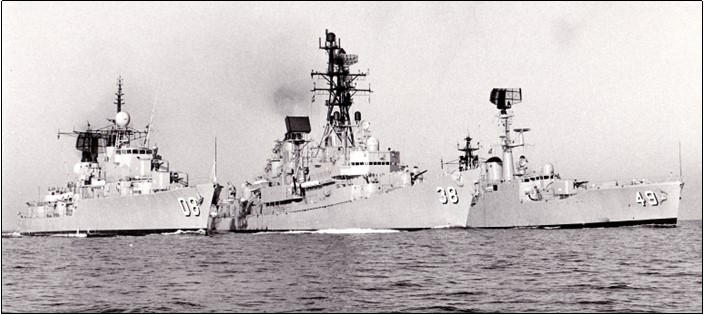
In 1969, in line with USN practice, these letter prefixes were removed and only the numbers displayed, although the large and small auxiliaries still carried a one (not two) letter prefix. The RAN’s current numbers are drawn from a NATO publication.
Spreading the names
In addition to the above, care had to be taken to ensure a geographical balance in the distribution of ship names. The instruction also provided guidelines for the use of the name Australia. This name was reserved for a large vessel, which due to its role would have a high national and regional profile. With the foregoing in mind, the actual process of selecting a name appears relatively simple.
Over many decades the RAN has selected totally Australian names or retained numerous (former) Royal Navy names. The latter include the first V and W class destroyers which were used again by the three later Daring class destroyers in the late 1950s and more recently, the old N class destroyer Norman was given to one of the Huon class minehunters.
In other examples, the old Royal Navy names were discarded with the six Ton class minesweepers (1962) all renamed after local birds and the Ham class diving tenders, Wintringham and Neasham renamed Seal and Porpoise in RAN service.
Once a requirement to name a particular type of vessel arose, the Canberra-based Naval Historian prepared various lists of potential names.=
Where ship associations or other interested parties campaigned to have a name selected, these names were also included, providing they met the criteria for that type of vessel. The merits of the various names would be discussed and a short list then prepared.
Prospective names
Possible names are forwarded to the Chief of Navy with a recommendation and justification for a particular selection. The Chief of Navy then decides which names to select. In past times the incumbent Chief of Navy whole-heartedly endorsed the recommended names. At other times he rejected these and provided additional guidance for the selection of names.
If the vessels to be named are minor war vessels the Chief of Navy may select the names himself and seek endorsement from the Minister for Defence. Should the names, however, be for major vessels or part of a significant project then the Chief of Navy would recommend selected names to His/Her Excellency the Governor-General for approval. This was done via the Minister for Defence and the Prime Minister’s office.
The name selection process is often underway well before successful tenders are announced for a particular project. This is done so that sufficient time is available for the design, if required, of a ship’s badge, as well as to prevent bidding wars by various ship associations.
Appropriate names
With the foregoing in mind it was not too difficult to envisage the type of name that the most recent generation of RAN ships were allotted:
-Hobart class guided missile destroyers – major cities or former destroyer names,
– Anzac class frigates – as above,
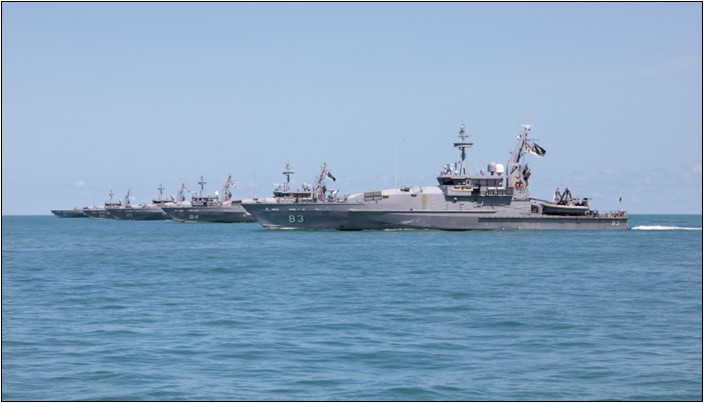
– Armidale class patrol boats – regional cities, Bathurst class corvettes, or names carried by some of the many requisitioned patrol craft, and,
– amphibious ships – Combined operations or previous amphibious ships.
But ….
…. then again, as it turned out, the two large Spanish-built LHD type amphibious ships, were named Canberra and Adelaide, not after Combined operations or previous ships of the type, let alone Australia.
The original names proposed for these ships were Australia and Canberra, after the two 1928-vintafe heavy cruisers. However, the then Minister for Defence, and Senator for South Australia, indicated to the Chief of Navy that his preference was for Australia to be replaced with Adelaide.
More recent names
The decision to acquire two replacement oilers, and finding appropriate names was an easy task. The older HMA Ships Success and Sirius were retired, and the new Spanish designed and built, HMA Ships Supply and Stalwart, entered service in April and November 2021. Hull numbers A195 and A304 were allotted.
Plans were also announced to acquire another group of modern warships, including the Attack class conventionally powered submarines (later cancelled), twelve (eventually six) Hunter class guided missile frigates, a dozen Arafura class offshore patrol vessels (also reduced to six units), and a group of uncrewed surface/underwater vessels. Of these, the Attack class would have reused names carried by the late 1960s-1980s era patrol boats.
The future Hunter and Arafura classes, to be acquired during the 2030s and 2040s, will feature new sets of names, three of the former named for colonial governor and two explorers, Hunter, Flinders and Tasman. The six OPVs have been allotted regional names, Arafura, Eyre, Pilbara, Gippsland, Illawarra and Carpentaria, none of which have been borne by earlier ships.
The RAN also plans to acquire at least three, possibly five US designed Virginia class nuclear powered submarines from the early 2030s, with these to be eventually followed by a batch of five UK-designed AUKUS class submarines. No names have yet been officially announced for these batches of boats. However, the acquisition of the British designed boats could see the return of ‘O’ names to the fleet.
To be acquired around the same time will be up to eleven new light frigates. In this writer’s opinion, this may provide the opportune time to again use the former River class destroyer/frigates names. When the new design is selected, and town names are used, a strong contender for the lead ship could be Broome given the strong historical connections with the Japanese and the pearling industry in the area. Complementing the light frigates is a proposed class of optionally crewed ships. Should the frigates be named after rivers, then these ships could carry the names of Bays.
When looking at the history of names allotted to RAN ships, it would appear that the selection of the Hunter and Arafura classes are aberrations because of the departure from traditional policy. The acquisition of further ships may present the opportunity to return to such a policy.
When looking at the general history of names selected for RAN ships it would appear that the selection of Adelaide, Hunter and Arafura Classes are aberrations which have resulted because of a departure from a cohesive naming policy. The acquisition of further ships presents the opportunity to return to such a policy.