
- Author
- Editorial Staff
- Subjects
- Biographies and personal histories, Ship design and development, Royal Navy, Influential People
- Tags
-
- RAN Ships
- HMAS Countess of Hopetoun (HMVS)
- Publication
- June 2025 edition of the Naval Historical Review (all rights reserved)
Coastal and Harbour defence by torpedo boats – a lecture by Commander Bosanquet, New South Wales Naval Forces.
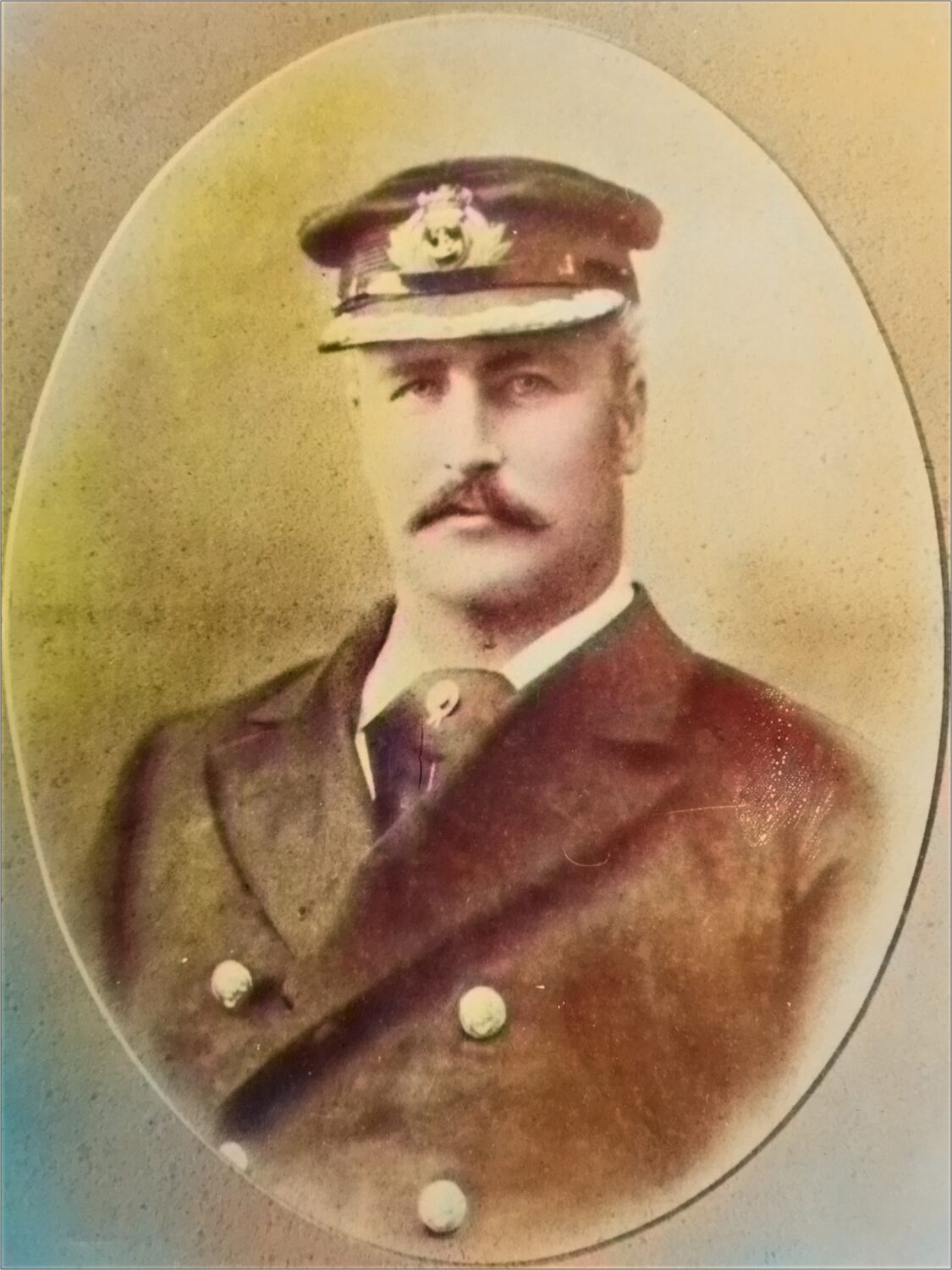
Sydney’s Daily Telegraph newspaper of 1 October 1895 featured an informative article on the defence of the Australian coast through the acquisition of the latest torpedo boat destroyers (TBDs), then entering service with Britain’s Royal Navy. The speaker, Commander George S. Bosanquet, of the NSW Naval Forces, was keen to progress his own naval force with the purchase of up to four of these larger TBDs, backed up by a new generation of the traditional, but still effective, smaller-sized torpedo boats.
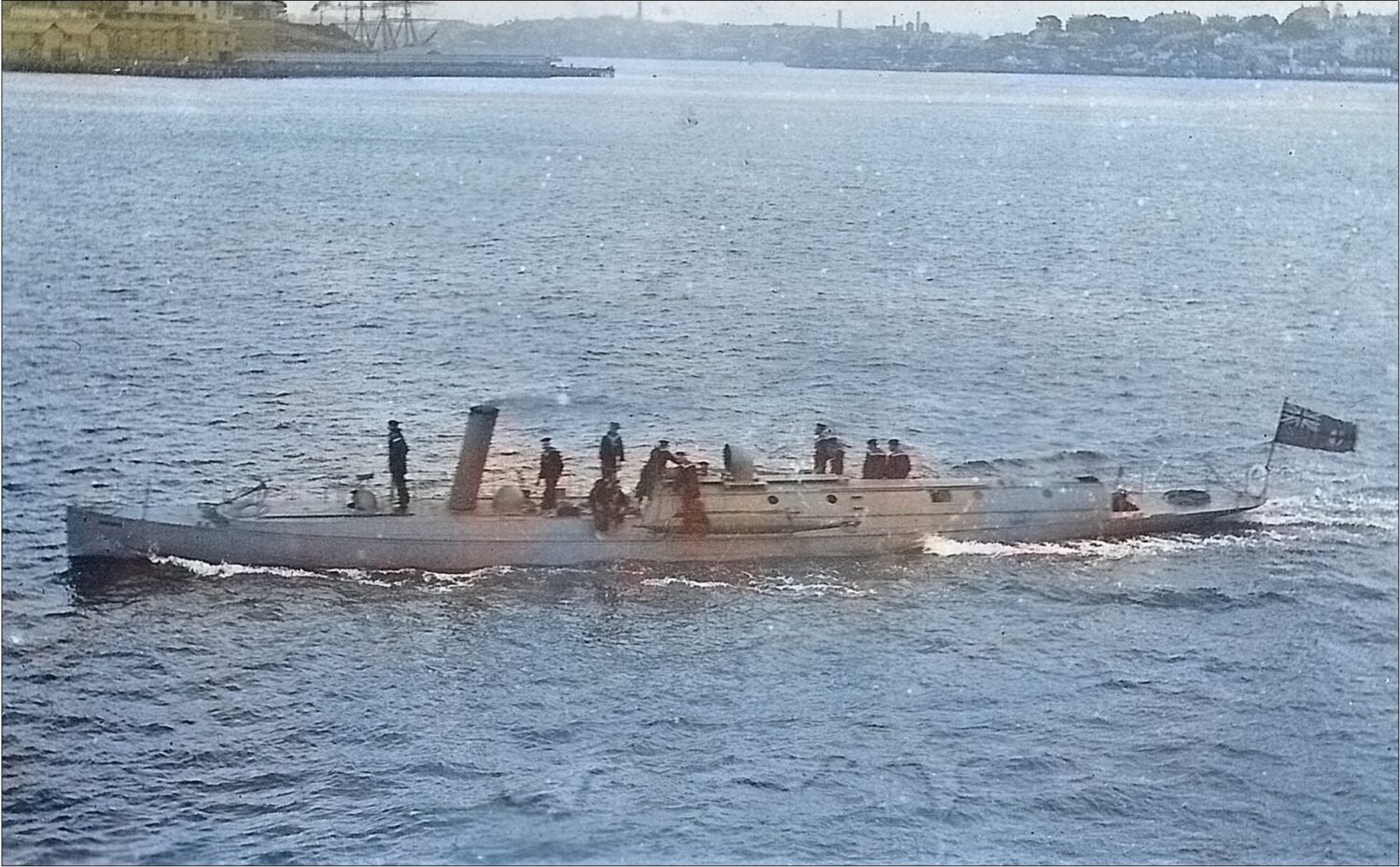
The report continued:
Last night at the rooms of the United Services Institute, Commander Bosanquet, late Royal Navy, presented a paper in the presence of a large number of military and naval officers on “Coast and Harbour Defence by Torpedo Boats.”
Bosanquet said the subject was one which had been pretty well gone into in Europe, although there had been so far very little war experience. His paper dealt with the special protection given to the coast, harbours and rivers by torpedo boats, independent of the British Navy. He was of opinion that the torpedo boats should defend pilotage water including the approaches and entrances to ports, and in harbour defence should be employed in defending the inner waters by enclosing particular positions, and by repeated attacks on the enemy in confined water.
A larger force
The long coastline of New South Wales was particularly adaptive to defence by torpedo boats seeing that their proper work was as raiders from a base. The local government could not look to the British Admiral to station his warships at any particular spot for the protection of the coast and its many harbours, but needed to be prepared to guard merchant ships in pilotage waters with no defences.
Bosanquet said he considered that for an efficient coast defence by torpedo boats there should be four torpedo boats operating from each principal port, and two for each of the harbours or rivers which had any claim for protection. These units would also be supplemented by one larger TBD for every 150-miles of coastline.
In time of conflict these better armed warships would be stationed temporarily at depots on the coast, where they would water and coal from punts. The duty of the TBD it was said was to supply information, to cover the enemy by day, and to worry them all the time. The four boats would cover an area of 600 by 100-miles and would frequently be in touch with the first line of defence constituted by the vessels of the navy.
Doctrine of operations
Bosanquet explained that in attacking a ship underway or in confined waters, the smaller torpedo boats would approach in pairs ‘from to leeward’ (sic), and, if possible, assisted by a similar attack from a different direction, which might be from seaward, the unexpected quarter. The report continued: It had been found that the probable position of discovery would be about 1000-yards from the enemy, and this zone should be travelled over at full speed, a moderate speed sufficing until discovery.
As the movement would be rapid it would be best to take the enemy end on, sweep past as close as possible, and use the broadside discharge, as being the quickest and most reliable in and out of action. The percentage of hits in action at sea was, according to Admiral Colomb, 2 percent, and taking into consideration the actual rate of fire in warfare it was probable that a torpedo boat would escape from the fleet of the enemy.
In firing a torpedo at a vessel, it had been found that a 50-yards range was quite long enough, and when ships had been struck it was generally by the broadside torpedoes, which should be fired first, the bow tubes being kept in reserve. Successful attacks must be sudden and unexpected, and given with dash, and unless favoured by fogs or rain squalls, a daylight attack would have little chance of being successful.
Harbour defence
For harbour defence, the torpedo boats should attack from seaward, thus falling on the enemy in the rear; that was when they were kept outside the harbour and not allowed to cross in. When attacks were about to be made from inshore, the officer commanding the defence would give the order to cease fire, and the attack would thus relieve the garrison. There was nothing like repeated attacks to demoralise the enemy, and attacks such as he had indicated should be made frequently.

In all probability an enemy could rely upon at least four clear days on the Australian coast without interruption, though at Wai-hei-Wei, where the Japanese had complete control of the seas, it took 13-days to silence the guns. Batteries, minefield guns and submarine mines were the recognised defences in protected ports, though history had shown that such protection was by no means invulnerable and rather that passive defence was invariably unsuccessful. The moral effect of torpedoes was quite as great as that of mines, as its effectiveness with regard to hitting its object far greater. Even the small torpedo boats of an antiquated type and considered useless for an attack against ships in the open sea, might be substituted for mines, and they would have all the advantages that the attack, mobile and sudden, has over the defence, immobile and passive.
Future force
Leading up to the arrival of the 20th century, it was quite possible that mine defences would be altogether abolished, opinion generally inclining towards keeping the main channels in all harbours absolutely clear. After dealing at considerable length on the method of harbour defence, Bosanquet concluded by saying he considered that a good armament of quick-firing guns, backed by some fast torpedo boats, would be the very best way of expending a defence vote, the fixed defence invariably taking second place to the mobile force.
In summary
The table below provides a good comparison of the main specifications of three principal warships of the time. The first column describes the Sydney-built torpedo boat Acheron, which Commander Bosanquet served on during his time with the NSW Naval Forces. By 1895, when the officer outlined his plans for an improved defensive force, these two torpedo boats, Acheron and Avernus, had been in service for 17-years, a prolonged period for such small naval assets. In comparison, the Victorian Colonial Naval Forces operated a total of five torpedo boats, two first-class, two second-class and one torpedo launch.
| Name | Acheron | HMVS Countess
of Hopetoun |
HMS Sturgeon |
| Operator | NSW | Victorian | Royal Navy |
| In use | 1878-1902 | 1892-1924 | 1894-1910 |
| Type | 2nd class torpedo boat | 1st class
torpedo boat |
Torpedo boat destroyer |
| Tons | 22-tons | 75-tons | 340-tons |
| Length | 82.6-feet | 130-feet | 194.6-feet |
| Torpedoes | Two 14-inch | Three 14-inch, plus four sets of dropping gear | Two 18-inch
|
| Guns | Small arms | Two 1-inch Nordenfelt | One 12-pounder Quick Firing (QF) |
| Speed | 16-knots | 24-knots | 27-knots |
| Crew | Approx 12 | 19 | 53 |
The pair of first-class boats, HMV Ships Childers and Countess of Hopetoun, had by 1895, been in use for eleven and three-years, respectively. Both could operate in heavy seas and had in fact, made their way to Victoria from their English builders. They remained effective upon the outbreak of the Great War in 1914 and continued to serve with the RAN, Countess of Hopetoun, in a variety of roles until 1924. To reach the standards of his Victorian counterparts, Bosanquet would have desired to obtain four of the latest TBDs, like HMS Sturgeon, which entered service with the British Fleet the year before. If approved, this class of warship would have offered both increased armament and speed, and the ability to operate in heavier seas.
Developments in the type of warship described by Bosanquet would eventually be acquired by the Royal Australian Navy, albeit, not until 1910. Then, the first pair of River (I) class arrived, with all six boats serving during the Great War and in the training role after the arrival of their replacements, the five S class destroyers.
Postscript
Unfortunately, the ideas put forward by Bosanquet would not see the light of day, with Government approval for such vessels, not obtained until late in the first decade of the 20th century.
On 18 August 1902, the Sydney Morning Herald reported on the death of Commander George Bosanquet. The report read:
We have to record the death of Commander George Stanley Bosanquet, Royal Navy, for many years Commander of the New South Wales Naval Volunteer Artillery and staff officer in charge of the torpedoes. The officer’s death was comparatively sudden, and took place at his late residence, Moorebank, Liverpool, on Saturday, the immediate cause of death being aneurism of the heart.
Bosanquet was born in the year 1851 and entered the Royal Navy as a cadet at the age of 14. In March 1876 he obtained his commission as lieutenant and retired from the service in the following year. His first connection with the New South Wales Naval Forces dates from March 5, 1885, and in August 1888, he became Commander of the Naval Volunteer Artillery, and also officer in charge of torpedoes.
He rendered useful service to the State and was regarded as a capable officer in both positions. Upon the reorganisation of the naval forces under the Commonwealth recently the deceased commander was retired owing to the age limit. He leaves a widow and family of four sons and one daughter. The remains were brought from Liverpool to Sydney by train on Sunday and buried in the Waverley Cemetery in the afternoon. The late commander was accorded a naval and military funeral. The coffin was removed from the train at the Redfern station and placed on a gun carriage. It was covered with the Union Jack, on which rested the deceased officer’s cocked hat and sword.
The cortege proceeded to the Waverley Cemetery, the gun carriage drawn by men from the Naval Brigade and preceded by a firing party and escort. The service was conducted by The Rev. R. Mc Keown. At the conclusion, the firing party fired three volleys over the grave.
…………
NSW Army and Navy List 1900 advised: Joined Royal Navy 1865 as a cadet 1 March 1876, retired 1877, Total 12 years. Still on Navy List in 1900. Commanding NSW Naval Volunteer Artillery. Holds 1st Class Certificate for Whitehead Torpedo from HMS Nelson dated 15 April 1886. Officer in Charge Torpedoes.
1876, retired 1877, Total 12 years. Still on Navy List in 1900. Commanding NSW Naval Volunteer Artillery. Holds 1st Class Certificate for Whitehead Torpedo from HMS Nelson dated 15 April 1886. Officer in Charge Torpedoes.