By David Michael
The majority of young men and women who join the Navy serve with great pride for careers of varying lengths and in their later years look back on career highlights. When reflecting most would say, ‘I never expected to be doing that when I signed up’. The experiences of an individual officer or sailor during their career could range from, wartime operations at one end of the spectrum to peace time activities at the other. Just what becomes a career highlight is a matter of time and place over which most service people have little input. That is, although the individual might express preferences in terms of the next posting or location, naval career managers will do what is best for the Navy and where possible, accommodate the wishes of the individual.
Traditionally, this system has worked well with many individuals pleasantly surprised with the opportunities and challenges presented. Similarly, an observation often made by non-service people relates to the great responsibility afforded young sailors and officers. The navy entrusts them with command and leadership roles at sea and ashore or the operation of ships, boats, aircraft and weapons worth millions of dollars. However, there should be no surprise with this as the naval training system is designed to deliver these outcomes.
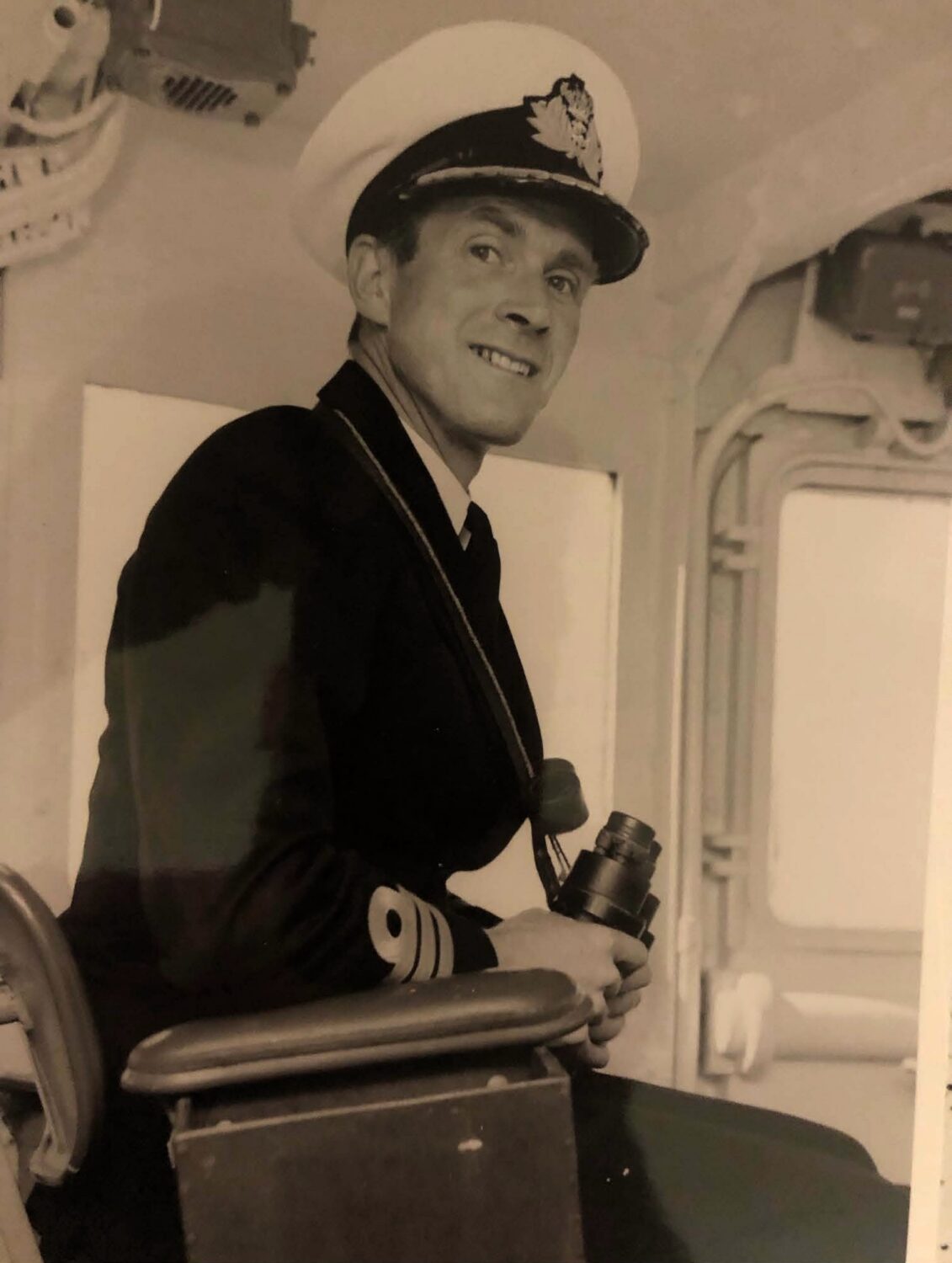
What follows is an example individual career. It is a series of images relating to the career of Commander Peter Lawrence Poland OAM RN Retd (1932 – 2025). Peter was a long-term member of the Naval Historical Society of Australia, historian and author. Born into a naval family he served in the Royal Navy from 1946 to 1971 the 16th Poland to join the Royal Navy. Peter’s father was Vice Admiral Sir Albert Poland who notably for Australians, commanded the ‘Tobruk Ferry Service’ from the besieged port and at war’s end took the Japanese surrender at Sabang. Peter’s brother Patrick also served in the RN in the Fleet Air Arm retiring as a Commander. Peter migrated to Australia in 1972 after retiring from the Royal Navy. He married June, an Australian he met in 1968 and together they had three children.
The following images are from Peter Poland’s naval collection presented to the Naval Historical Society by his family.
1946 to 1949, Training at the Royal Naval College, Dartmouth

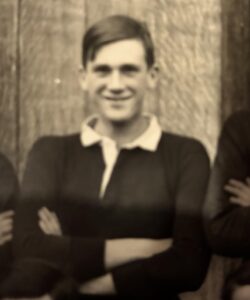
1950 to 1952, Sea training and qualification
Peter’s early officer training occurred in the heavy cruiser HMS Devonshire, the cruiser HMS Liverpool, frigate Loch Craggie and destroyer HMS Corunna which took him to the West Indies, northern Europe, Malta, Gibraltar, Spain, France, Italy, Sicily, Yugoslavia, Greece, Turkey, Cyprus, Egypt and Algeria. Very much a case of ‘Join the Navy and see the world’, an impressive list for a twenty-year-old.
Following Sub-Lieutenants training ashore he became a non-specialist salt horse officer.
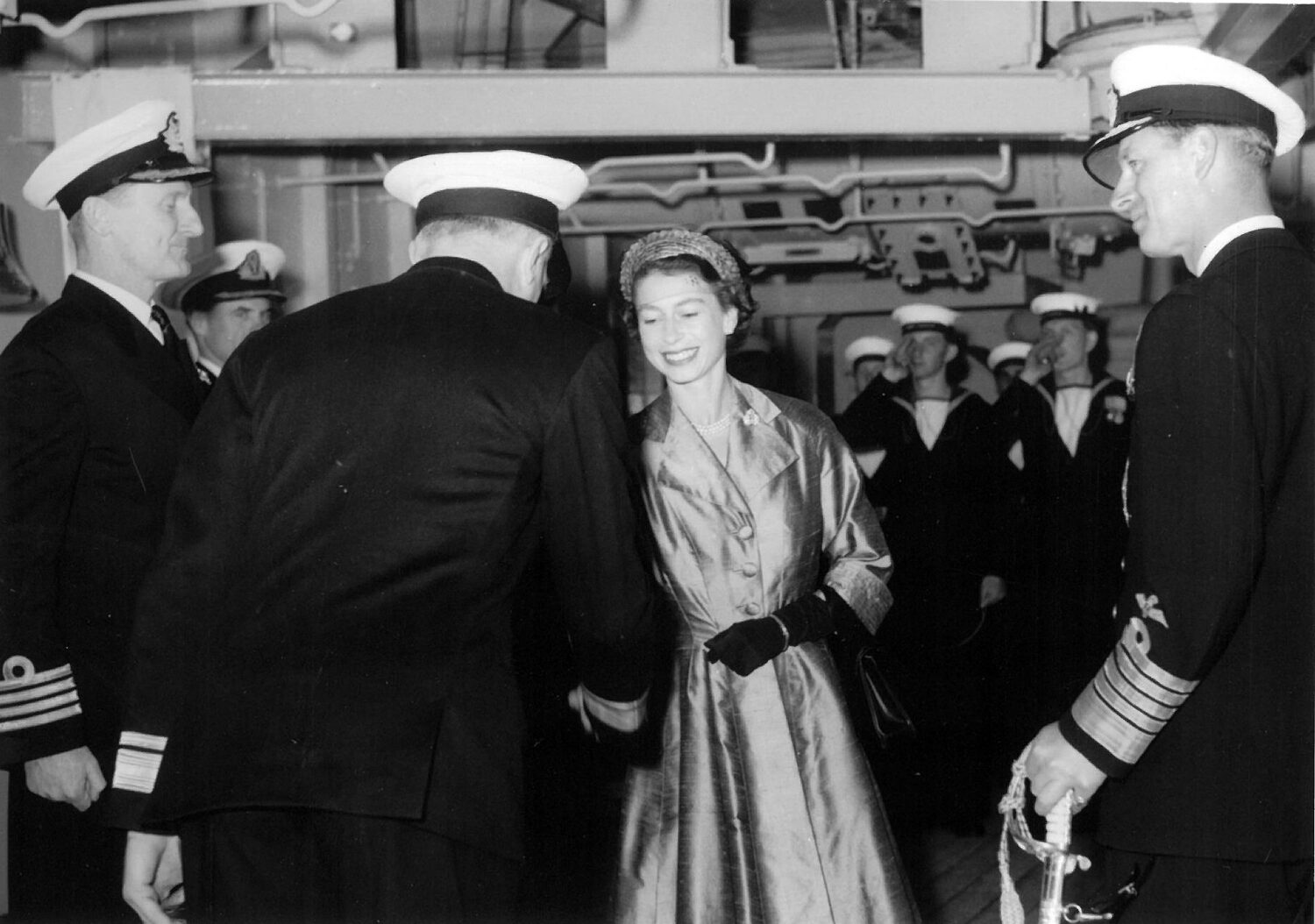
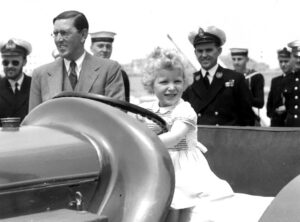
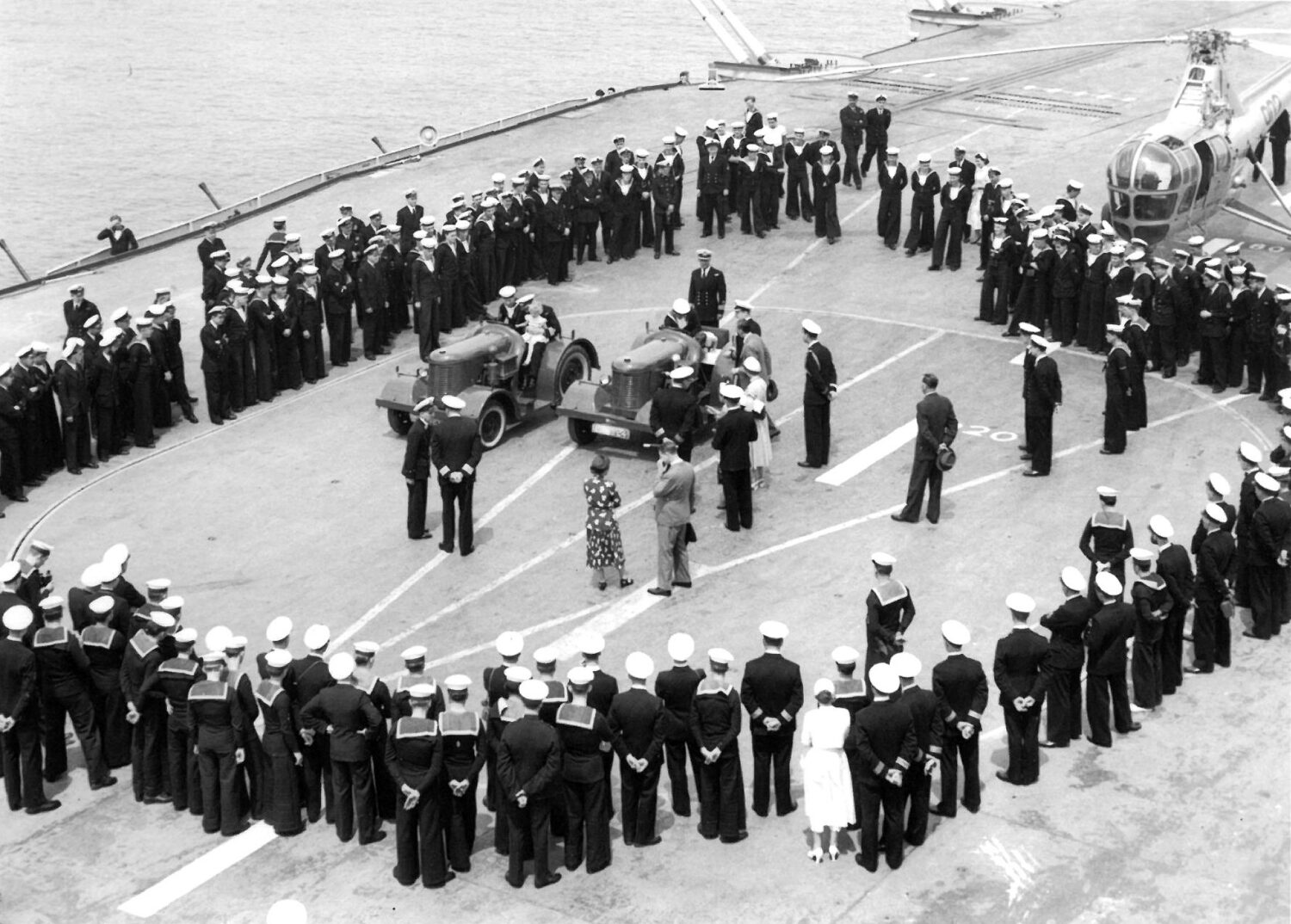
1953 to 1954 Service in HMS Eagle as Sub Lieutenant and Lieutenant
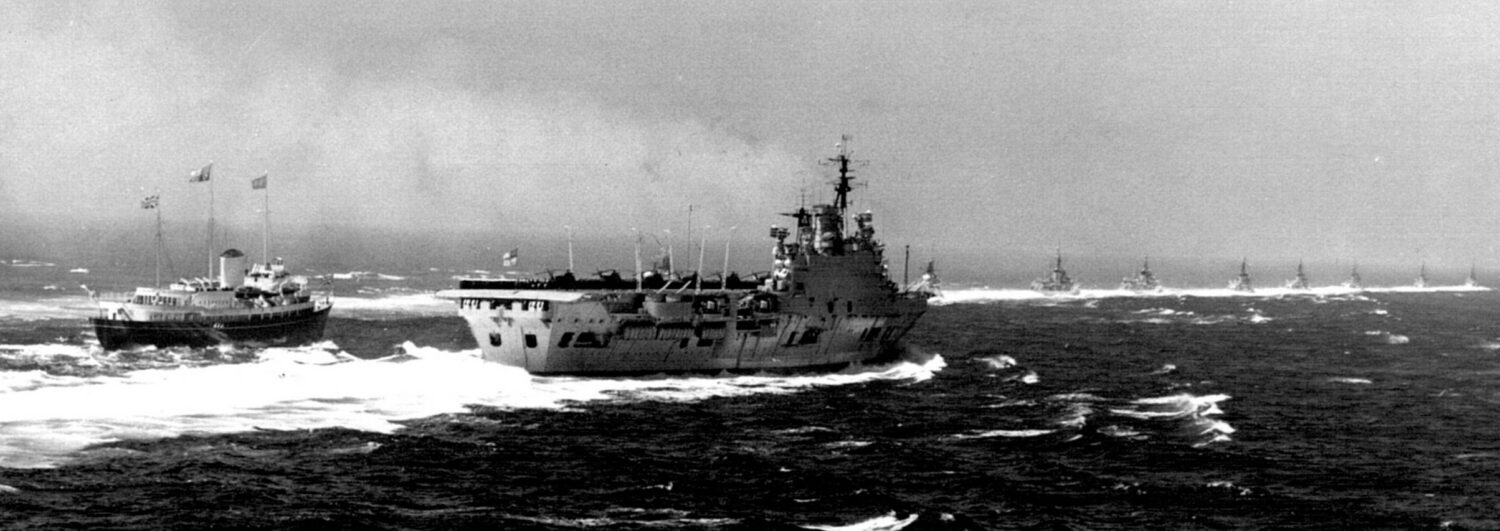

Royal Visit to HMS Eagle, 5 May 1954.

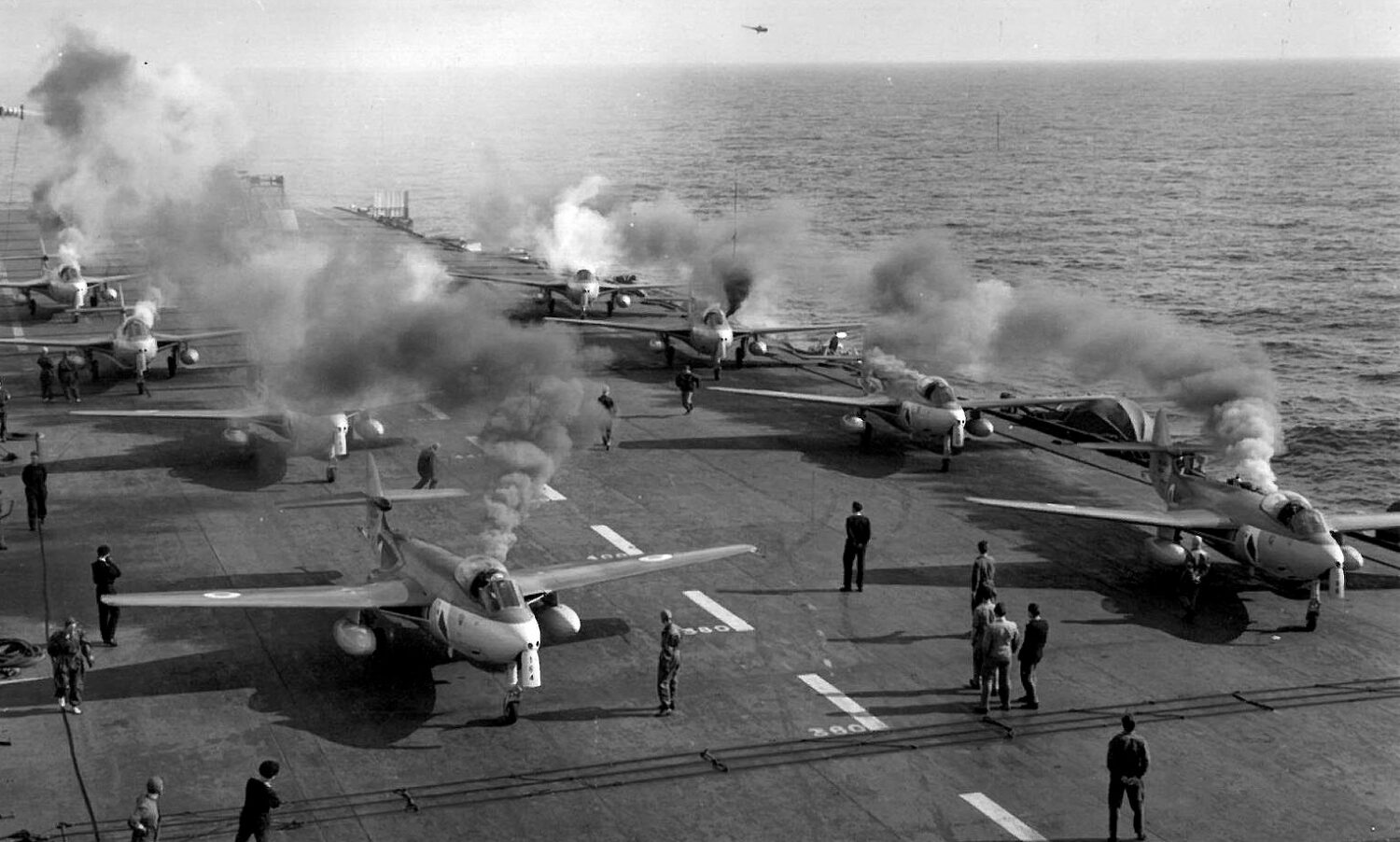
Sea Hawks used a cartridge starting system to turn the engines which produced dramatic smoke.
Exchange with the Royal Australian Navy
Persistence led to a life changing experience for the junior Lieutenant Poland, that is, exchange service in HMAS Warramunga and command of the training corvette HMAS Gladstone.
Having obtained his bridge watching ticket, Peter was appointed to a ship about to enter refit which he would have perceived as lacklustre for a newly qualified watchkeeper. After being inspired by a meeting with some RAN officers visiting Portsmouth including Captain Steven Foley from Australia House in London, Peter, against his father’s advice, badgered his appointer for a posting to Australia. Exchange with the RAN sounded so much more appealing than sitting in a dockyard for months. Against the odds he was successful and he had a happy and life changing exchange experience in Australia.

October 1954 to February 1956, HMAS Warramunga
This included a south east Asian deployment taking in Malaya, Thailand, Hong Kong, Okinawa and Japan.
February 1956 to December 1956, HMAS Gladstone
First Lieutenant and then Commanding Officer, his first of four commands.
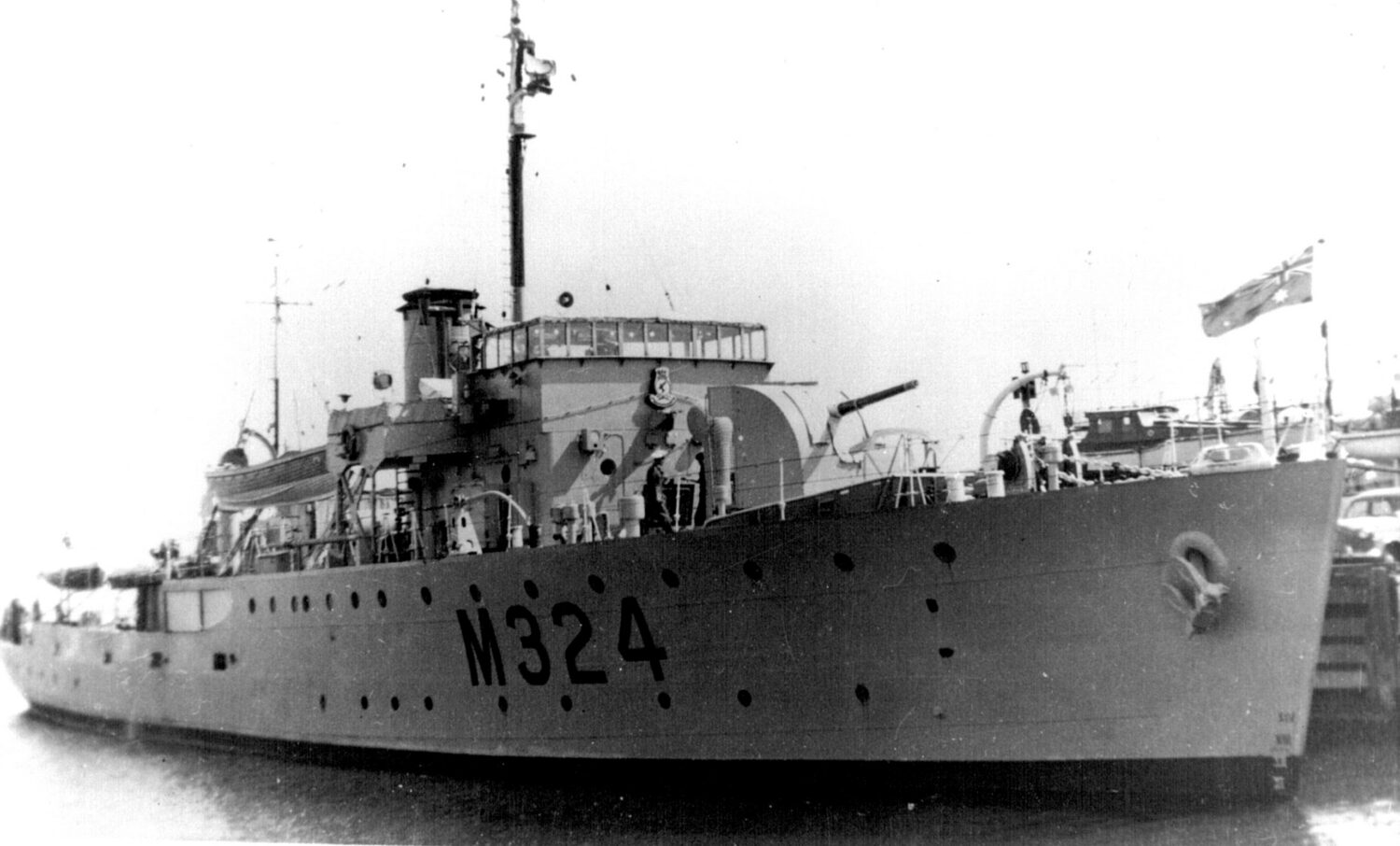
HMAS Gladstone 1956.
Subsequent Sea Postings
1956-57, HMS Burnaston, as 1st Lieutenant.
1958 to 1959, HMS Grenville, 1st Lieutenant and commanding officer.
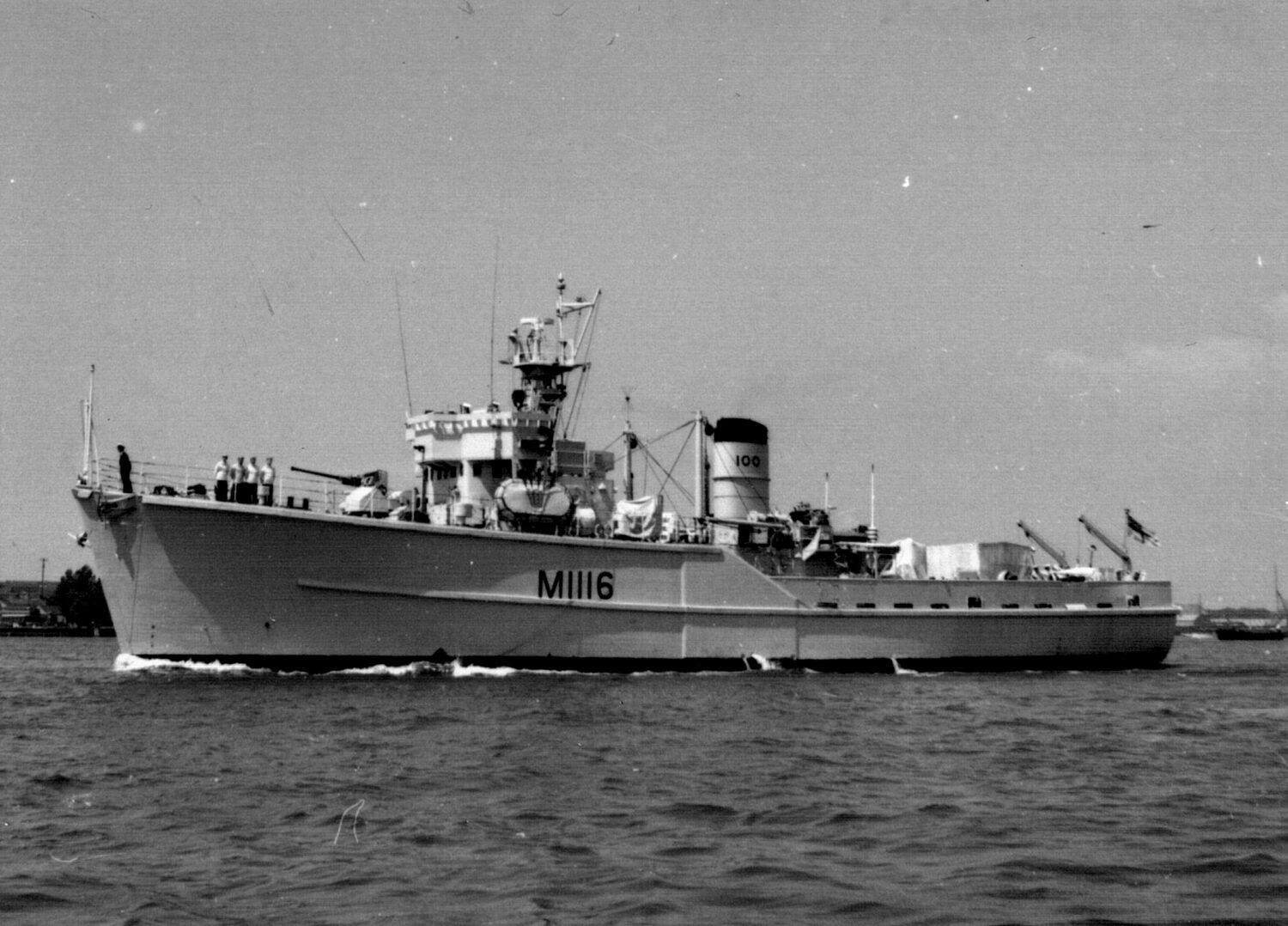
HMS Grenville a Type 15 Frigate, converted from a V class WW2 destroyer, was Peter’s second command after joining as 1stLieutenant. During this posting he conducted Iceland fish patrols and visited Germany, Denmark, Sweden, France and Gibraltar.

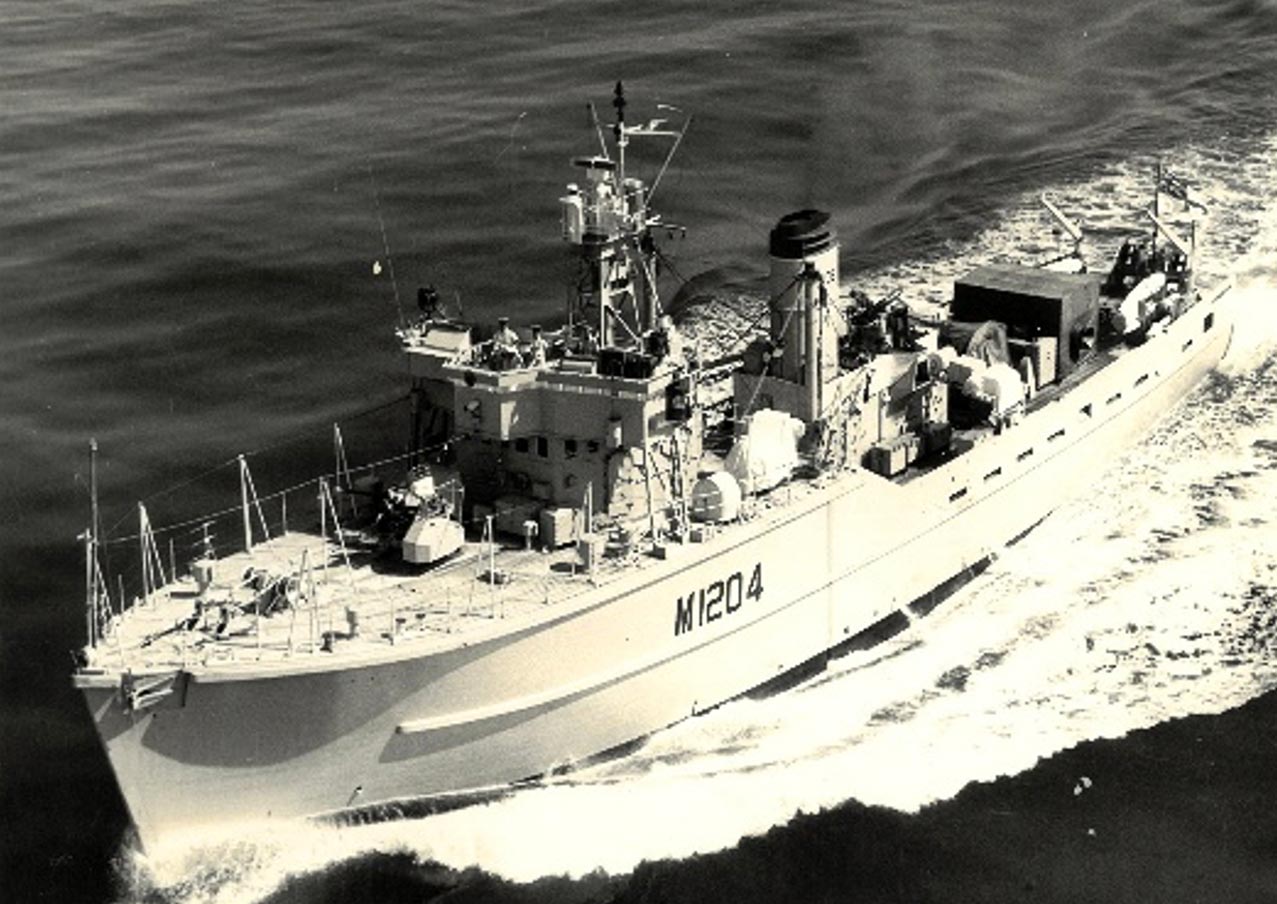
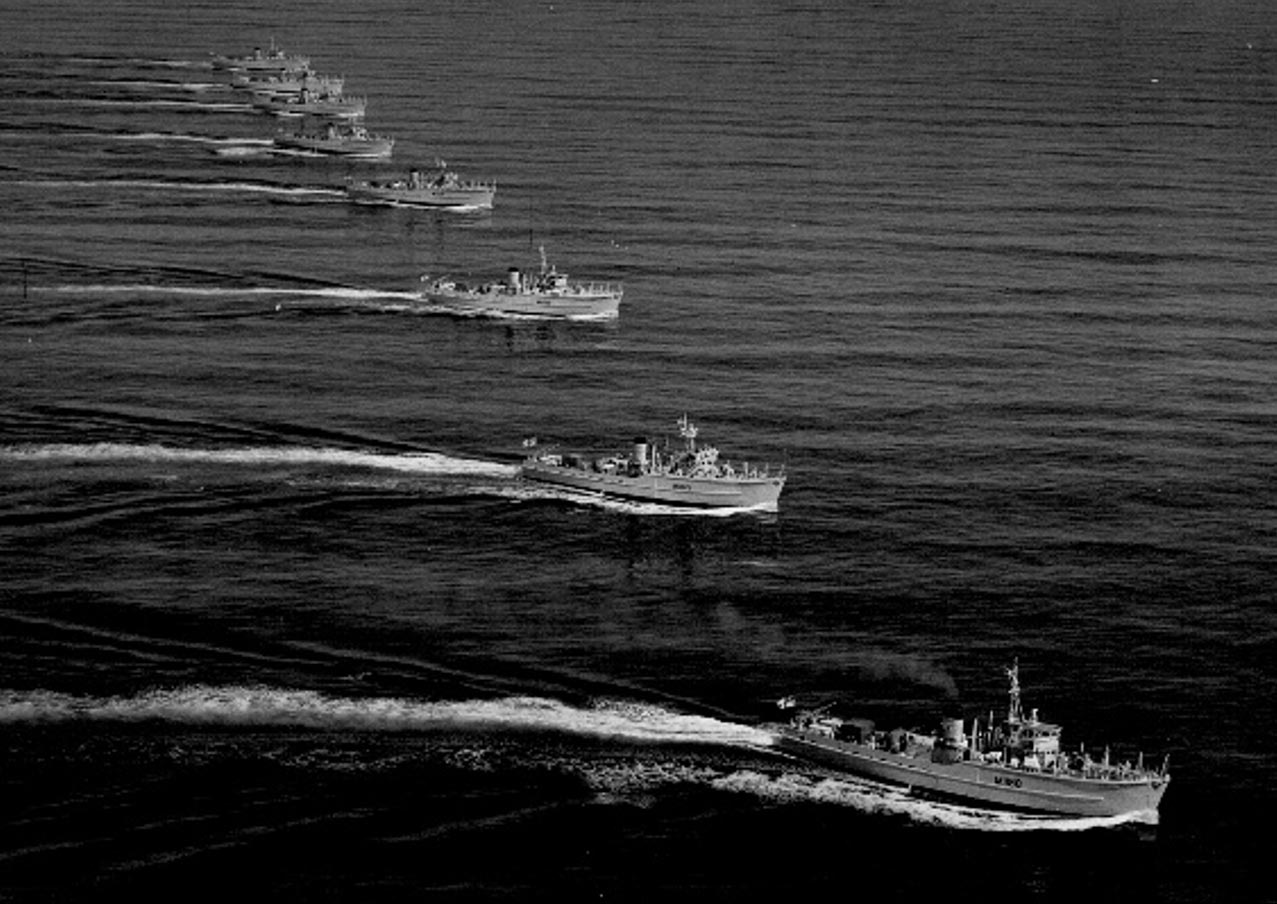
December 1959 to November 1961, HMS Stubbington in Command
During his time in command Stubbington was a unit of the 108th Mine Sweeping Squadron based in Malta in the Mediterranean. It conducted exercises and visits throughout the Mediterranean including, Gibraltar, Spain, France, Italy, Sardinia, Sicily, Greece, Turkey, Libya, Egypt as well as Aden, Eritrea and Pakistan.
Service in the Far East
Between February 1964 and July 1968 Peter Poland served in two ships based in the Far East. Separating these postings was a period of two years on the directing staff at the RN College, Greenwich conducting the Lieutenant’s course.
1964–65, HMS Lincoln, Air Direction Frigate.
As 1st Lieutenant, LCDR Poland took Lincoln which was a Salisbury-class frigate to Singapore, Borneo, Malaysia, Thailand, Hong Kong and the Philippines. During this time the ship also supported operations against Indonesia during “Confrontation” which involved forces from Australia, New Zealand, and Britain.

July 1967 to July 68 Commanding Officer HMS Zest
Peter Poland’s fourth command was HMS Zest, a Z class destroyer commissioned in 1944. During his time in command Zest was deployed to the Far East Station visiting Cape Town, Mombasa, Gan, Sydney, Dunedin, New Plymouth, Yokohama, Hong Kong and Singapore. This was the ships final deployment before paying off into Reserve at Plymouth.
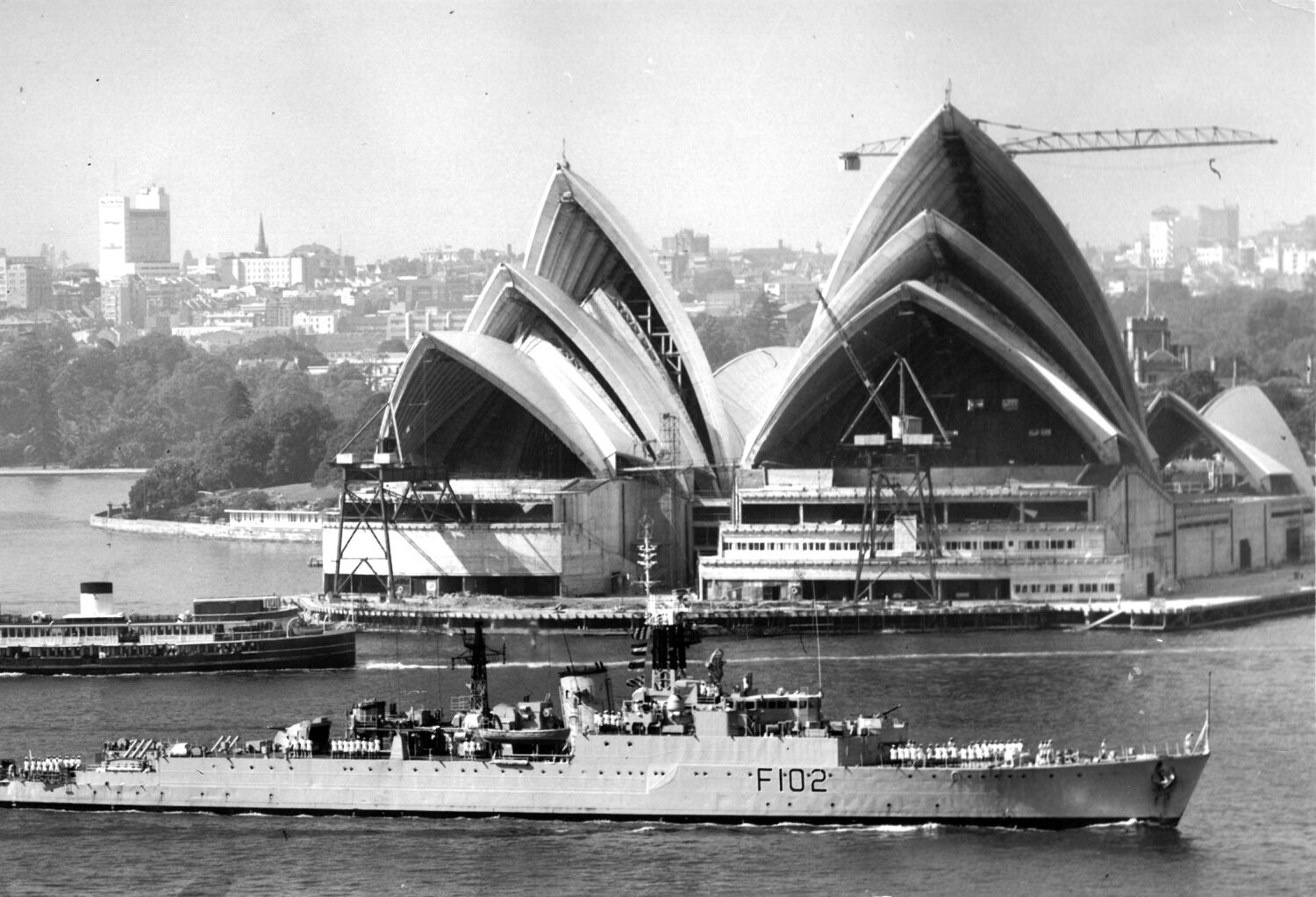
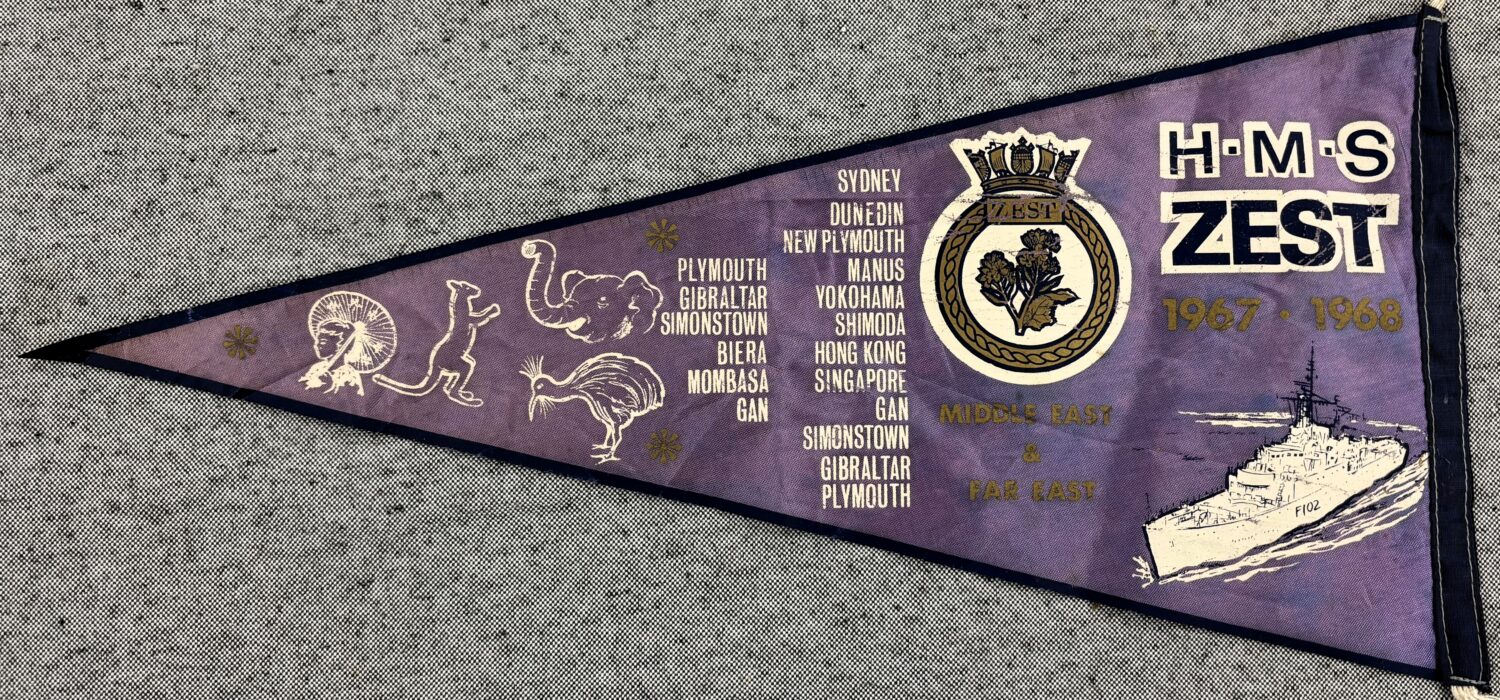
Note: The paying off pennant remains with the Poland family.
A very fine Career
Very few officers can claim four sea commands. In the case of Peter Poland, it was his determination and persistence which made this a reality. His outstanding leadership skills must have been clear to the Admiralty because, in addition to command positions, he served in leadership training positions at Royal Arthur, in Corsham where he trained petty officers and as noted before, the Royal Naval College, Greenwich.
As observed by Vice Admiral Peter Jones, AO, DSC, RAN Retd at Peter Poland’s memorial service, ‘Over the years I came to greatly appreciate Peter’s deep understanding of navies and life at sea. I concluded he would have been a terrific shipmate and a fine captain to serve under.’