By Greg Swinden
Following the ceasefire that ended hostilities in the 1973 Arab-Israeli War the United Nations (UN) established a peace keeping force in the Sinai; the United Nations Emergency Force II (UNEF II). This force was to monitor the buffer zone between Egyptian and Israeli forces and also supervise the withdrawal of Israeli forces from the Sinai.
UNEF II was in existence from late 1973 until mid-1979. During the period 1976-1979 a 50 man detachment from 5 Squadron RAAF provided a rotary wing unit (utilising four UH-1H Iroquois helicopters) to undertake patrol and logistics support duties. 16 members of the Royal Australian Navy (RAN) fleet air arm (both aircrew and maintenance personnel) were attached to this unit, which became known as AUSTAIR, on six month rotations. The Australians were based at Ismailia on the western bank of the Suez Canal.
A Treaty of Peace was eventually signed by Israel and Egypt on 26 March 1979 and the UNEF II mandate expired on 24 July 1979. UNEF II peace-keeping forces remained in place for several months as negotiations regarding a new peace-keeping force were undertaken. By late 1979 the Australian detachment had returned home and was not replaced. The main force remaining in the area to ensure peace was provided by the United States.
Throughout 1980-1981 the UN attempted to create a new UN peacekeeping force and observers without success; due to the threat of the Soviet Union vetoing the motion at the request of Syria. On 18 May 1981 the President of the Security Council formally advised that it was not possible for the United Nations to provide a peace-keeping force in the Sinai.
As a result of this impasse, Egypt, Israel and the United States set up a peacekeeping organisation external to the UN. On 3 August 1981 a protocol to the Treaty of Peace was signed, thus establishing the Multinational Force and Observers (MFO) consisting of three infantry battalions and supporting units. The MFO is still in existence and is governed by the US State Department and has its headquarters in Rome.
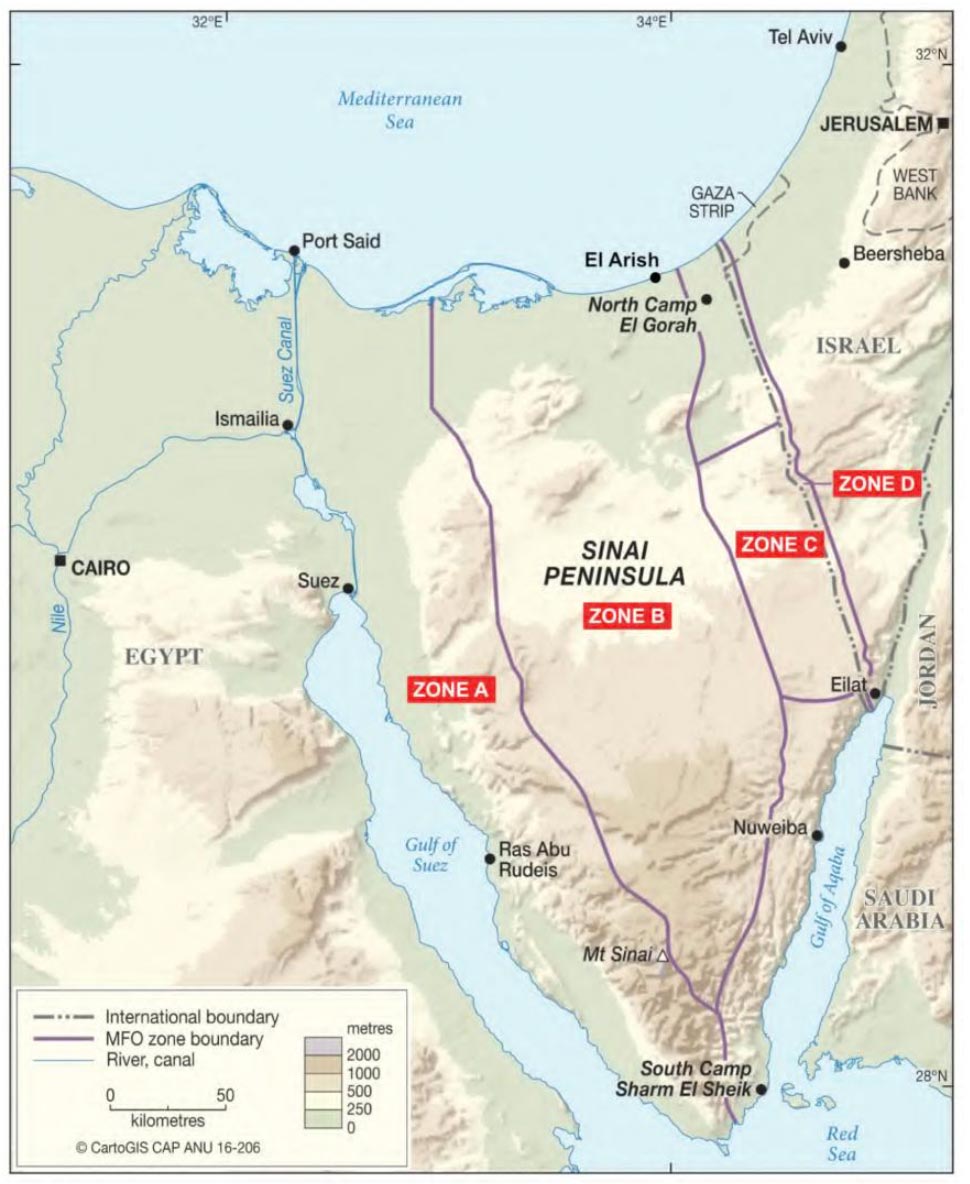
Following the establishment of the MFO, the Australian Government decided, on 12 October 1981, to provide aviation forces in support of the MFO 1. The New Zealand Government also chose to provide aviation forces which was announced on 27 October 1981. The base where the Australians and New Zealanders were to be located was at El Gorah (16 km west from the Israeli border and 30 km south east from the coastal city of El Arish). The Royal Australian Air Force (RAAF) was tasked with forming the 110 strong Australian contingent and following on from the UNEF II experience, members of the RAN were included 2. Additionally a few Australian Army personnel also served with the Australian force making it one of the ADF’s first Tri-Service peace-keeping deployments.
The Royal Australian Navy’s first involvement in this operation was the delivery of the initial eight RAAF UH-1H Iroquois helicopters, eight ISO containers of stores, equipment and a number of MFO personnel to the region. The Navy’s heavy lift ship HMAS Tobruk embarked the helicopters and equipment in Brisbane and sailed on 18 February 1982 bound for the Middle East. Tobruk transited the Suez Canal and arrived at the Israeli port of Ashdod, 40 Kilometres south of Tel Aviv, on 19 March 1982. The unloading was completed by the 23rd and Tobruk sailed that day, returning to Australia via Malaysia and Singapore arriving back in her home-port of Brisbane on 30 April 1982 3.
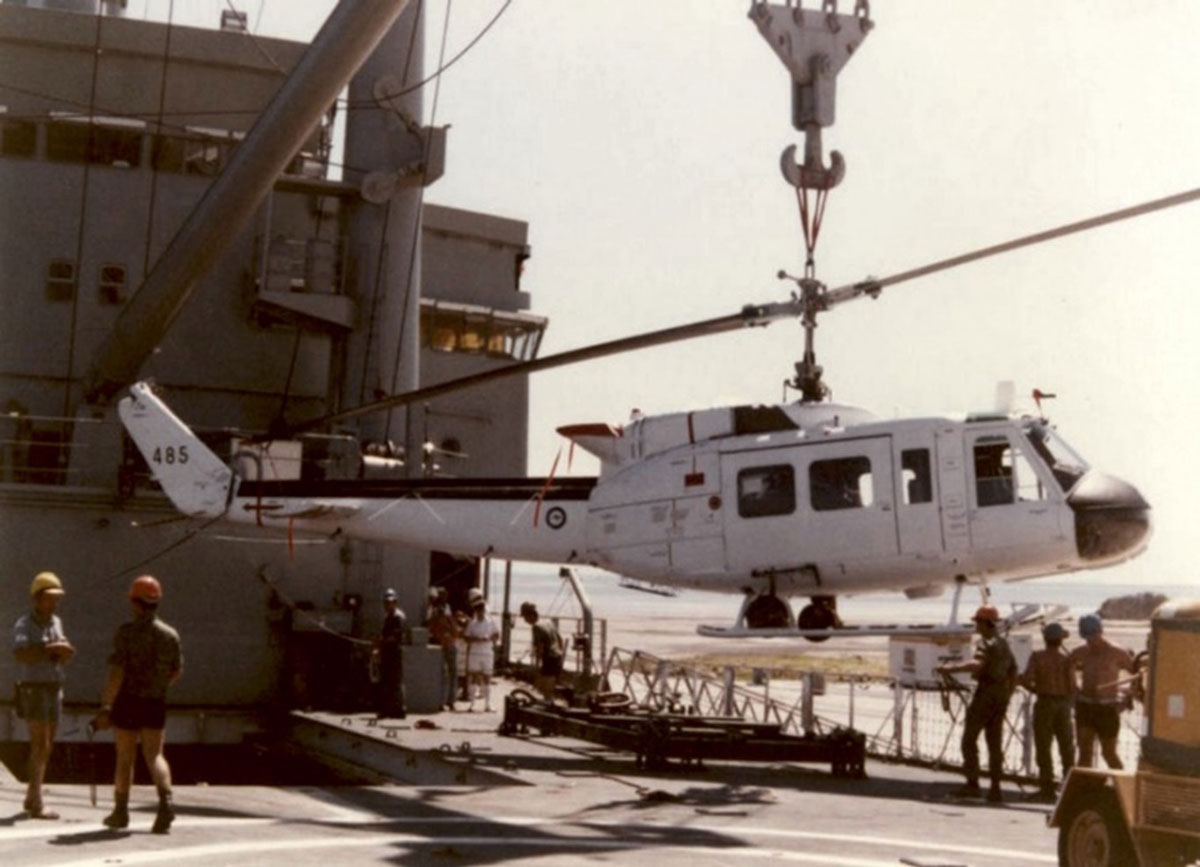
The bulk of the Australian and New Zealand personnel flew from Australia to Tel Aviv, by civil air, and the aircrew then flew the Australian helicopters from the wharf at Ashdod to the ex-Israeli airbase at El Gorah 4 . The two New Zealand helicopters were leased ex-United States Government aircraft. Additionally a French fixed wing contingent flying Transall C-160 and Twin Otter aircraft also operated from El Gorah.
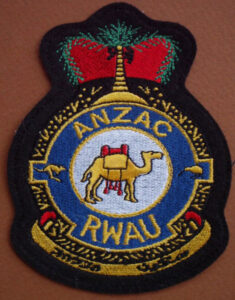
Much of the base at El Gorah had been dismantled by the departing Israeli forces and civilian contractors were still at work constructing or repairing facilities when the Australian and New Zealand Rotary Wing Aviation Unit (RWAU) arrived. Despite this difficulty the contingent commenced operations on 25 April 1982 – the day the Israeli forces withdrew from the Sinai. The role of the unit was to undertake activities to ‘supervise the implementation of the Treaty of Peace and to employ its best efforts to prevent any violations of its terms’. The unit’s ten Iroquois helicopters (eight Australian and two New Zealand aircraft) would be employed on a wide variety of tasks including:
Force commander verification and aerial patrols across all four treaty zones. During these flights US State Department personnel, many who were ex-military, were embarked to observe that Treaty of Peace requirements were being fulfilled. These personnel wore bright orange clothing and were informally referred to as ‘Agent Oranges’.
Personnel movement throughout the Sinai; including ferrying personnel between the various security checkpoints, moving couriers to and from Cairo and VIP flights;
Logistics Support to the Columbian and Fijian infantry battalions and other units as required. This included many and varied tasks such as moving heavy equipment as underslung loads to widely dispersed and remote areas that were inaccessible by road;
Medical evacuation of MFO personnel and serious civilian casualties from point of injury to suitable medical facilities;
Search and Rescue missions and regular training flights to maintain crew competency; and
Meteorological services to all force aviation elements
The Sinai was divided into four zones from west to east (A, B, C, and D) with A being closest to Egypt and D Being a narrow strip along the Israeli border. Limitations were placed on Egyptian forces in Zones A and B and Israeli forces in Zone D. The MFO operated in Zone C stretching from the Egyptian border to the Gulf of Aqaba. The Fijian and Columbian battalions were also based at El Gorah while the US battalion was located at Sharm el Sheikh in the southern portion of the peninsula.
Overall the RWAU was the ‘Jack of all trades’ used to undertake all manner of tasks where rotary wing aircraft were needed. Eight of the ten helicopters were expected to be serviceable and on standby for tasking at any one time. This was to prove difficult at times due to sortie requirements above the expected 30-50 hours per month per aircraft, spare parts availability, and the effects of the harsh desert conditions on the aircraft. On occasions a shortage of aviation fuel, or contaminated fuel, restricted flying operations as well. The US aviation contingent, operating in the south, only supported US requirements; but occasionally had to conduct flights when the RWAU aircraft were unavailable.
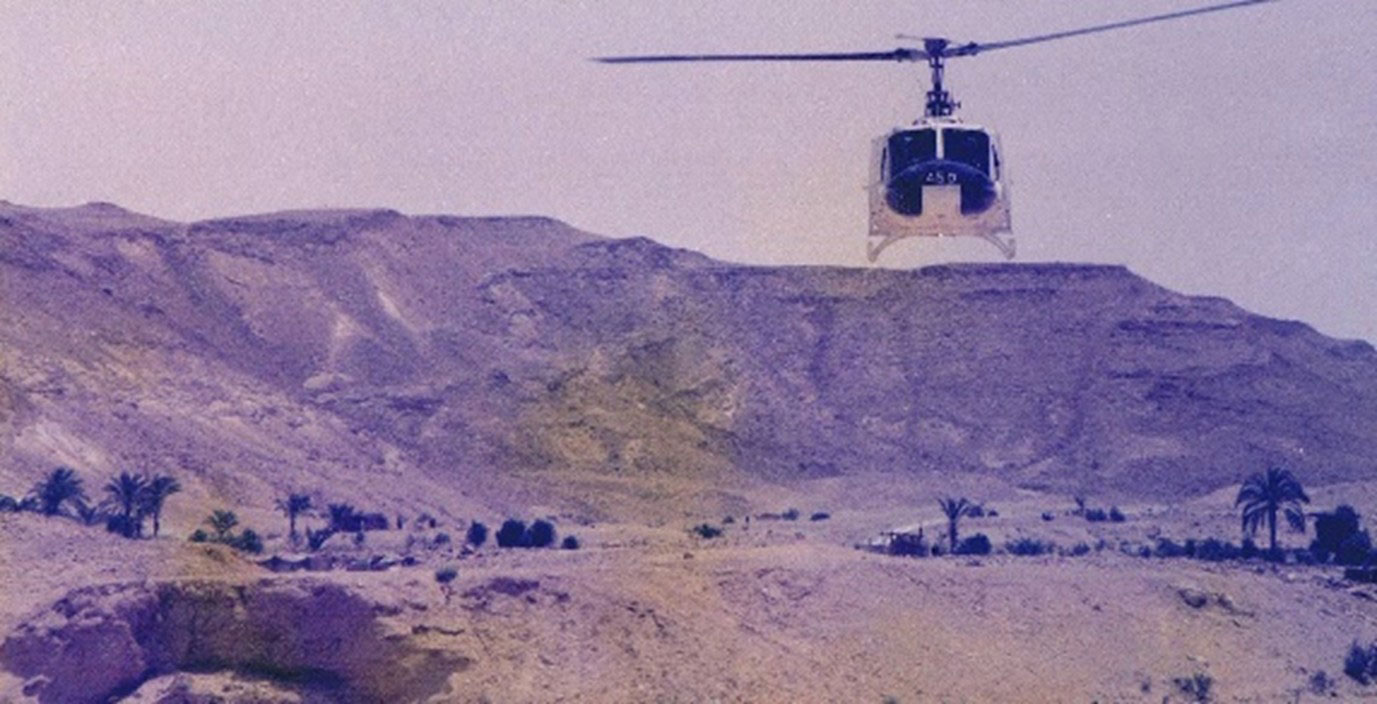
Flying conditions were difficult due to the desert heat (usually 30 degrees centigrade by mid-morning) and frequent sand storms. There were also risks associated with landings ‘in the field’ due to the presence of land mines and unexploded ordnance throughout the Sinai.
On one patrol, during July 1984, an Iroquois piloted by Lieutenant Robert Hill responded to an incident where an Egyptian army truck had struck a land mine. While the vehicle had been destroyed, the driver survived. Hill recalled; ‘the poor soldier was wandering down the road carrying his boots and in shock. I could see the burnt skin peeling off his legs in strips. We took him to a hospital right beside the Suez Canal’. The soldier, Private Mohamed el Said Ali, survived and recovered from his injuries.
The maintenance teams worked rigorously around the clock to keep aircraft serviceable in hot and harsh conditions. Spare parts were flow in via the six-weekly C-130 resupply flight which took five days on average, to make the trip from the Australian east coast via Perth and Diego Garcia to El Gorah. The Hercules also brought in replacement personnel and the all-important beer re-supply.

Food quality was initially a problem during 1982 but improved steadily over time and water was always a commodity that required close management for drinking, cooking, washing and laundry.
Petty Officer Air Crewman (later Captain) Alan Whittaker stated ‘E-Systems messes at El Gorah provided a good range of food with quality always of a high standard. The Military PX proved excellent options for sporting goods, alcohol and other requirements (i.e. toiletries). The BBQ’s, cinema and gala nights at the ANZAC bar were always a highlight for all the contingents and very much the party hub of the entire el Gorah base. Evenings in the French bar sampling their fares enhanced cross contingent goodwill’.
Living conditions at El Gorah were quite good for the region. Accommodation was a mixture of single and two berth cabins in ATCO hut style demountable buildings. The showers and toilets were in a separate building and water had to be shipped in by truck on a regular basis.
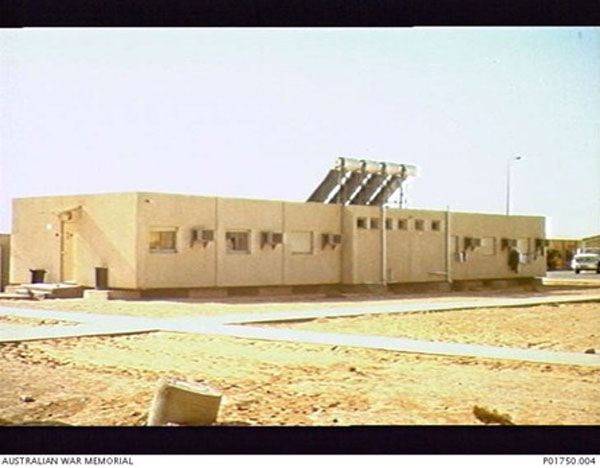
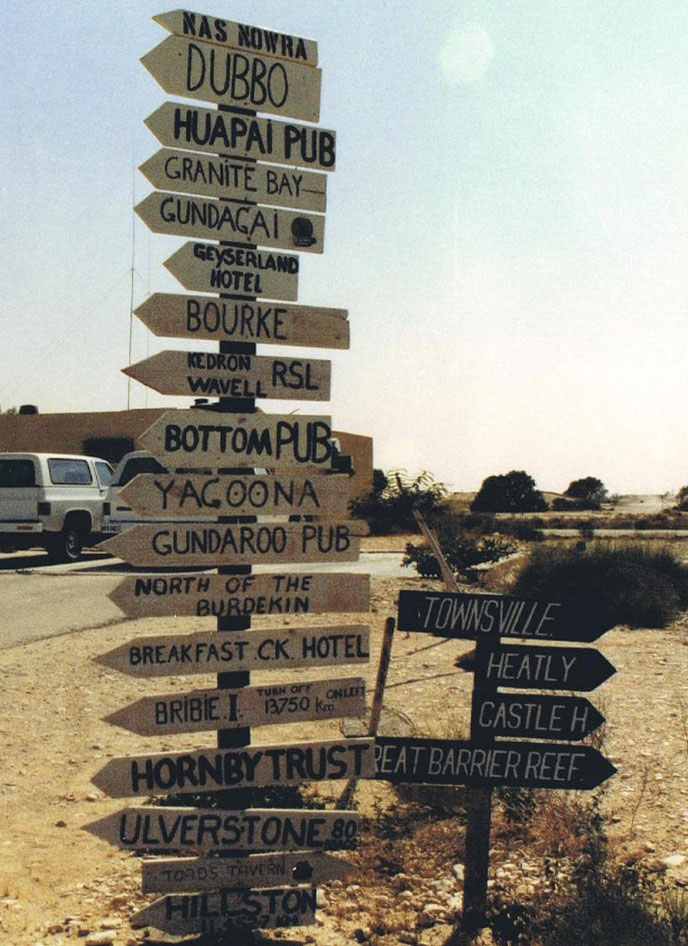
While the peninsula climate and terrain was harsh and the working hours long and arduous, the ANZAC Contingent made the best of the situation. A golf course was set up, and the Sinai Surf Club and Sinai Wine Appreciation Society were created to improve morale. One commentator stated: ‘whilst they work hard, they also have a reputation for playing hard’ 5.
MFO personnel were also allowed recreational leave and could visit Jerusalem, Tel Aviv and the coastal resort town of Elat in southern Israel. Masada and the Dead Sea were also popular sites to visit, as were the pyramids in Egypt. The 6th Century Greek Orthodox St Catherine’s Monastery (in the southern Sinai) as well as Australian Light Horse World War I battle sites such as Romani, Gaza and Beersheba were also visited, and one group even undertook a short trip to Cyprus.
The following 54 members of the RAN are known to have served as part of the Australian & New Zealand Rotary Wing Aviation Unit in the Sinai during 1982-1986 (ranks at time of service):
- Able Seaman Michael Patrick Adams
- Sub-Lieutenant Merinda Lee Andrew
- Able Seaman Grant Peter Barnett
- Able Seaman David William Biddle
- Able Seaman Robert Scott Bradford
- Lieutenant Stephen Clive Brand
- Able Seaman Rhett Bruce Campbell
- Lieutenant Richard Alain Chartier
- Sub-Lieutenant John Allan Clark
- Petty Officer Raymond Keith Cully
- Petty Officer Peter Thomas Cummings
- Sub Lieutenant Leigh Anton Curac
- Lieutenant Michael Richard Curry
- Acting Sub-Lieutenant Anthony Carl Dalton
- Acting Sub-Lieutenant Allan Cameron Dickinson
- Petty Officer Stephen Brian Duffey
- Acting Sub-Lieutenant Geoffrey Norman Fiedler
- Sub-Lieutenant Alan Kendall Fisher
- Lieutenant Derek James Frew
- Lieutenant Michael Robert Galvin
- Leading Seaman Terrence Patrick Garside
- Sub-Lieutenant Leigh Hunter Godlonton
- Petty Officer John Allan Harford
- Lieutenant Graeme David Hawkins
- Lieutenant Mark Dawson Henschke
- Lieutenant Robert John Hill
- Sub-Lieutenant Mark John Hype
- Sub-Lieutenant Andreas Wilhelm Jacobs
- Lieutenant Gary Andrew Kubel
- Sub-Lieutenant Brendan Carl Leddy
- Sub-Lieutenant Grant Alfred Lewis
- Midshipman Murray McFarlane Lindsay
- Sub-Lieutenant Philip Anthony Long
- Lieutenant Graeme Peter Lunn
- Able Seaman Wayne Robert Lyon
- Lieutenant Craig Walter Marcombe
- Petty Officer Anthony James Mason
- Sub-Lieutenant Ian Craig McConachie
- Lieutenant Anthony Kershaw Nelson
- Lieutenant Peter Whitfield Nelson
- Acting Sub-Lieutenant Richard William Nest
- Able Seaman Peter Raymond Newman
- Able Seaman Roderick Wayne Poole
- Sub-Lieutenant Stanley Keith Ritchie
- Able Seaman Neil Francis Roberts
- Midshipman Shaun Francis Rodenburg
- Sub-Lieutenant Darrell Lindsay Secker
- Sub-Lieutenant George Sydney
- Acting Sub-Lieutenant David John Threlfo
- Able Seaman Peter David Welsby
- Lieutenant Rodney Joseph Whannell
- Leading Seaman Allen Mark Whittaker
- Petty Officer Terry Wilkinson
- Lieutenant Commander Theodore Bernard Wynberg
The Navy provided aircrew, air traffic controllers, meteorologists and safety equipment sailors (due to a shortage of these personnel within the RAAF). Unlike UNEF II no RAN aircraft maintainers were deployed.
Amongst the Australian naval personnel who served with the MFO was Sub-Lieutenant Merinda Lee Andrew who was an air traffic controller. Merinda, as a member of the Women’s Royal Australian Naval Service (WRANS) was at that time the first female member of the RAN to serve overseas on operations since World War II 6.
Others, such as Lieutenant Commander Theodore ‘Ted’ Wynberg, had served in the RAN Helicopter Flight in Vietnam, but many were on their first operational deployment. Acting Sub-Lieutenant Tony Dalton went on to complete a long naval career finally retiring in 2016 as a rear admiral and having commanded the Fleet Air Arm during 2008-09.
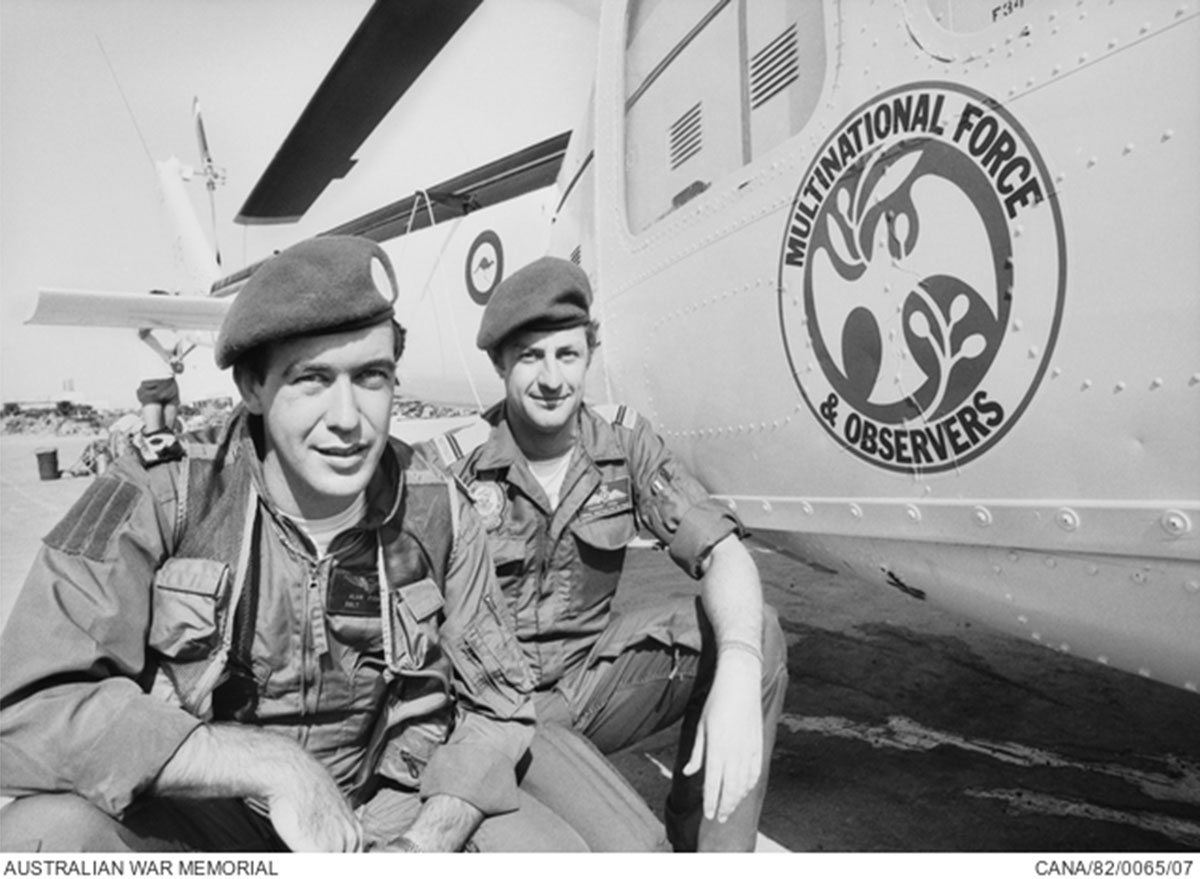
The initial two year Australian commitment to the MFO was reviewed in late 1983. This was an interesting event as the initial commitment had been made by the Fraser Liberal Government and had been vehemently opposed by the Australian Labor Party, then in opposition. In 1983 Labour was now in Government and the Minister for Foreign Affairs, Bill Hayden, visited the unit in January 1984. Following this visit the Labor Government confirmed, that as no other nation could provide a replacement unit in a reasonable time, the RWAU would continue to serve in the Sinai until early 1986 but would be withdrawn then.
Despite pressure from Egypt and Israel, the RWAU began handing its duties over to a Canadian unit operating nine twin engine CH-135 twin Huey aircraft in early 1986.
During the RWAU’s four years in the Sinai it completed 16,414 flying hours, moved 93,000 passengers and carried 1,160 tonnes of freight and equipment. During this period 792 personnel served in the unit (with 25 New Zealanders and 114 Australians in each rotation).
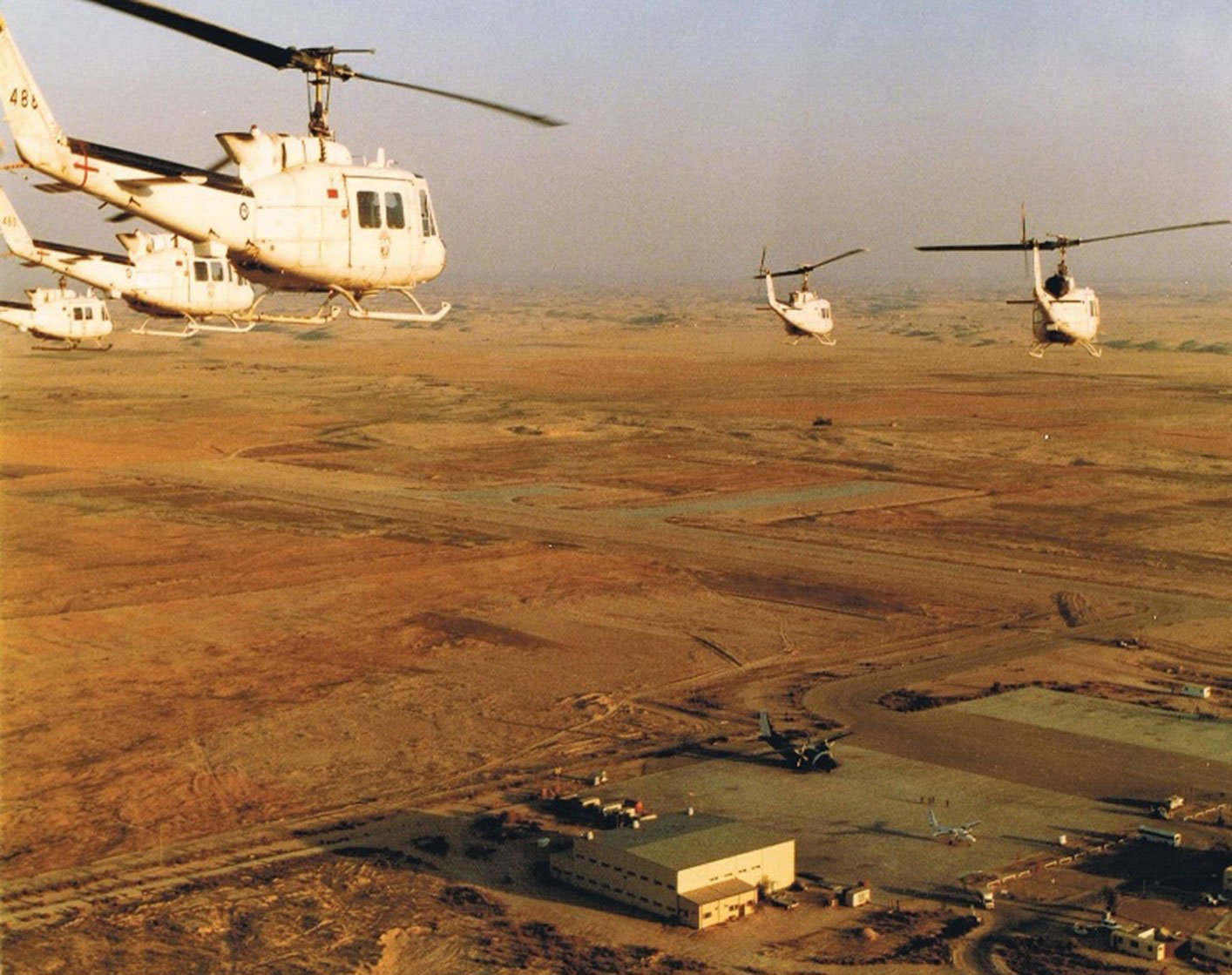
The final RAN crewed mission took place on 14 March 1986 with the movement of Columbian troops. On 16 March a flypast by all 10 Iroquois helicopters took place at El Gorah. The Australia helicopters were then flown to Tel Aviv and subsequently moved back to Australia as cargo in a US Air Force C-5A Galaxy. The bulk of ADF personnel then returned to Australia on 18 March with the last Australian personnel withdrawn from El Gorah on 31 March 1986,
There was then a gap in Australia supporting the MFO until 1993, when approximately 25 Australian Army personnel were deployed on six month rotations to the Sinai as part of Operation MAZURKA. The roles undertaken were mainly staff and support duties vice the roles previously undertaken during 1982-1986. The deployment continues to this day, becoming a Tri-Service deployment opportunity in the early 2000’s; with naval personnel undertaking administrative and logistics duties.
The Multinational Force & Observers (MNFO) Medal is awarded for a minimum of 170 days service in the Sinai.
Initially MFO Sinai personnel were not permitted to officially wear the MFO medal but this decision was eventually overturned. The Australian Service Medal, with clasp SINAI, was also awarded for a minimum of 30 days service with the MNF & O during the period 9 February 1982 – 28 April 1986 and was gazetted on 1 November 1989.
For many RAN personnel, service in the MFO was the highlight of their service careers. Lieutenant Commander Richard Chartier, RAN later recalled that there was ‘a real sense of purpose in the missions we flew’ and ‘that the peace-keeping effort to which we were contributing was of great benefit.’
That the MFO continues to exist and maintains the peace between Egypt and Israel, in an otherwise turbulent region, is a testament to its worth and the quality of its personnel.
Further Reading / Information:
Australian Naval Aviation Museum, Flying Stations: A Story of Australian Naval Aviation, Allen & Unwin, Sydney, 1998.
Doolan, Ken HMAS Tobruk: Warship for every Crisis, Grinkle Press Pty Ltd, Queanbeyan NSW, 2007.
Gouttman, Rodney Bondi in the Sinai: Australia, the MFO and the Politics of Participation, University Press of America, 1996.
Kirkland, Frederick Sometimes Forgotten, Plaza Historical Service, Cremorne NSW, 1990.
Lax, Mark Taking the Lead – The RAAF 1972-1996, Big Sky Publishing, 2020.
Londey, Peter The Long Search for Peace – Observer Missions and Beyond, 1947-2006, Volume 1, Australian War Memorial, 2020. (Chapter 23).
Londey, Peter Other Peoples Wars – A History of Australian Peacekeeping, Allen & Unwin, Sydney, 2004.
Lunn, Graeme Helicopters over the Sinai: The Story of the FAA in the Anzac Rotary Wing Aviation Unit 1982-1986, Fleet Air Arm Association of Australia.
Wilson, Stewart Iroquois in Australian Service, Aerospace Publications Pty Ltd, Weston Creek, ACT, 1994.
Naval History Podcast Series (Season 6 Episode 7, 2021) Helicopters over the Sinai, Naval Studies Group, UNSW Canberra.
References
1 The Fraser Liberal Government decision to commit Australian forces to the Sinai was debated at length in Parliament and the Labor opposition did not support the deployment fearing Australia would be drawn into the wider Middle East conflicts.
2 In contrast to UNEF II (which included RAN aircrew and maintainers) the Navy MFO commitment was mainly aircrew, air traffic controllers and safety equipment personnel.
3 The Royal Australian Navy had served in this region several times in the past including the RAN Bridging Train serving in the Sinai during 1916-1917, RAN cruisers also served on loan with the Royal Navy in the Mediterranean during the 1920-30’s. During World War II several RAN ships served in the region during 1940-43 and RAN personnel serving in Royal Navy Ships took part in the Suez Canal crisis in 1956.
4 Known as Eitem by the Israelis
5 Lieutenant Colonel David Brown – quoted Pix people article 1983.
6 Women’s Royal Australian Naval Service (WRANS) personnel were posted to Singapore / Malaysia, mainly in communications roles, during the 1970s and 1980s and this service was later deemed as operational service in the early 2000’s.