- Author
- Gillett, Ross
- Subjects
- Battles and operations, History - WW2
- Tags
-
- RAN Ships
- None noted.
- Publication
- September 2025 edition of the Naval Historical Review (all rights reserved)
By Ross Gillett
Papua New Guinea’s port city of Rabaul is full of naval artifacts from the two world wars. And at the nearby town of Bita Paka it was good to see that the activities and accomplishments of the RAN in the Great War continue to be honoured. The role of the Navy in the first stages of the conflict becomes even more apparent when one arrives in Rabaul, sailing past the last known sighting of HMA Submarine AE1.
The area surrounding the modern-day city of Rabaul is a mixture of memories from the early years of the Great War (1914-1918), plus a wider selection of very rusty equipment from the 1939-45 conflict. The latter are on display at several locations near the port, but in most cases have not received the attention of any professional preservation efforts.
Bita Paka
Due to the efforts of the present-day RAN, visitors to the local Bita Paka Memorial Cemetery are greeted with some large plaques outlining the Navy’s role, including that of the Australian Naval and Military Expeditionary Force (AN&MEF). This initial period is often overlooked by many modern-day historians who tend to concentrate on the later operations in the Middle East and Turkey. But, at Bita Paka, lie the remains of many naval and military personnel, in an area which is maintained to the highest level.
Early endeavours
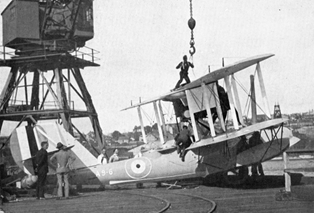
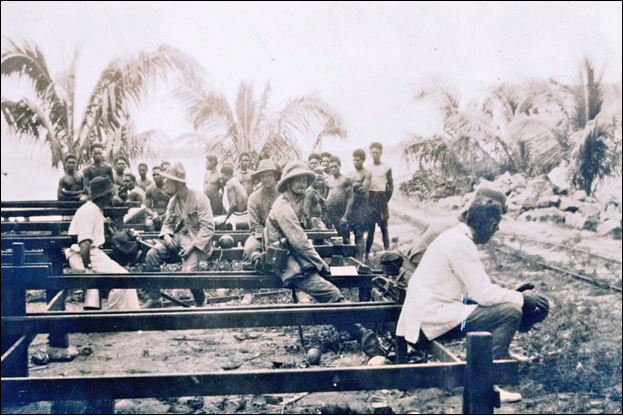
Back in 1914-15, the RAN, through the efforts of its personnel and youthful naval fleet, was able to neutralise enemy shipping, scare off the larger German men-o-war, capture and then re-use some vessels as patrol craft and very importantly, neutralise the enemy’s radio stations.
Led by the powerful and youthful battlecruiser HMAS Australia, this fleet of RAN warships and their accompanying support ships, secured a very inhospitable landscape to defuse the threat from German forces, both afloat and ashore.
The larger remnants of the enemy naval force fled from the area and were deterred from returning to the region due to the presence of the battlecruiser’s 12-inch guns, supported by the light cruisers Sydney, Melbourne and Encounter with their six-inch guns and the six River class torpedo boat destroyers. At that time, the RAN also deployed its first two submarines, AE1 and AE2, to the area as a further counter to the German threat.
These first months of the Great War also demonstrated how well the RAN had learnt to utilise the accompanying fleet ‘train’, a group of merchant ships taken up from private shipping companies and quickly modified to serve the warships as depot, oiler, stores and transport ships. The RAN had only been in existence for a little over three years, a figure that makes the success of the New Guinea operations even more noteworthy.
The operations in New Guinea eventually wound down, and the departure of Germany’s East Asia Squadron from the region (and to defeat at the Battle of Falkland Islands), allowed the RAN’s main fleet units to sail to the Mediterranean Sea and then the waters around the United Kingdom. With the departure of these ships, the RAN maintained a presence in the region via the group of requisitioned or captured craft to provide a small force of patrol boats.

Second conflict
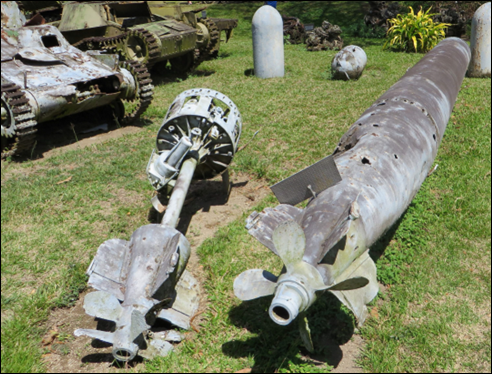
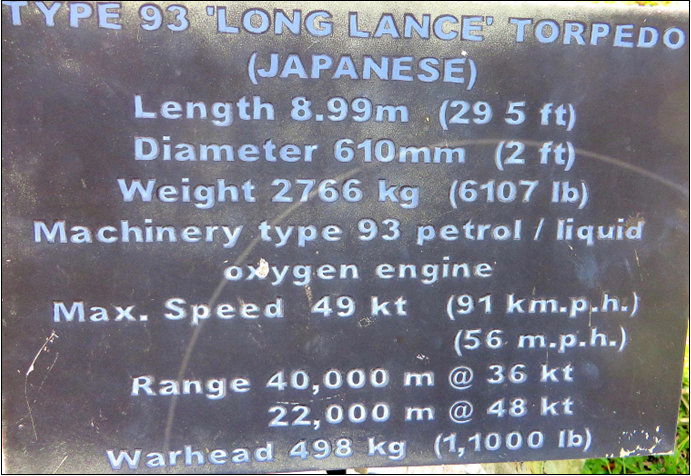
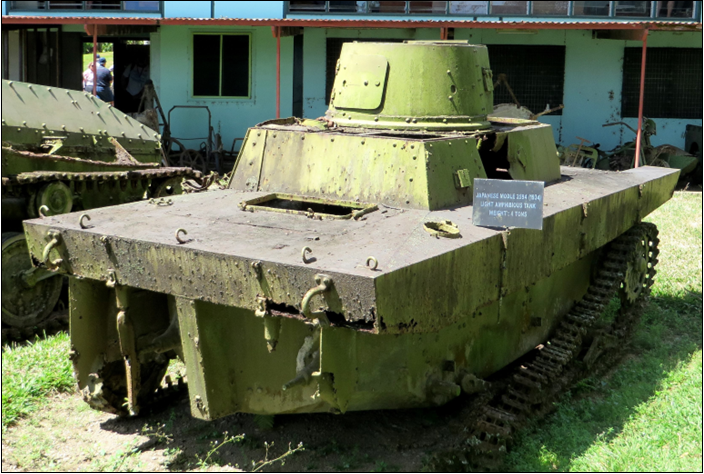
A short distance from the port of Rabaul is the Kokopo War Memorial featuring a small collection of buildings and former Japanese military machines rescued from the nearby landscape. These include examples of aircraft, tanks and amphibious vehicles, an Imperial Japanese Navy torpedo, some anti-aircraft guns and other armaments. The accompanying photos illustrate some of these on display within the museum grounds.
On the only road back to the port, a number of tunnels built by the Japanese forces are visible. All were dug into the mountain sides, some it was claimed, a few kilometres long. These were designed to house stores and are about two-metres in height.
Landing craft
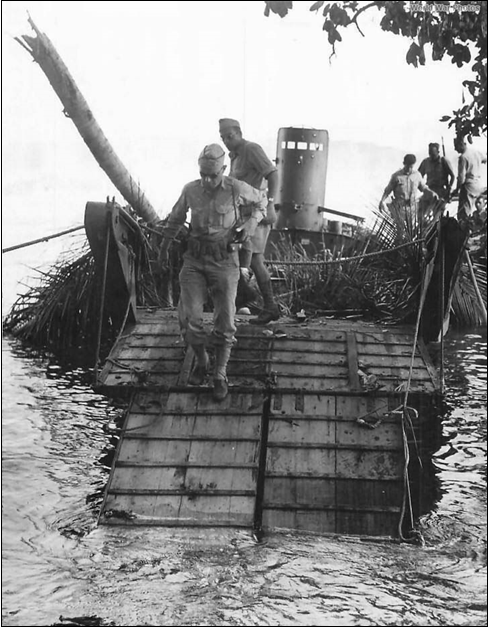
Another group of tunnels were designed to house a large number of Japanese landing barges and protect them from allied air and sea attacks. The barges were employed to shift men and equipment between the various islands and their outposts.
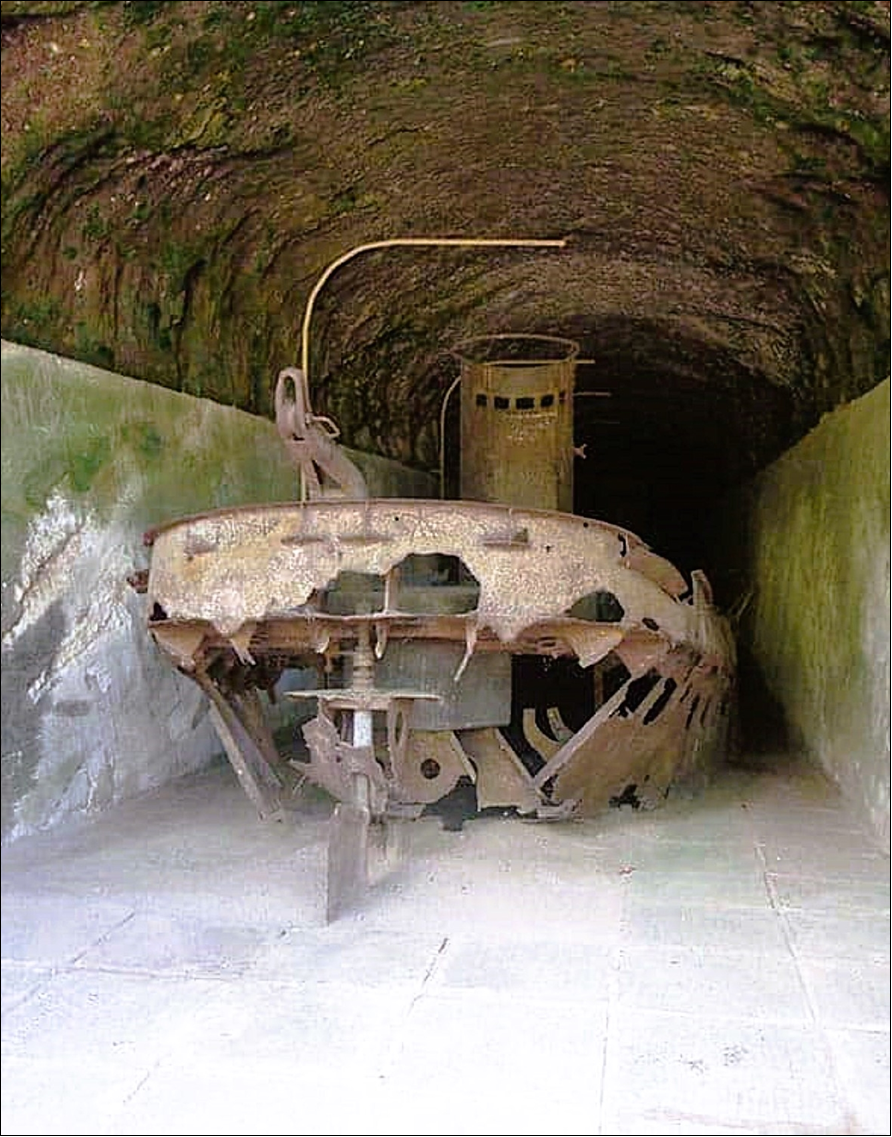
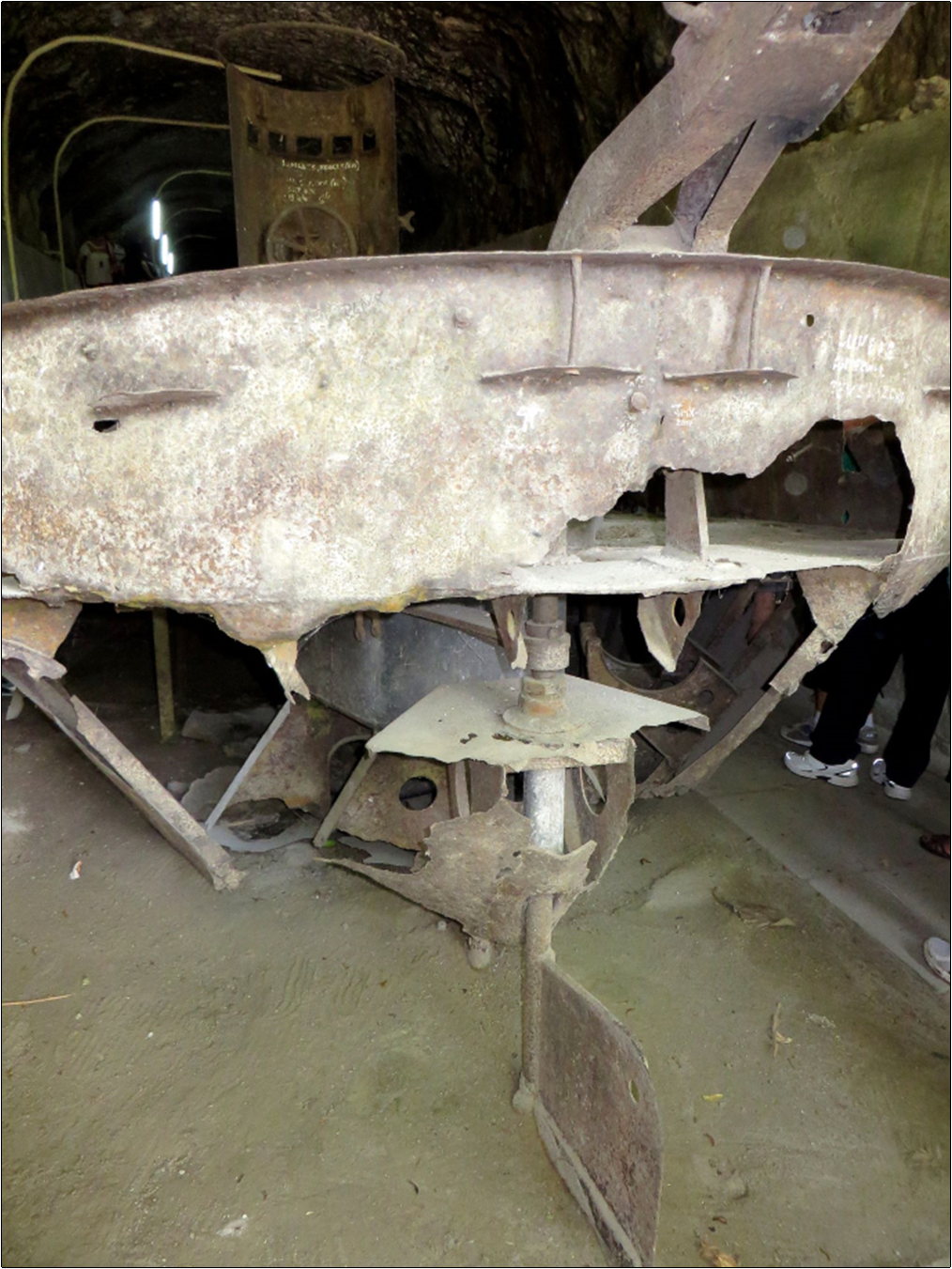
These tunnels are tucked away in the cliffs, a short distance from the water, and are hidden from view when travelling along the roadway. Many of the tunnels also had small gauge railway lines, about 300-metres down to the shoreline to move the barges in and out and which were then covered with branches. Inside the tunnels, visitors now experience an eerie silence of the past, a reminder of how strategic and resourceful the Japanese forces were during their years in occupation. One tunnel, open to tourists, still stores three Daihatsu cargo barges which were kept there safe from Allied air raids.
Most of the tunnels were excavated by slave laborers into the local soft volcanic rock. Some tunnels also housed supplies and Japanese command posts, while others were utilised as accommodation ‘hellholes’ for Australian and American POWs.
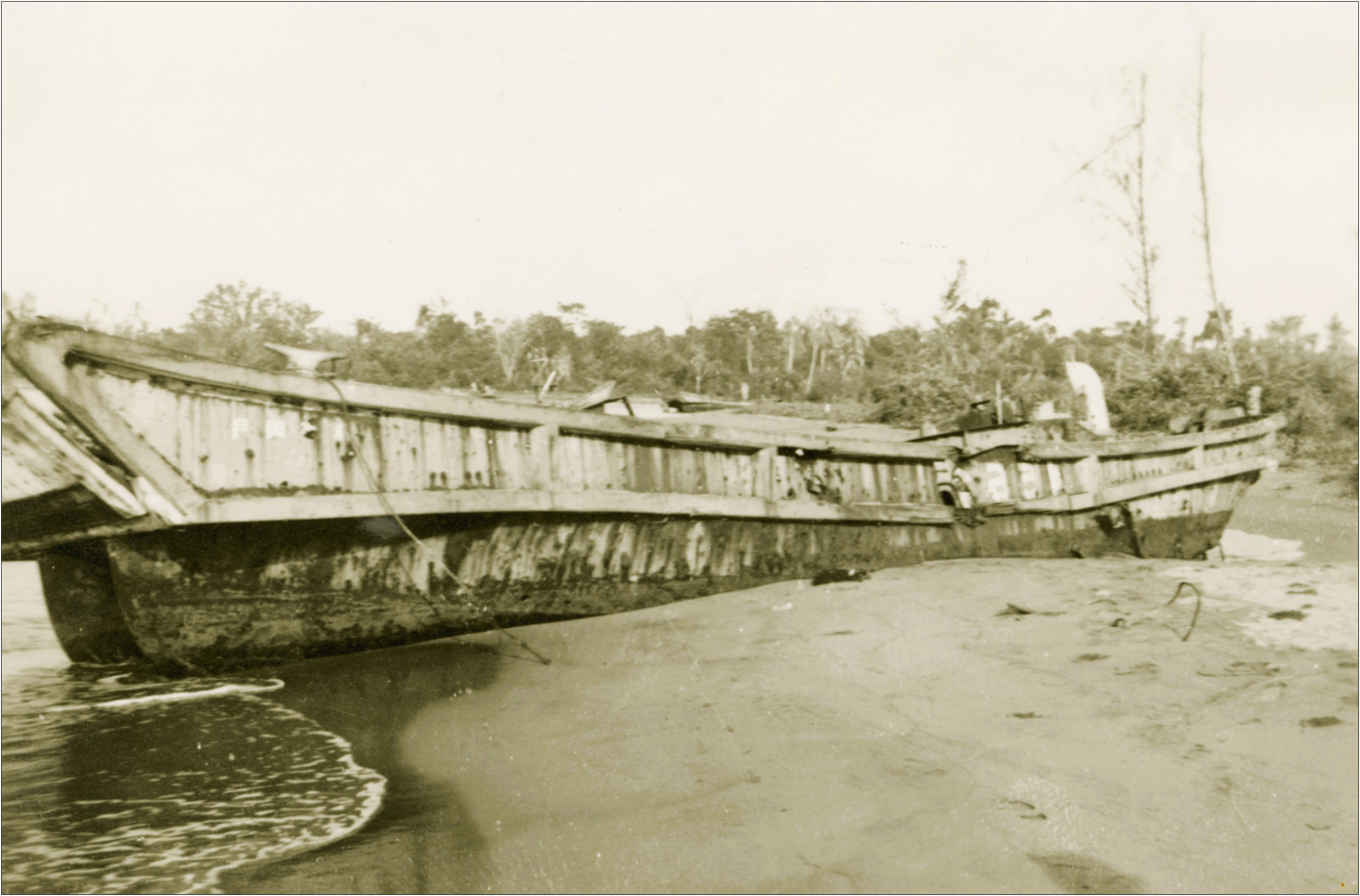
In some of the tunnels, up to 17 landing craft remain, albeit in various levels of non-preservation. Beyond the first three or four craft, available for inspection in the ‘public’ tunnel, the condition of the landing barges improves as each tunnel progresses into the interior of the mountain, further away from the elements. The overall condition of the barges near the tunnel entrances are very rusty and unstable, with some of the sides, bows and sterns already eaten away by the elements. As the constant stream of tourists from the regular cruise ships continue to visit the tunnels, the state of decay of the closest barges is worsening. There are no visible signs of preservation underway and many of the craft are unstable from more than 80-years of neglect.
The Daihatsu design
Daihatsu’s 14-metre landing craft, known also as ‘large, motorised boats’, were employed by the Imperial Japanese Army from February 1932 to 1945, starting with the Second Sino-Japanese War and, subsequently, to the end of the Second World War. It’s official designation as the Type A landing craft was assigned by the United States during the war.
The design was originally developed for the Japanese Army, then further upgraded and operated by the Imperial Japanese Navy. The landing craft were built until the end of the war, with one of the last reported combat uses being a supply delivery on the Kaladan River on 10 May 1944. An estimated 6000 boats were built for both the Army and Navy.
Each craft featured a bow ramp, which was lowered onto the beach to offload cargo. After reviewing photos of the Daihatsu landing craft, the type was adopted by American landing craft designer Andrew Higgins in the development of the Landing Craft, Personnel (Large) (LCP(L)), and later, the Landing Craft, Personnel (Ramped) (LCP(R)) and finally, the Landing Craft, Vehicle and Personnel (LCVP). However, due to its hull design, the Daihatsu landing craft was said to be a more seaworthy craft than an LCVP. Boasting a metal hull and powered by a diesel engine, many Daihatsu craft were adapted to carry weapons of up to 37-mm calibre and fitted with an improved armour against 40-mm fire.