- Author
- Swinden, Greg
- Subjects
- History - general, Naval Engagements, Operations and Capabilities
- Tags
-
- RAN Ships
- None noted.
- Publication
- March 2025 edition of the Naval Historical Review (all rights reserved)
By Greg Swinden
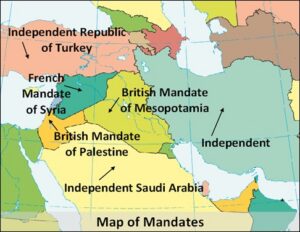
The ongoing conflict in Israel and Gaza shows no sign of ending. Members of the Australia Defence Force (ADF) have operated in this region, often termed the Levant (which includes Syria, Lebanon, Palestine, Israel, and Jordan) since 30 June 1956 as part of the UN Truce Supervision Organization (UNTSO). Members of the Australian Federal Police have been part of the United Nations Peace Keeping Force in nearby Cyprus since 1964.
Additionally, ADF personnel deployed to Egypt and the Sinai as part of United Nations Emergency Force in the late 1970s and the Multi Force Observers (MFO) in the early 1980s.
The MFO is an ongoing deployment for the ADF. Australian soldiers, mainly the Australian Light Horse, and the RAN Bridging Train, served in the region during 1916-19; thus, Australians are familiar with the region. There is however another group of Royal Australian Navy personnel who served in the region, in the late 1930s, as part of the British forces trying to maintain stability in an area that has seen little peace.
New status quo
Following the end of the Great War, and the defeat of the Ottoman Empire, the area known as Palestine was allocated to Great Britain to control (under a League of Nations mandate arising from the 1922 San Remo Conference). This mandate authorized the British Government to administer the areas of the former Ottoman Empire until such time that these areas could manage themselves.
Throughout the 1920s and 1930s, the Jewish population in the region increased from about 50,000 to well over 300,000 and tensions between the Jews and Arabs increased. By mid-1936 organized violence and strikes were common place.
During 1936-39 Royal Navy ships operated off the coast of the Levant during what was known as the Great Revolt; which saw Palestinian Arabs demanding independence and an end to Jewish migration to the region. British troops and Palestinian police undertook operations on land to keep the peace, while the Royal Navy warships undertook patrols to stop the importation of weapons, ammunition and explosives, as well as preventing the illegal migration of members of the Jewish faith to the region. During the same period Iraqi oil was piped to Haifa where it was refined and supplied to the Mediterranean Fleet. The Royal Navy also augmented the British troops ashore with Royal Marines and naval personnel from the ships in the area.
Australian personnel
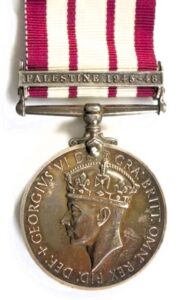
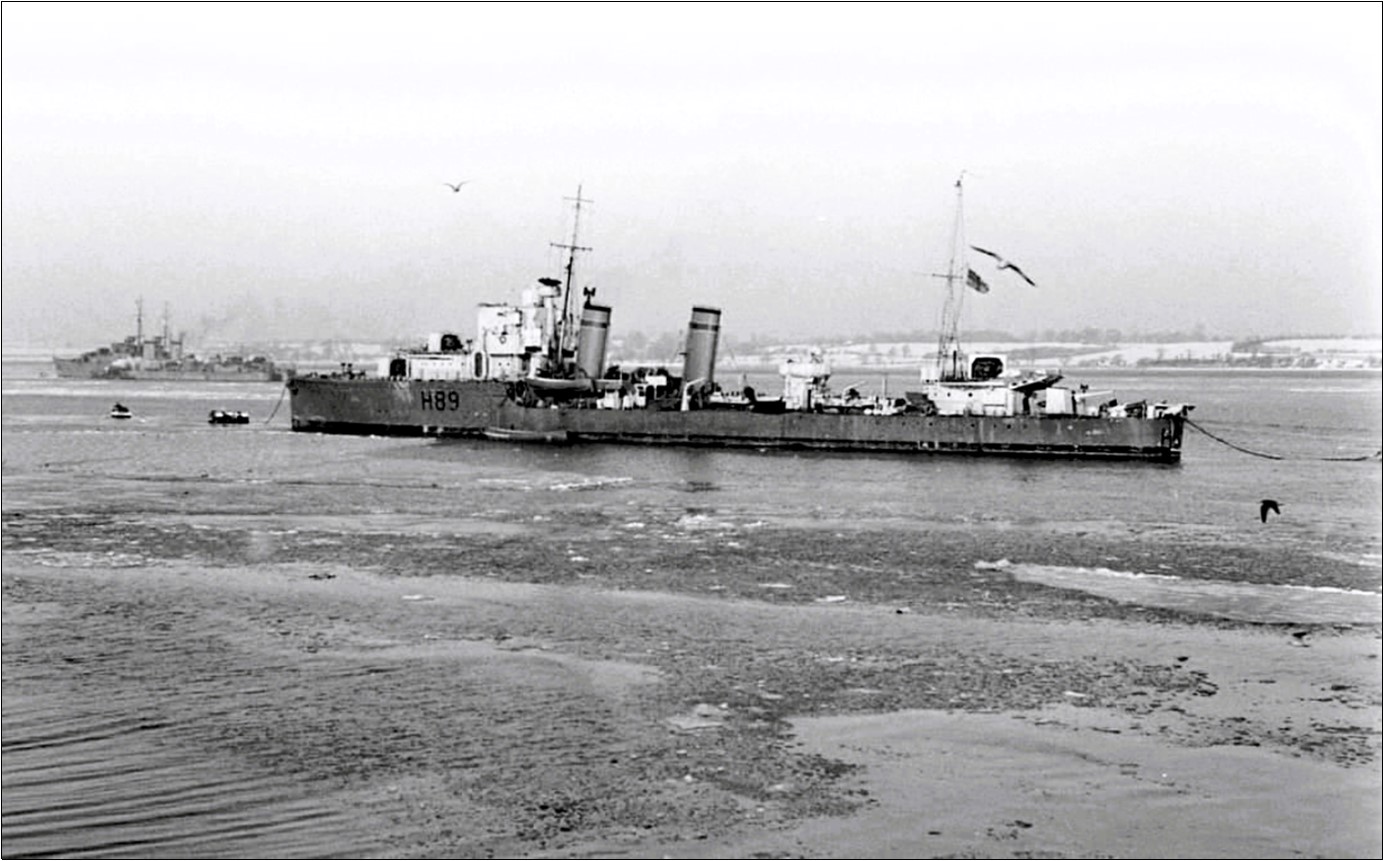
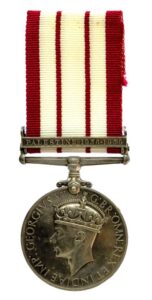
While RAN warships operated in the Mediterranean, on exchange with the Royal Navy, during this period none operated as part of the force off the Levant. There were however RAN officers serving in Royal Navy warships patrolling along the coast and some even served ashore in Palestine. A total of 19 RAN officers served in this region during 1936-39 and were subsequently awarded the Naval General Service Medal with clasp Palestine 1936-1939.
Midshipman Ian Cartwright and Midshipman Robin ‘Dusty’ Millar graduated from the RAN College in 1937 and in 1938 served in the cruiser HMS Grafton for six months.
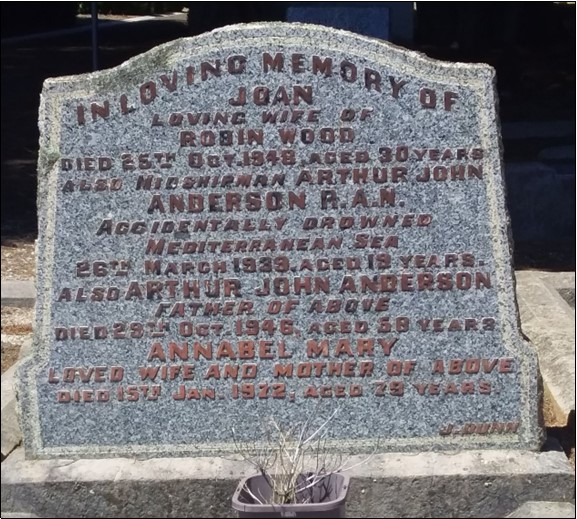
Cartwright recalled his ship serving for two months off the coast of Palestine, in the vicinity of Haifa, to prevent illegal landings by Jewish refugees (Grafton did not intercept any refugees according to Millar). Midshipmen Arthur John Anderson, Anthony Cooper and Walter Graham Wright served in the battleship HMS Malaya for a month off the coast of Palestine. Cooper later recalled the highlight of his time was commanding a road convoy into the countryside and then spending three weeks in camp, with other officers and a group of Royal Marines, guarding Lydda station (in the Centre of Palestine and now 15-kilometres southeast of Tel Aviv).
Tragedy
Midshipman Anderson sadly drowned in a boating accident off southern France on 26 March 1939; his body was recovered and he was buried ashore in southern France.
Midshipman Walter Graham Wright recalled in his memoirs:
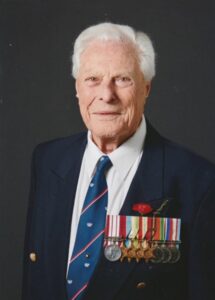
On 22 August 1938 HMS Malaya arrived at Haifa to relieve HMS Repulse and take part in the military control of Palestine. The main duty involved using sailors in an ‘aid to the civil power’ role in that traditionally they are here today and gone tomorrow. This made it easier for them to be more impartial than the soldiers who came to be identified, rightly or wrongly, more with one side or the other in a local dispute – not that it was easy for us to sort out who was whom in these particular circumstances.
The ships, men and Royal Marines provided armed parties to cope with emergencies requiring field tactics, mortar crews, lorry drivers, guards and demolition parties. My particular function was in one of the search parties looking for weapons and explosives. Providing we acted as though we meant business our presence served to deter those who may have been persuaded to take up arms against us.
We won some and lost some: Once, I was reliably informed that two revolvers would be handed over to men required to carry out some special tasks and that this would be done at prayers. Setting up surveillance operations on all the mosques through the day was a fairly formidable task; allowing for the fact that devout Muslims offer up prayers on at least eight separate occasions daily. This kept me and my search party fully occupied – particularly as it achieved nothing. I often wonder what really changed hands somewhere else. I have no doubt we were set up.
On another occasion, midshipman Wright was closer to the action: During a house search in an Arab settlement where there had been difficulties, a pipe bomb was thrown over the fence; fortunately, it failed to explode – but it made life difficult for the residents who had a hard time convincing us that they were not involved.
After a month ashore the men from Malaya were relieved by another Royal Navy warship. Midshipman Wright departed via an armoured train from Lyyda station to the port. During the transit he looked out through the many bullet holes in the carriage thinking that a bullet would not go through the same hole twice! Wright went on to serve during the Second World War and retired as a captain in 1962. He passed away in 2018, aged 98.
Other officers
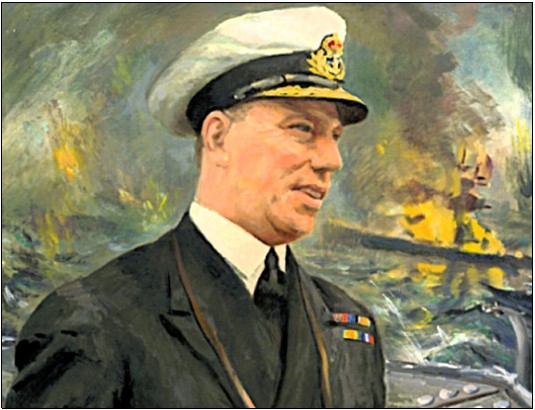
Others serving in the region included Captain Charles Farquhar-Smith, a veteran of the Great War who had survived the sinking of the cruiser HMS Aboukir in August 1914. He commanded the cruiser HMS Delhi from October 1936 to March 1938 during which time the cruiser conducted patrols off the Levant. Farquhar-Smith was later promoted rear admiral on the retired list.
Commander Henry Arthur Showers was the executive officer (second in command) of the light cruiser HMS Arethusa during 1935-36. Showers was a graduate of the inaugural 1913 entry to the RAN College and also retired with the rank of Rear Admiral.
Several of the Australian officers who served in Royal Navy ships off the Levant later lost their lives during the Second World War. These included Commander Hector MacDonald Laws Waller, who served in the destroyer HMS Brazen during 1937-38, and later commanded the light cruiser HMAS Perth; he was killed in action when the cruiser was sunk at the Battle of Sunda Strait on 1 March 1942.
Midshipman, later Lieutenant, David John Sutton served in HMS Repulse and HMS Hood during 1938-39 and was killed when Perth was sunk. Midshipman William Lindsay Gay also served in Repulse (during 1937-38) and then in HMAS Perth as a lieutenant; he survived the sinking of the ship and another 3 ½ years as a prisoner of war of the Japanese.
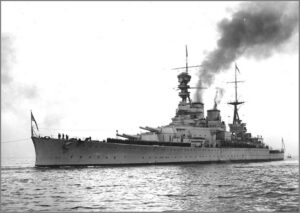
Lieutenant Commander William Thomas Alldis Moran served in the light cruiser HMS Despatch during 1936. He was killed in action on 9 April 1942 while aboard the destroyer HMAS Vampire, when the ship was sunk off Ceylon by Japanese bombers. Midshipman Thomas Garton Brown served in the cruiser HMS Sussex in 1938 and by 1941 was a lieutenant; he was killed in action when the light cruiser HMAS Sydney was sunk, with her entire ships company of 645 men, in the action with the German raider Kormoran on 19/20 November 1941.
Lieutenant Rupert Cowper Robison served in the battle-cruiser Repulse during 1936-38. He was later the commanding officer of the destroyer HMAS Voyager when the ship ran aground on Betano Beach, Timor while attempting to land Australian soldiers on the Japanese occupied island. The ship could not be re-floated and was destroyed by explosive charges set off by the crew, and also by Japanese air attack. Robison was subsequently medically discharged from the RAN with post-traumatic stress disorder.
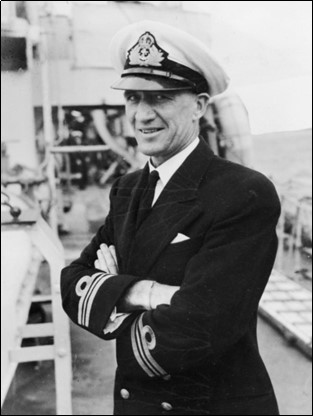
The other RAN officers who served on the Levant patrols were Lieutenant Commander Robert John Vere Hodge in the destroyer HMS Inglefield, Lieutenant Commander John Plunkett – Cole in the heavy cruiser HMS Sussex, Lieutenant Commander James Kenneth Walton in the battlecruiser Repulse, Lieutenant Gerald Chester Carter in the destroyer HMS Havock, Lieutenant Arnold Green in the destroyer HMS Daring,Lieutenant Rodney Rhoades in the battleship HMS Malaya Midshipman Allen Nelson Dollard in the Galatea, midshipman Anthony Hawtrey Cooper in the Repulse, Midshipman Thomas Richard Fenner in Repulse, and Midshipman Ian Hepburn-Scottland Cartwright and Midshipman Robin Angus Harvey Millar who both served in the destroyer HMS Grafton, the cruiser HMS Sussex and the battleship Malaya for a total period of six months and Midshipman Jack Robertson McMurray who served in Repulse.
The outbreak of the Second World War, in September 1939, saw a dramatic decrease in Jewish refugees migrating to Palestine as the Mediterranean region became a war zone and more British troops deployed to the region to counter Italian and German aggression.
Post-war
The end of the war however saw a significant resurgence
in violence between Arab and Jew, and British naval patrols re-commenced to prevent the importation of weapons and the un-controlled migration of Jewish refugees; many of them holocaust survivors from Europe.
Only one RAN officer is known to have taken part in these post-war operations; Lieutenant Raymond Douglas Green, serving in the destroyer HMS Milne during the period 14 August 1945 to 3 May 1946. He was subsequently awarded the Naval General Service Medal with Palestine 1945-48 clasp and is the only known member of the RAN to receive this medal.
The state of Israel was proclaimed on 14 May 1948 and British forces withdrew from the Levant, however fighting between both warring parties has continued to this day and regrettably there appears to be no end in sight.