- Author
- Editorial Staff
- Subjects
- Ship design and development, Royal Navy
- Tags
-
- RAN Ships
- None noted.
- Publication
- December 2024 edition of the Naval Historical Review (all rights reserved)
In terms of Autonomous Vehicles, thoughts turn to new initiatives stemming from recent technology which significantly reduces manpower requirements and in the case of the armed forces also reduces potential casualties. However, a little research shows that Britain, France and Germany were all involved in similar programs more than a century past and were actively building autonomous vehicles during the First World War. This paper concentrates on one such initiative as information is readily available, and remarkably a vessel from this era still exists.
They Showed Initiative
Dale (1980) informs us that in 1915 three young naval officers from the Harwich Destroyer Force (LEUTs Geoffrey Hampden, Bill Bremner and a New Zealander, Eric Anson) conceived the idea of a fast motor boat capable of ferrying a torpedo, to be carried in the davits of a cruiser and then launched to carry on under its own power through enemy minefields (helped by its low draught) to attack their bases.
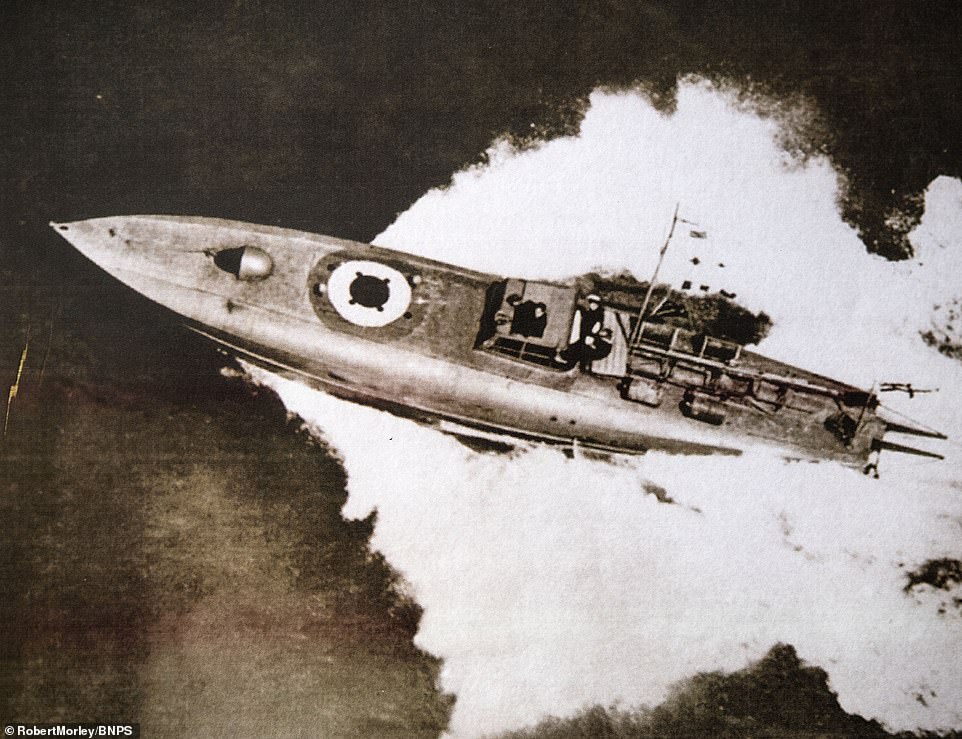
The Commodore of the Harwich Force authorised these officers to approach the well-known shipbuilder Thornycroft with their plans. This initiative was given full support and within one year led to the Admiralty placing an order for 12 boats to be built with immediate priority.
Possibly the smallest naval vessels that have passed through the ordeal of battle are Coastal Motor Boats (CMBs) which evolved from the Thornycroft designs. The Admiralty insisted on the greatest secrecy, so that the enemy would be taken by surprise. The engines were specially designed and the torpedo gear and fittings built by Thornycroft. The boats were built on an island in the Thames without exciting unwelcome curiosity. Three boats were ready in April 1916, and the Southern Railway Company’s pier near Sheerness, at the mouth of the River Medway, was the secret base. For some time, the officers who had volunteered for service in the CMBs lived on the pier, and the boats were so secret that most of the runs necessary for training were made after dark.
Boats and Crew – The Suicide Club
The first boats were just 40 feet long, being the smallest possible hull size that would carry a Whitehead 18-inch torpedo, weighing three quarters of a ton. If necessary depth charges could be loaded in lieu of the torpedo. These were lightweight wooden craft of double diagonal mahogany construction, with a single screw propeller driven by a 12-cylinder engine of the aviation type developing 250 hp at 1600 revolutions, giving a maximum speed when fully loaded of 34 kts. A fuel tank with 100 gallons of aviation spirit was installed in the cockpit beneath the COs seat. They were designed to skim across the water, fire their torpedo at close range, and then race away. In practice their attrition rate was high.
The crew usually consisted of two officers supplemented by an Engine Room Artificer (ERA). Officers were expected to know every detail of the engines as well as of the hulls, and spent some time watching the engines being built. As men in the artificer branch of the Navy were not accustomed to motors of the aeroplane type, artificers and engineers had to be specifically trained. A drawback was that the engines were very noisy, making an undetected attack upon the enemy difficult. The crew were kitted out similar to aviators with leather helmets and gloves and goggles providing the only protection against ice-cold water and blinding spray.
Training was strenuous – learning to handle boats in the dark at over thirty knots, to discharge torpedoes, perform complicated manoeuvres and avoid sister craft. The twenty-four officers who volunteered for the original twelve boats were enthusiasts. LEUT Hampden was the original officer in charge, and after training was complete a base was established at Dover, becoming part of the Dover Patrol. He was assisted by LEUT Erskine Childers RNVR joining as Flotilla navigator because of his knowledge of the German coast. With no guidelines the crews had to be trained from scratch and were known as the ‘Suicide Club’ because of the perilous nature of their work.
Deployment
By the end of 1916 four boats were sent to an advanced base at Dunkirk, on the French coast; these were known as the 3rd Coastal Motor Boat Division commanded by LEUT W.N. Beckett. On 7 April 1917 the 3rd CMB Division attacked a group of German destroyers anchored off Zeebrugge with one enemy ship sunk and another damaged. Beckett was awarded the DSC.
CMB 1 saw action in 1917 at Zeebrugge during one prolific mission accompanied by CMB 9. Both vessels were on the Dover patrol and went to the rescue of pilots who were shot down ten miles off Nieuport, when they came under attack by four German torpedo boats. CMB 1 took a direct hit and was blown up, but CMB 9 escaped unscathed.
One of the greatest threats to the CMBs was from enemy aircraft. An enemy seaplane with superior speed could swoop down and rake the craft with machine gun fire. In their defence they carried a Lewis gun on a swivel mount and could lay a smokescreen. But in the summer of 1917 six CMBs were attacked from the air in the North Sea when two vessels were lost and the remainder made for neutral Holland. Here the crews were interned and not released until the end of the war.
In his critique of Coastal Motor Boats Admiral Bacon (Bacon 1919) notes the raids on Ostend and Zeebrugge and said they possessed great potential, praising the enthusiasm of their crews, but was unimpressed by their poor sea-keeping qualities and thought of them as ‘work in progress’. His extensive volume contains a short poem; the first verse possibly neatly summarises the Admiral’s thoughts:
Smallest of our fighting craft, swiftest of the small,
Engines of three hundred horse and forty over all,
Swishing, seething through the sea and dashing through the night,
Three stout hearts and active brains centering on a fight.
Distance Coastal Boats
In 1918 CMB 9, one of this flotilla, was redesigned as a Distance Coastal Boat (DCB 1), an unmanned vessel carrying a torpedo, to be controlled remotely from the air and directed towards enemy targets. To this end the vessel was re-engineered with twin screw propulsion, bilge keels and radio masts fitted, plus a small bridge with radio controls. This type of control was tested successfully. As DCB 1 was fully operational when completely unmanned she was the first known autonomous vessel in Britain and possibly the world. Eclersley (2019) comes to a similar conclusion calling her a remotely-piloted boat that was the world’s first-ever drone.
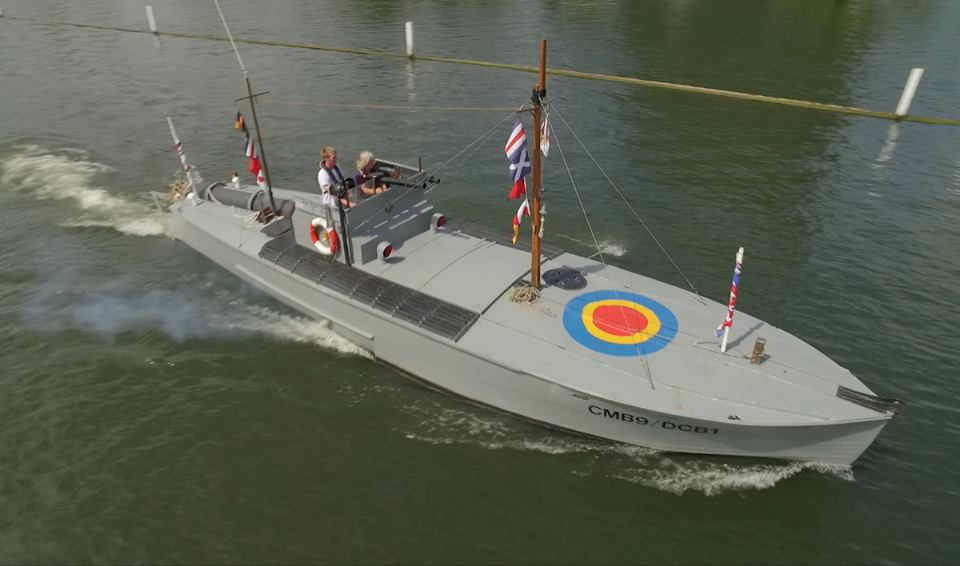
During trials in March 1917 using Royal Flying Corps aircraft it was found that one aircraft could operate two DC Boats and in trials in 1918, up to eight DCBs could be controlled in close formation. The aircraft could successfully control the boats when flying up to 16,000 feet and out to a range of five miles. At the conclusion of these trials DCB 1was converted back to her original configuration.
Unlike the vessel’s role as CMB 9, little is known about DCB 1 and to date, this remains classified. However, it is known that the torpedo could be controlled by firing off the stern, control was via aircraft and wireless control. Speeds were 40 knots which made it a hard target to hit. DCB 1 remained in service with the Royal Navy until the early 1950s and it is believed that there are no other surviving DCBs.
The Operators
The Coastal Motor Boats usually operated with a crew of two, a commander and an engineer. These must have been a special type of individual, fearless and yet remaining coolheaded under extreme pressure. The commanders appear to have been junior RNR offices and the engineers were RN artificers. We know the background of one commander of CMB 9 – Peter Harold Drew, son of Charles and Jean Drew from Oswestry in Shropshire. Born on 15 March 1895, Peter attended the local grammar school and later the nautical training college HMS Conway. From Conway he entered the Merchant Navy as a cadet and in 1913 joined the RNR as a midshipman, serving in the Armed Merchant Cruiser HMS Mantua (ex P&O passenger liner) serving in Atlantic and North Sea patrols.
In September 1915 Peter Drew was a sub lieutenant serving in the destroyer HMS Lance and was granted a permanent commission in the Royal Navy on 29 January 1916. It was at about this time he was seconded for training with the Coastal Patrol Boat Squadron of 12 vessels, then based at Osea Island on the River Blackwater in Essex. Osborne (2015) says: ‘Because of meritorious service in command of the coastal motor boat CMB 9 off the French coast, for which he was awarded the Distinguished Service Cross on 12 May 1917, he was promoted to Acting Lieutenant on 15 November of that year. Drew then joined the battleship Emperor of India which was part of the Grand Fleet based in Scapa Flow’.
Also assigned for training in the Coastal Motor Boats as of 4 June 1916 was another RNR officer, SBLT Archibald Dayrell-Reed. Two years younger than Drew but with a similar background, he had first served with the New Zealand Shipping Company before joining the RNR on 29 September 1914. Dayrell-Reed was awarded the DSO for action on 8 April 1917 and later a Bar to this decoration whist serving in CMB 24 at Zeebrugge in April 1918: he was tragically killed in another successful CMB action in Kronstadt, Russia on 18 August 1919.
The following information on operations conducted by the Coastal Patrol Boats has been pieced together.
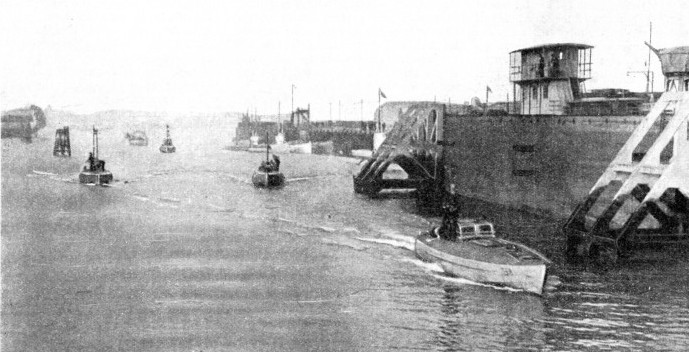
In the early hours of 8 April 1917 while off Zeebrugge four British Coastal Motor Boats CMB 1, 4, 6 and 9 attacked four German torpedo boats. CMB 9 hit and sank the German boat G88 – this was the first British success with Coastal Craft. G88 went down just after midnight – 00.15 hrs with the loss of 18 men.
Again on Tuesday 19 June 1917, CMB 1 and CMB 9, of the Dover Patrol, commanded by a Lieutenant RNR, were sent to investigate the loss of British aircraft off the Flanders coast. That morning a Dunkirk-based Short 184 seaplane, with two escorting Sopwith Baby seaplanes, took off to carry out a reconnaissance of the Belgian coast. Ten miles NE of Nieuport they were attacked by three German seaplanes. One German and the two Sopwith aircraft came down. A French destroyer and CMBs 1 and 9 sailed to rescue the pilots. Four German torpedo boats of the Flanders flotillas arrived on the scene first. CMB 9 escaped, but CMB 1 took a direct hit, and blew up off Ostend with one rating lost, possibly drowned, and four aircrew taken prisoner, with no lives lost. Thereafter, air-sea rescue missions were abandoned if Allied aircraft crashed too close to the enemy coast.
Victoria Crosses for CMB Actions
The two most famous actions concerning CMBs arose out of Great Britain’s attempt to curb Russian bolshevism in the aftermath of the Great War. A small base for the Royal Navy had been established in Finland from where agents could be ferried into Russian territory using fast CMBs. LEUT Augustus Agar in overall command of CMBs 4 and 17 on one of his night patrols entered the great Russian fleet port of Kronstadt and on 17 June 1919 attacked and sank the cruiser Oleg.
CMB 4 was recovered and is on display at the Imperial War Museum. From this display we know that the boats with torpedo rails are not 40 feet but 44 feet.
In a further action only two months later on 18 August 1919 also at Kronstadt, CMB 88 was under command of LEUT Beckett when the boat was illuminated by searchlight and then hit by gunfire when Beckett was killed. His 2/IC LEUT Gordon Steele assumed command and pressed on with the attack and torpedoed and severely damaged the battleship Andrei Pervozanny. Both Agar and Steele were awarded the Victoria Cross for their heroic actions.
Less well known are the exploits of another flotilla in the landlocked Caspian Sea which lasted from January toSeptember 1919, to protect Britain’s oil
interests and contain potential bolshevik threats from spreading to India. A shipment of 12 CMBs (55 footers) was made to Batumi in the Black Sea, and then overland by rail to Baku on the west coast of the Caspian Sea. Two merchant ships were equipped as CMB carriers, and in an early success four destroyers surrendered after witnessing the explosive power of depth charges. Later an attack by CMBs on the eastern shore of the Caspian Sea resulted in the destruction of more Russian vessels, including submarines and a seaplane.
Coastal Motor Boats – Built Up, Phased Out
Royal Naval records indicate that from the initial group of 12 CMBs built in 1916 CMBs 1, 8, 10 and 11 are mentioned as war losses. CMBs 9 and 12 are listed as having lasted up until 1933. CMB 4 is specifically listed as being preserved in the Imperial War Museum. CMBs were retitled as Motor Torpedo Boats on 14 January 1936.
During WWI and its aftermath, the number of Coastal Motor Boats built by the RN greatly increased. In total, 41 of the original 40-foot variant were built, followed by 88 of the 55-foot variant and ending with 14 of the 70-foot, in total 143 boats. Faced with the need for huge reduction of expenditure the RN phased out many of the original Coastal Motor Patrol Boats in the early 1930s but DCB 1 was retained for use in experimental work and based at Portland. There are conflicting stories as to her future but one says that in the mid-1930s she was bought by the famous land and water speedster Sir Malcolm Campbell but later seems to have been used as a pleasure craft until about 1970 when she was laid up.
Her current owners are marine surveyor Robert Morley and his wife Terri. They discovered the boat in 2009 lying derelict, covered in brambles and left to rot in a boatyard in Weston-Super-Mare where she had been unloved for the past 40 years and was on the verge of being broken up. As Robert had already restored a 55-foot version, MTB 331, he recognised the historic significance of this vessel and had her transferred to Avonmouth where she has been restored with the hull completely stripped and re-decked and engines overhauled to return her, as far as possible, to her original configuration. Robert has discovered that she was designed all those years ago to pump out bubbles underneath her hull to aid buoyancy, a technique now being used by some cruise ships. She took part in the 2014 Remembrance Day events at Bristol and is now held on the National Historic Ship’s Register (NHSR).
The latest sad news from the NHSR is that the owner of CMB 9/DCB 1 Robert Morley, who lived at Coalpit Heath outside Bristol, died in 2019 aged 70, and there are no further details of current ownership.
Summary
The forty-foot CMBs provided a successful launching pad resulting in the introduction of larger and faster craft capable of carrying two torpedoes. They were a deterrent to major warships and their flexibility and economy was fully demonstrated immediately post-war in the Baltic campaign. Following their successful contribution in the First World War, a new era developed in the Second World War with Motor Torpedo Boats known to most major naval forces.
As for their crews, these pioneers were a special breed of men: brave, resourceful and resilient. Their exploits earned them two DSCs, two DSOs, one CGM and two VCs, a resounding tally for a small band of brothers. And it was through their exploits that the world’s first autonomous vessel was created.
References:
Aldom, Helen, The Restoration of CMB9/DCB1, Topmast – The Quarterly Newsletter of The Society for Nautical Research, May 2015.
Bacon, Admiral Sir Reginald, The Dover Patrol 1915-1917 Vol 1, Hutchinson & Co, London, n.d.(1919).
Denis, A.L.E., Coastal Motor Boats – 1916, Naval Historical Review, Sydney, March 1980.
Eclersley, Phoebe, Remotely-Piloted Boat, Mailonline, 13 August 2019.
Stanford Terry, C., Ostend and Zeebrugge, April 23 to May 10, 1918, The Dispatches of Vice Admiral Sir Roger Keyes, Oxford University Press, 1919.