- Author
- A.N. Other
- Subjects
- Ship histories and stories, WWII operations, History - post WWII
- Tags
-
- RAN Ships
- None noted.
- Publication
- December 2024 edition of the Naval Historical Review (all rights reserved)
By Walter Burroughs
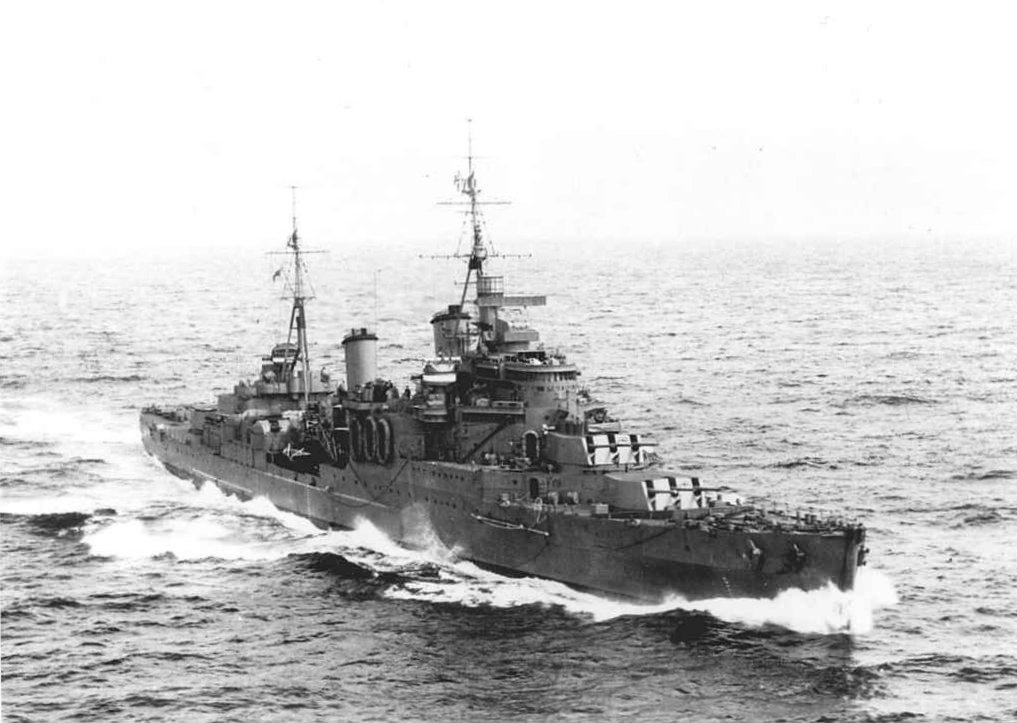
Visitors to London flock to see an ancient Tower safekeeping the Crown Jewels; close by is the famous Tower Bridge and just beyond, moored safely in the Thames, is the cruiser HMS Belfast, emphasising Britannia and her mastery of the seas. Lost in the mists of time, you are unlikely to find mention of a sister ship, HMS Manchester, and this is her story, which is important to those aspiring to command with its privileges and perils.
Town-class cruisers were conceived in 1933 in answer to the Japanese Mogami-class, thought superior to existing Admiralty designs – and this would never do. The mainstay of British cruisers at this time was the Leander class, used by Australia with HMA Ships Hobart, Perth and Sydney and over the Tasman HM Ships (later HMNZS) Achilles and Leander.
The Towns comprised ten ships built in near record time. The first, HMS Newcastle, commissioned on 5 March 1937, HMS Manchester the seventh on 4 August 1938 and HMS Belfast the ninth on 5 August 1939. The ships varied slightly and grew in length, breadth and displacement as changes were made to improve anti-aircraft armament and incorporate radar systems.
HMS Manchester main characteristics
Length 591 ft 6 ins (180.3 m)
Beam 62 ft 4 ins (19 m)
Draught 20 ft 7 ins (6.3 m)
Engines 4 x steam turbines, 82,500 SHP
Speed 32 knots max
Range 6000 nm at 14 knots
Armament 12 x 6-inch guns in four triple-turrets
8 x 4-inch guns in twin mounts
2 x 2 pdr AA guns
2 x quad AA machine guns
2 x triple 21-inch torpedo mounts
Complement 815 officers and men.
The Towns lacked full-length waterline armour, although the boiler rooms, engine rooms and magazines were protected by 4.5 inch (114 mm) armour and the top of the magazines and machinery spaces and main gun turrets were also armour plated. The ships were designed to carry three Supermarine Walrus amphibious reconnaissance aircraft but only two were carried. Modifications made during her service resulted in the machine guns being replaced by 40 mm Bofors and 20 mm Oerlikons as well as the installation of search and early warning radar and ASDIC systems.
Manchester was built by Hawthorn Leslie at Hebburn-on-Tyne, launched on 12 April 1937 and commissioned on 4 August 1938. After acceptance trials and workup, she deployed to the East Indies Station and when WW II began she escorted convoys in the Indian Ocean but was soon ordered home to enforce the German blockade and thence partake in the Norwegian campaign. In March 1940 she escorted a convoy through the Mediterranean and was involved in the indecisive Battle of Cape Spartivento. After refitting in early 1941 she then conducted Arctic patrols.
The Commanding Officer – Captain Peter Harold Drew DSC RN
Peter Drew was born to wine merchant Charles Dean and his wife Jean in Oswestry, Shropshire on 15 March 1895; he attended the local grammar school and the nautical training college HMS Conway and served as a cadet in the Merchant Navy. On 1 July 1913 he joined the RNR and served as a midshipman aboard the Armed Merchant Cruiser HMS Mantua(ex P&O liner) conducting Atlantic and North Sea patrols. On 29 January 1916 he transferred to the RN and as a sub lieutenant volunteered to join the newly formed Coastal Motor Boat (CMB) flotilla then starting operations with the Dover Patrol. Here he had a particularly adventurous time and on 12 May 1917, at only 21 years of age, he was awarded the DSC for meritorious service in command of CMB 9 and the sinking of an enemy destroyer. Drew went on to specialise in gunnery and was an instructor at HMS Excellent with numerous staff appointments interspersed with seagoing service. While he served as Executive Officer he did not achieve any further commands until promotion to captain at 44 years of age. On 4 June 1941 Captain Peter Harold Drew DSC RN was appointed in command of Manchester.
The Mediterranean Campaign
Allied forces in the Mediterranean relied principally of bases at Gibraltar to the west, surrounded by neutral Spain, Malta in the midst of a seaway dominated by Italy, and to the east Alexandria in British controlled Egypt. Providing reinforcements to Malta was becoming increasing difficult as German and Italian aircraft dominated the skies and the Italian fleet become more belligerent.
Following success against Italian troops in North Africa in March 1941, Allied (mainly Anzac) forces were sent to Greece to support that country against an anticipated Italian invasion. With the Italians being held back by determined Greek resistance, Germany came to the aid of its Axis partner and quickly gained ascendency, driving Allied forces into retreat. By the end of April 1941 British and Anzac forces were being evacuated from mainland Greece to Crete and Egypt.
In June 1941, in a short but hard-fought campaign a German airborne invasion of Crete resulted in yet another evacuation of British and Anzac forces to Egypt. The successful German invasion of Greece and Crete led to an assumption that a similar attack would soon follow on Malta, calling for substantial reinforcement of troops and equipment to the island.
To the end of 1940 a total of 21 merchant ships had provided supplies to Malta, building up six months of reserve. From January 1941 to August 1942 a further 46 merchant ships and 31 small supply runs by submarines and fast minelayers were made to the island. With increased enemy resistance more than half (25) of these surface ships were sunk. This created a grave deficiency of supplies to the garrison supporting air, sea and submarine forces and the important civilian population.
While there were numerous Malta convoys we shall only concentrate on two of these, both involving Manchester. The first, OPERATION SUBSTANCE, occurred in the summer of 1941 and a year later in the summer of 1942, the second, OPERATION PEDESTAL, gained world-wide attention.
OPERATION SUBSTANCE 12 – 28 July 1941
On 12 July 1941 an escorted convoy (GM1) of seven merchant ships left the Clyde with stores and 5000 troops and RAF personnel bound for Malta; they proceeded well into the Atlantic before passing through the Strait of Gibraltar on the night of 20-21 July. The escort now comprised one aircraft carrier (HMS Ark Royal) one battleship (HMS Nelson) one battlecruiser (HMS Renown) four cruisers (including Manchester) and 18 destroyers, including HMAS Nestor, plus limited air cover from Ark Royal and Maltese based squadrons. On the return voyage it was intended to bring out another convoy (MG1) of seven empty merchant ships which had been trapped in the island.
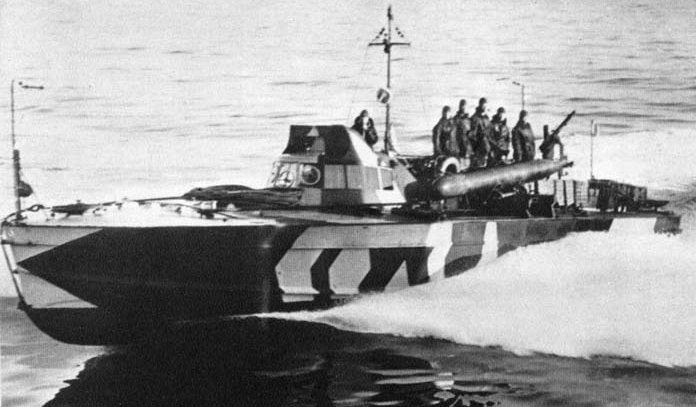
OPERATION SUBSTANCE benefited from the German invasion of Russia which began on 22 June, taking the bulk of the Luftwaffe away, but this still left 200 Italian aircraft based in Sardinia and Sicily to contest the convoys. Allied intelligence informed that the considerable Italian Fleet was then divided between Taranto, Palermo and Messina with the Mezzi d’Assalto (known as MAS boats) at Pantelliera. The English equivalent of MAS is Motor Torpedo Boats (MTBs): the Italian version with two 18-inch (450 mm) torpedoes carrying a warhead of 440 lbs (200kg) of TNT was a dangerous close-range adversary. In lieu of torpedoes MAS boats could carry 20–30 mines.
To distract the enemy, eight Royal Navy submarines patrolled off the Italian naval ports where they harassed merchant ships and damaged one cruiser. In addition, as another distraction the British Mediterranean Fleet based at Alexandria sailed westward on 22 July, which was noted by enemy scouting aircraft, but turned around two days later and headed for their home port.
Convoy GM1 was first sighted by enemy aircraft on 22 July and at 9.15 am the next morning was subject to high level bombing and low-level torpedo attacks. These resulted in the destroyer HMS Fearless being torpedoed and sunk with survivors taken off by another escort. A short while later Manchester was similarly attacked and critically damaged by an air-launched torpedo. The after engine room and some magazines were flooded and abandoned, the ship lost steerage, the use of X and Y turrets and part of her 4 inch AA armament, and listed 12 degrees to port. At this stage Manchester was heavily loaded with 700 troops aboard in addition to her wartime complement. From these naval and military personnel 35 men were killed, three were missing and seven wounded.
After regaining emergency steerage Manchester proceeded slowly ahead and was detached under escort of a destroyer. making for Gibraltar. Following further reduced air, MAS, and submarine attack the two ships arrived off Gibraltar in the early hours of 26 July and later that day Manchester was placed into dry-dock for emergency repairs.
The remainder of the convoy was subjected to further attacks in which one destroyer and two merchantmen were damaged and six Allied aircraft were lost but the convoy reached Malta successfully. Nestor came to the aid of the badly damaged merchantman Sydney Star which was in danger of sinking, transferred 470 troops and then escorted Sydney Starinto Malta. On this occasion the main Italian fleet could have done considerable damage, but thankfully did not venture out of port. Of the seven empty merchantmen trapped in the island, six escaped successfully and returned to Gibraltar on 24 July.
Patched-up Manchester left Gibraltar for permanent repairs at the Boston Naval Yard in the United States where she arrived in early September 1941 and remained for five months. Extensively repaired and with her radar and anti-aircraft gunnery systems upgraded she was back in operational duty in home waters in February 1942 and spent the next month patrolling in the North Atlantic. But after providing support to the disastrous Russian convoy PQ17 these convoys were suspended and ships could then be spared for another last chance in providing support to the now almost starving Maltese.
OPERATION PEDESTAL 03 – 15 August 1942
By mid-1942 the war was not going well for Britain. Disastrous withdrawals from Dunkirk and Norway, tragic losses to Russian convoys, the Greek fiasco and the humiliating surrender of Singapore had left a sense of despondency. In the Mediterranean the bastion provided by the island of Malta still held, but at what cost? The island was now severely depleted of resources with the Axis strangulation cutting off supplies and this meant that if food, fuel and munitions were not replenished by September 1942 surrender was inevitable. Against this Churchill considered that the loss of Malta would be a political disaster and fatal to the defence of Suez. Consequently, plans were drawn up for OPERATION PEDESTAL, one of the largest naval and air battles of the war.
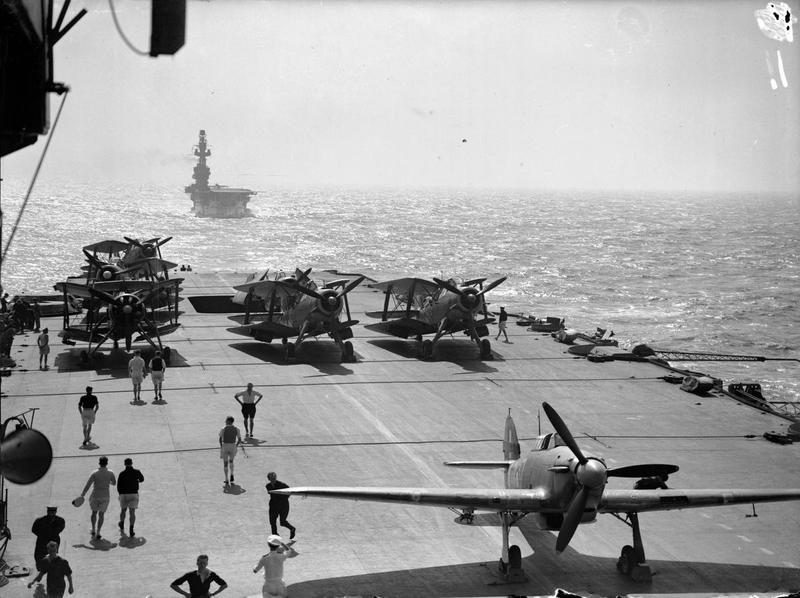
An unprecedented concentration of Allied naval strength was prepared to break through the Axis cordon and shield a relief convoy of 14 modern fast merchant ships. This was achieved through a temporary suspension of Russian convoys and as the Japanese had been halted at Midway, naval forces were withdrawn from these theatres. This mighty fleet comprised two battleships (HM Ships Nelson and Rodney) three carriers (HM Ships Eagle, Indomitable and Victorious) with 72 fighters and 28 torpedo bombers; a fourth carrier (HMS Furious) flew off 38 Spitfires of which 37 reached Malta; seven cruisers (including Manchester), 32 destroyers, 15 minor war vessels, eight submarines and three fleet oilers.
A major naval force to accompany the relief convoy was drawn up at Scapa Flow on 2 August 1942, sailing that evening to rendezvous with their merchant charges which had assembled in the Clyde. Providing a false scent, the convoy was numbered WS 21S, normally a numbering system designating convoys bound for Suez via the Cape. This remarkable convoy of 14 merchantmen was ultimately supported by more than 70 warships and submarines involved in all phases of the operation, but only about 50 ships made their way through the Strait of Gibraltar and into ‘Bomb Alley’ to deliver precious supplies to the besieged garrison. Should they fail, the island would be forced to surrender.
Shrouded in dense fog, PEDESTAL ships passed through the Strait in the early hours of 10 August and the next morning they were able to refuel at sea. Later in the day the fleet was discovered by an Italian submarine which failed in its attack but was able to send a radio message giving the position of the Allied ships, resulting in continuous aerial reconnaissance.
The Axis High Command was confused by this important fleet, clearly not proceeding to its advertised route to the Cape and Suez. It seemed too large just to support Malta, so was it part of an invasion force making for the north African coast, or possibly for the reconquest of Crete? It took a while for the High Command to work out a response with available, mostly Italian, naval resources. This was basically to attack with submarines in the initial phase, and then with torpedo boats and mines when approaching the narrows between north Africa and Sicily, and finally with two cruiser divisions on nearing Italy and Malta. When within range the convoy would also be attacked by Axis aircraft, of which about 250 bombers and fighters were available.
On 11 August, before the convoy encountered serious air attacks a devastating torpedo attack by a German U-boat sank the carrier Eagle within eight minutes, with the loss of 230 of her crew and all but four of her 16 Hurricanes.
The next morning the attacks intensified and in the early afternoon the carriers Indomitable, Victorious, one destroyer and one freighter suffered damage; as a result Indomitable was no longer able to operate aircraft and was virtually useless. The damaged destroyer was scuttled and as she passed close inshore the damaged freighter was sunk by an MAS boat.
That evening came another blow with Italian submarine attacks made on the cruisers HM Ships Cairo, Kenya, Nigeriaand the tanker Ohio. With her stern blown off, Cairo was crippled and scuttled, and Nigeria returned to Gibraltar under escort. Fortunately, Kenya and Ohio were able to continue.
During the night of 12/13 August the convoy manoeuvred into two columns when passing through the Skerki Narrows between Tunisia and Sicily. This movement was badly executed resulting in ships becoming disorganised trying to avoid minefields. In the early hours of the morning, Italian MAS boats lying in wait attacked the cruiser Manchester which caused her to lose power, and later the critically damaged ship, now close to the Vichy French coast, was scuttled to prevent her falling into enemy hands. The MAS boats continued their deadly work, sinking five merchant ships.
As the sun set on 13 August it must have felt that all was lost, as of the precious convoy five freighters had been sunk by MAS boats and a sixth torpedoed from the air, and two other freighters were damaged and only just afloat.
By now the worst was over and despite more air attacks on the morning of 15 August five out of the original convoy of fourteen merchant ships reached Malta. Not a very high score when considering the losses also suffered of one aircraft carrier, two cruisers and one destroyer of the escorts plus numerous ships damaged. The convoy had experienced violence in every shape of attack except from heavy Italian ships. If these heavy ships had attacked when the convoy was in disarray passing through the Skerki Narrows, the outcome may well have been different.
While success was achieved at great expense the vital supplies which had reached Malta were enough to keep the island going and surrender was no longer an option. In recognition of the efforts displayed by the crews of the merchant ships involved a change was made to the military honours system and a number of the crews were awarded military honours including three of their Masters awarded the Distinguished Service Order (DSO).
Loss of HMS Manchester
On the evening of 12 December the cruisers Kenya and Manchester were each attempting to lead a column clear of the Skerki Narrows and round Cape Bon which was expected to be passed at midnight. Cape Bon is an important landmark on the north African coast, which has to be rounded to reach Malta and beyond. The coast off the Cape had been mined and sweeping ahead of the cruisers were three minesweeping destroyers and another three destroyers were chasing up merchant-men which had become separated during the last major air attack.
At 0120 on 13 August Manchester was torpedoed by at least one and possibly two MAS boats. The cruiser was critically damaged, temporarily losing all power with the loss of her engines, steering and armament. As a result of the attack 11 men died. The destroyer HMS Pathfinder came alongside the crippled ship and took off 172 personnel considered non-essential to the running of the ship. Pathfinder gave her position as in 20 fathoms 2.2 miles (3.5 km) from Kelibia Light. Kelibia is 17 miles (32 km) south of Cape Bon. Also in the vicinity is Pantalleria, 38 miles (61 km) distant, a small but important Italian island and home to a squadron of MAS boats and torpedo bombing aircraft.
Captain Drew believed his ship to be crippled, without use of her main armament, limited secondary armament and suspect power and manoeuvrability. Accordingly, he considered that the chance of survival of his ship if she suffered another attack was negligible and in such an attack risked losing up to 75% of his crew. The Captain then gave orders to prepare for scuttling and to abandon ship, which was subsequently carried out. Manchester’s crew made shore mainly using life rafts. At this stage two destroyers, HM Ships Eskimo and Somali were sent to investigate and offer assistance, and took off about 80 personnel who were in life rafts.
When they landed the crew were arrested by pro-Axis Vichy French and taken to the Laghouat Internment Camp where they joined about 150 other POWs taken from HMS Havock. Laghouat is on the edge of the Sahara Desert 250 miles (400 km) south of Algiers. The destroyer Havock had taken part in earlier Malta convoys and was damaged by aerial bombing; after emergency repairs in Malta she was ordered back to Gibraltar but ran aground off Kelibia Light on 6 April 1942. The ship was abandoned, with only one life lost, and her crew interned.
Allied landings in North Africa codenamed OPERATION TORCH occurred from 8 to 16 November 1942. With the large number of vessels involved the aftermath becomes confused but the inmates of the Laghouat Internment Camps were released by American forces in November 1942 and taken for embarkation into troopships bound for the United Kingdom. There are details of one group embarked in the Landing Ship Infantry HMS Keren which took a number of ex-Manchester personnel to the Clyde. Post war, Keren was better known to many Australians as the Italian immigrant ship Castel Felice. CMDR Harrold Gill (Osborne 1915), Manchester’s navigating officer, says he took passage in the troopship Arundel Castle departing Algiers 15 November and reaching the Clyde on 23 November 1942.
Court of Enquiry and Court Martial
Commencing on 16 September 1942 a Court of Enquiry was held at Portsmouth into the loss of Manchester. While hampered by a lack of senior personnel interned in Algeria the Court was able to interview 24 witnesses from Manchester’s complement who had been transferred to other ships and later returned to the UK. The outcome of the Court of Enquiry is best summarised by comments made by Admiral of the Fleet Sir Dudley Pound, the First Sea Lord, on 7 October 1942 which in true Nelsonian tradition says:
As long as a ship remains afloat and has even one gun in action she may cause damage to the enemy. In spite of the sketchy nature of the evidence, I do not consider that there can be any doubt that Manchester was sunk prematurely and that this shows a lack of determination on the part of the Captain which renders him unfit to command one of HM Ships.
The homecoming of Manchester’s crew was therefore bittersweet when all interned survivors reached the UK in November 1942. The Head of Naval Law suggested that a Court Martial be convened which would be more rapid than a Second Board of Enquiry followed by a Court Martial. Accordingly, a Court Martial was convened into the loss of Manchester which assembled at Admiralty House Portsmouth on 2 February 1943.
The picture in Captain Drew’s mind was clear: his ship was critically damaged, listing and taking on water, the agonising decision he now faced was should he save his ship or save his crew. His evidence centred on his desire to save lives and prevent his ship falling into enemy hands. If he could get his damaged ship underway again he did not believe she could clear the hostile coast without incurring another enemy attack, which given their reduced circumstances, would prove fatal. The Captain’s rather gloomy picture was not fully supported by Commander Robb, the engineering commander, who believed he could restart the ship’s engines, albeit at greatly reduced power, but giving some opportunity to possibly clear the enemy coast.
Evidence given to the Court Martial demonstrated that the damage done by the torpedo was serious but not fatal and that hasty and premature orders from Captain Drew and his gunnery officer, Lieutenant Commander Duff, reduced the battle-worthiness of the ship into a state of chaos from which there was no recovery. Thus Captain Drew’s order ‘Emergency Stations’ given within ten minutes of his ship being torpedoed, did as much to sink the ship as the torpedo. The Court noted with dissatisfaction the tendency for officers and men to order positions throughout the ship to be prematurely abandoned but wished to record with satisfaction the fact that this did not occur in the engine room where a high state of discipline was maintained.
What might we learn from this story and the dilemma of command? While the court martial recommended a number of admonishments only Captain Drew and Lieutenant Commander Duff were severely censured. Until this time both of these officers had unblemished careers and were possibly destined for further rewards. The greatest failure of each of these men appears to be their inability to share responsibility with others and seek counsel before taking irrevocable decisions.
Aftermath
After these traumatic events it is interesting to briefly plot the continuing careers of some of the characters.
The Commanding Officer CAPT Peter Harold Drew DSC was ignominiously posted in charge of maintenance at Scapa Flow but later became an Acting Commodore as Deputy C-in-C of the fledgling Royal Indian Navy.
Upon return he served as Chairman of the Victory Celebration Committee, was awarded a CBE and became an ADC to King George VI. Died 20 December 1987 aged 92.
LCDR Daniel Duff – the Gunnery Officer and First Lieutenant. Eldest son of Admiral Sir Arthur Duff. Early in his career was appointed Flag Lieutenant to Admiral of the Fleet Sir Dudley Pound and carried off the prize of marrying the great man’s only daughter. The Manchester Court Martial must have been an exasperating experience for the Admiral to castigate such a close family member. After Manchester Duff returned to Whale Island as a course officer and was involved in planning the D-Day landings for which he was awarded a DSC. He later returned to Whale Island (HMS Excellent) retiring as a Commander. He died on 19 August 2012, two weeks after celebrating his 100th birthday.
CMDR Douglas Hammersley-Johnston, the Executive Officer, later awarded the MVO and OBE and post-war promoted as captain of the cruiser HMNZS Bellona as senior officer of the Royal New Zealand Navy Squadron. No further details available.
LEUT (E) Nigel Malim – the Damage Control Officer had a distinguished career and was awarded a CB and LVO. His roles included Engineering Commander of the Royal Yacht Britannia, Captain of the Royal Navy Engineering College Manadon and as Rear Admiral, Chief of Staff (Technical) to C-in-C Western Fleet. Died 23 August 2006 aged 87.
References:
C.B.3081(25) later B.R.1736(25), Battle Summary No 32 Malta Convoys 1942, Tactical Torpedo & Staff Duties Division, Admiralty, London, July 1945.
Harold Drew and the Loss of HMS Manchester, Oswestry Family & Local History Group Newsletter, 10 November 2017.
Osborne, Richard, The Watery Grave – The Life and Death of HMS Manchester, Frontline Books, Barnsley, Yorks, 2015.