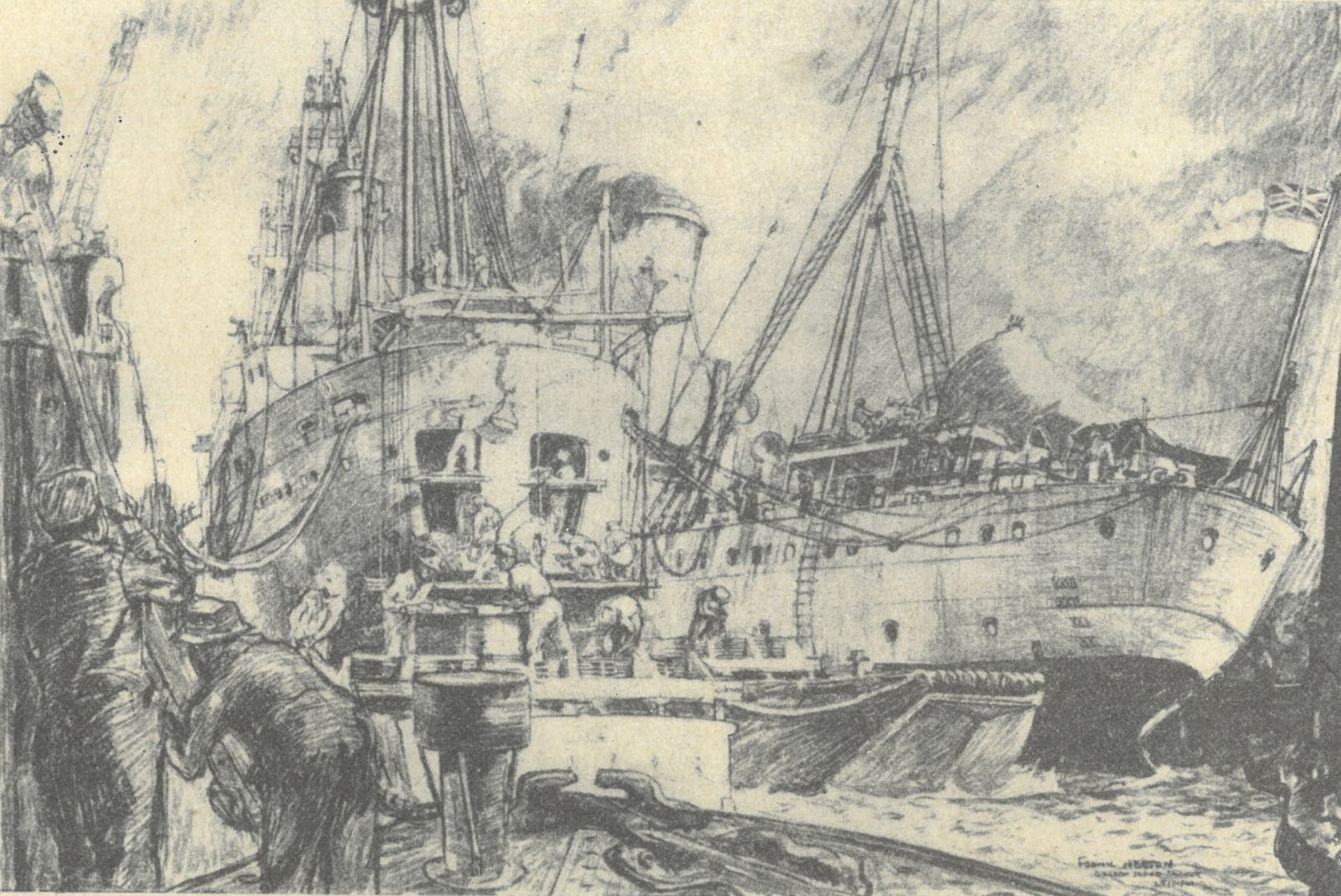
Able Seaman
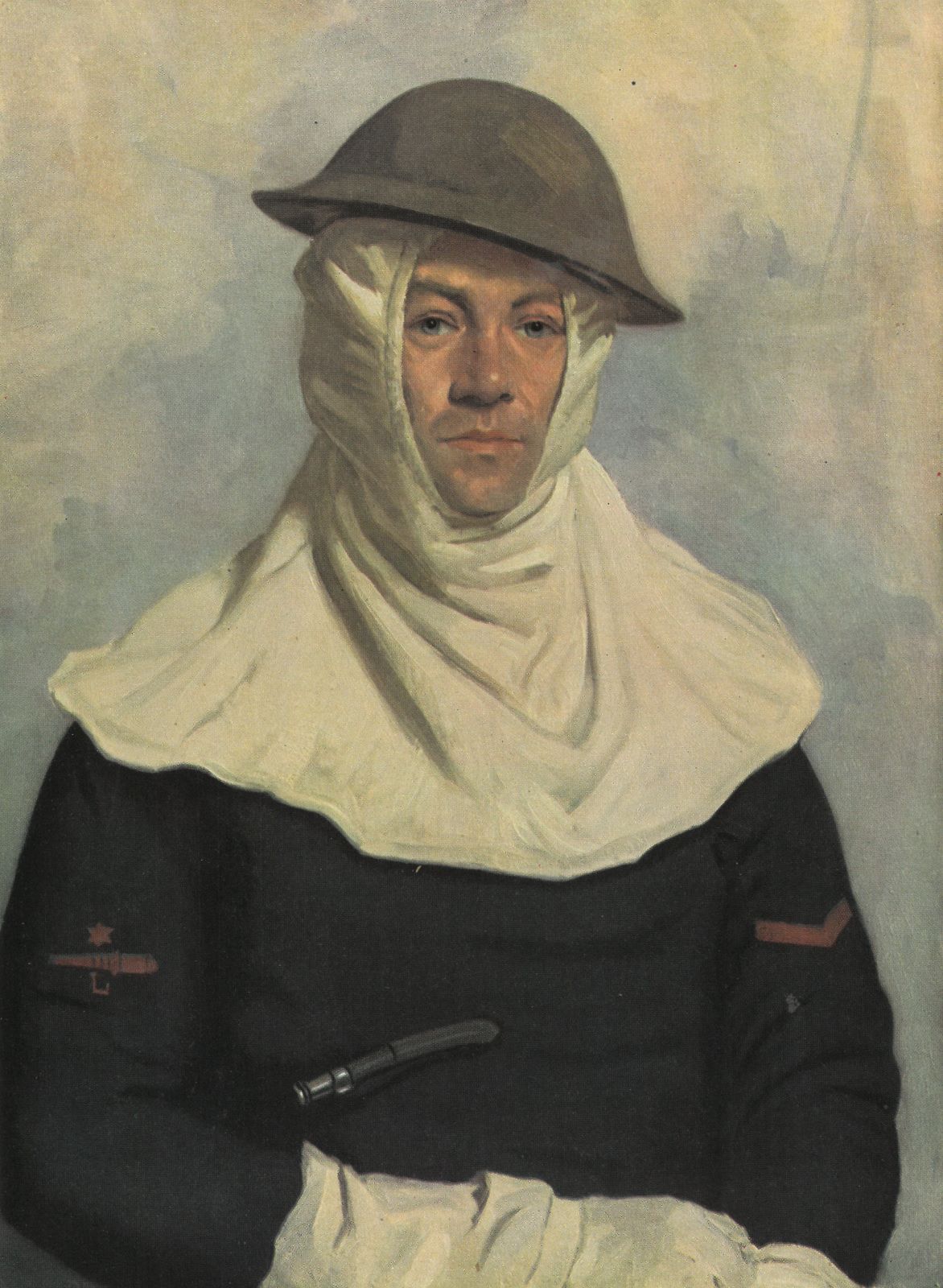
- About H. A. Hanke
Henry Aloysius Hanke
(Born Sydney 14 June 1901. Died Sydney 29 September 1989)
Henry was an Australian painter and teacher, who won the Archibald Prize in 1934 with a self-portrait, and the inaugural Sulman Prize in 1936 with his painting La Gitana (the Gypsy).
Henry served in the Army during World War II from November 1942, initially as a signaller and later commissioned as an Officer and war artist from December 1943, during which he completed many paintings in New Guinea (now Papua New Guinea – PNG). Henry was the first war artist sent into the area after the battle, giving his work special historical weight - he documented not only the area of conflict but also the aftermath of what was a turning point in the war.
After the war, Henry returned to Sydney and became director of the Royal Art Society art school, continuing to paint and teach. His wartime experience remained a defining part of his legacy, linking him to the broader tradition of Australian artists who recorded national history through frontline observation.
Apart from the Australian War Memorial, Henry’s works appear in private collections, auction house holdings, and Australian art market archives. There are repeated sales through major auction platforms, which indicates broad private ownership.
- About Sailors at work
Since entering World War 1 in 1914 with 16 ships, two submarines and 3800 RAN personnel (including 850 from the Royal Navy) the number of serving personnel in the Royal Australian Navy has fluctuated depending on the strategic and shifting financial environment. Over more than a century, the RAN’s and people have seen action in every ocean of the world.
Of the tens of thousands who have served, 2658 members have made the ultimate sacrifice defending Australia’s interests in warlike and peacetime operations across the globe.
Fortunately, for the vast majority who served in periods of peace or survived periods of hostilities the experience was positive.
In addition to their service in a particular category which involved specific duties, they also participated in communal duties such as coaling ship. Thus, the artworks included in this section relate to a mix of specialist and communal activities.
More reading
- Additional resources for H. A. Hanke
- Additional resources for Sailors at work
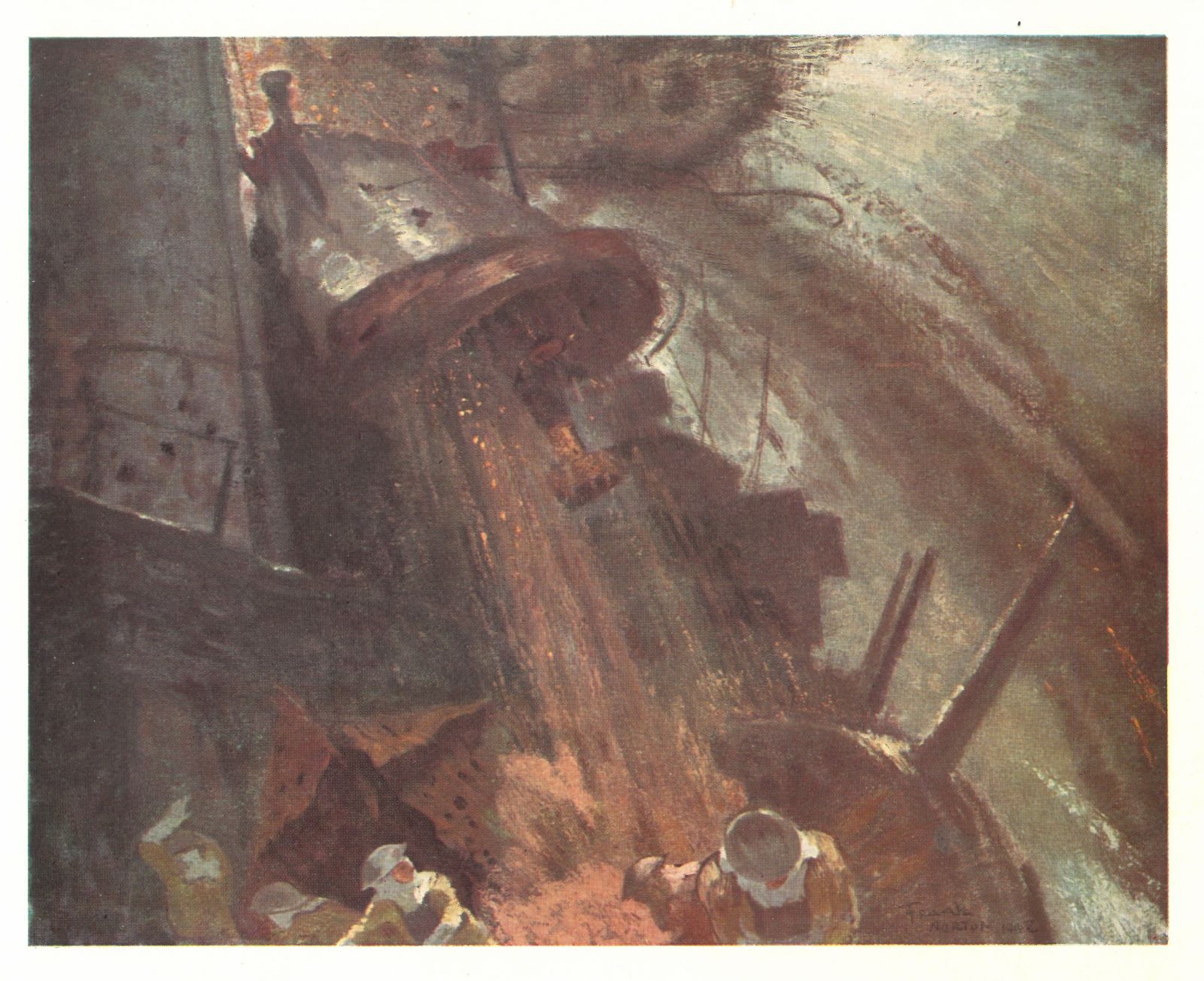
Path of the Kamikaze
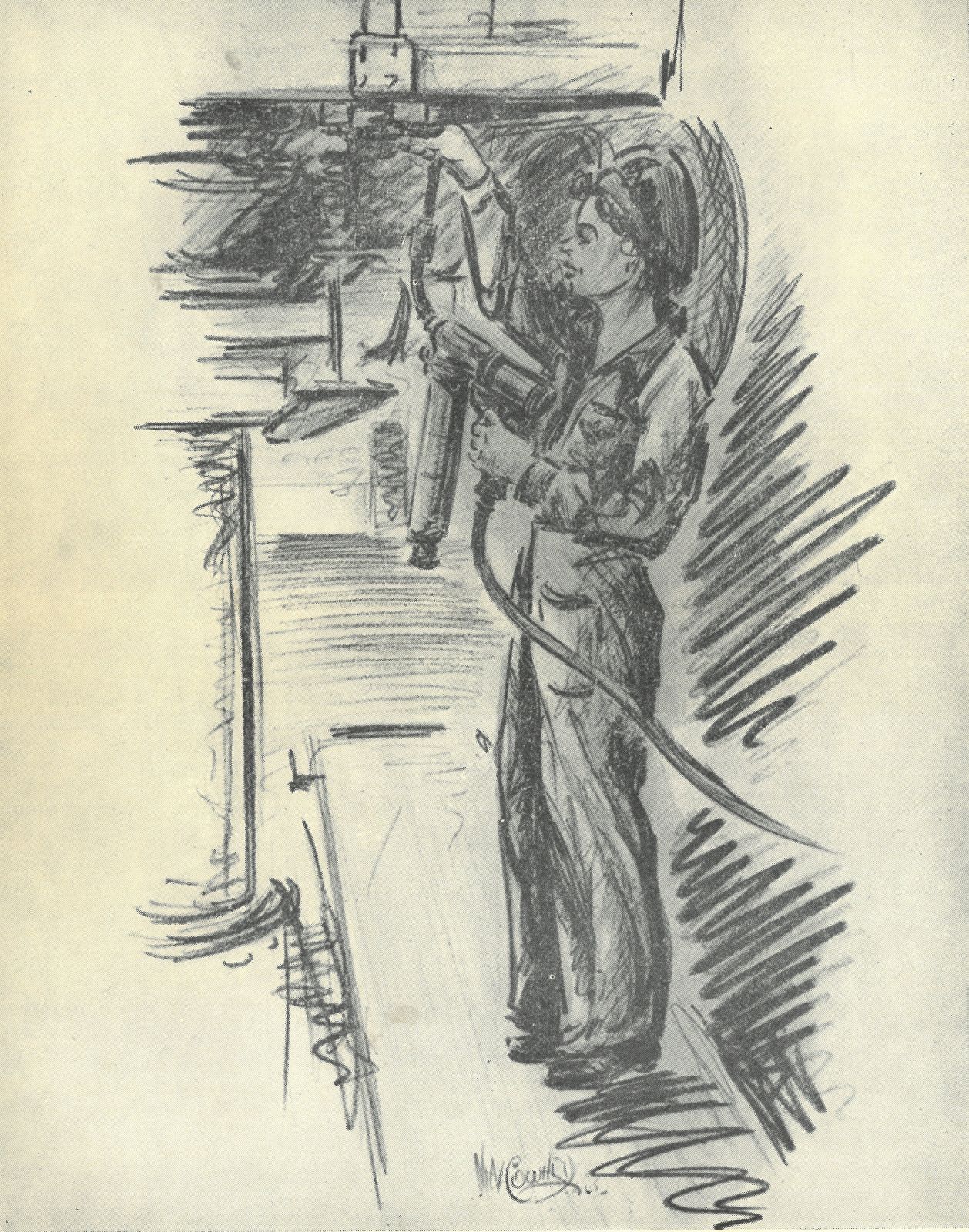
WRANS Transport Driver at Flinders Naval Depot
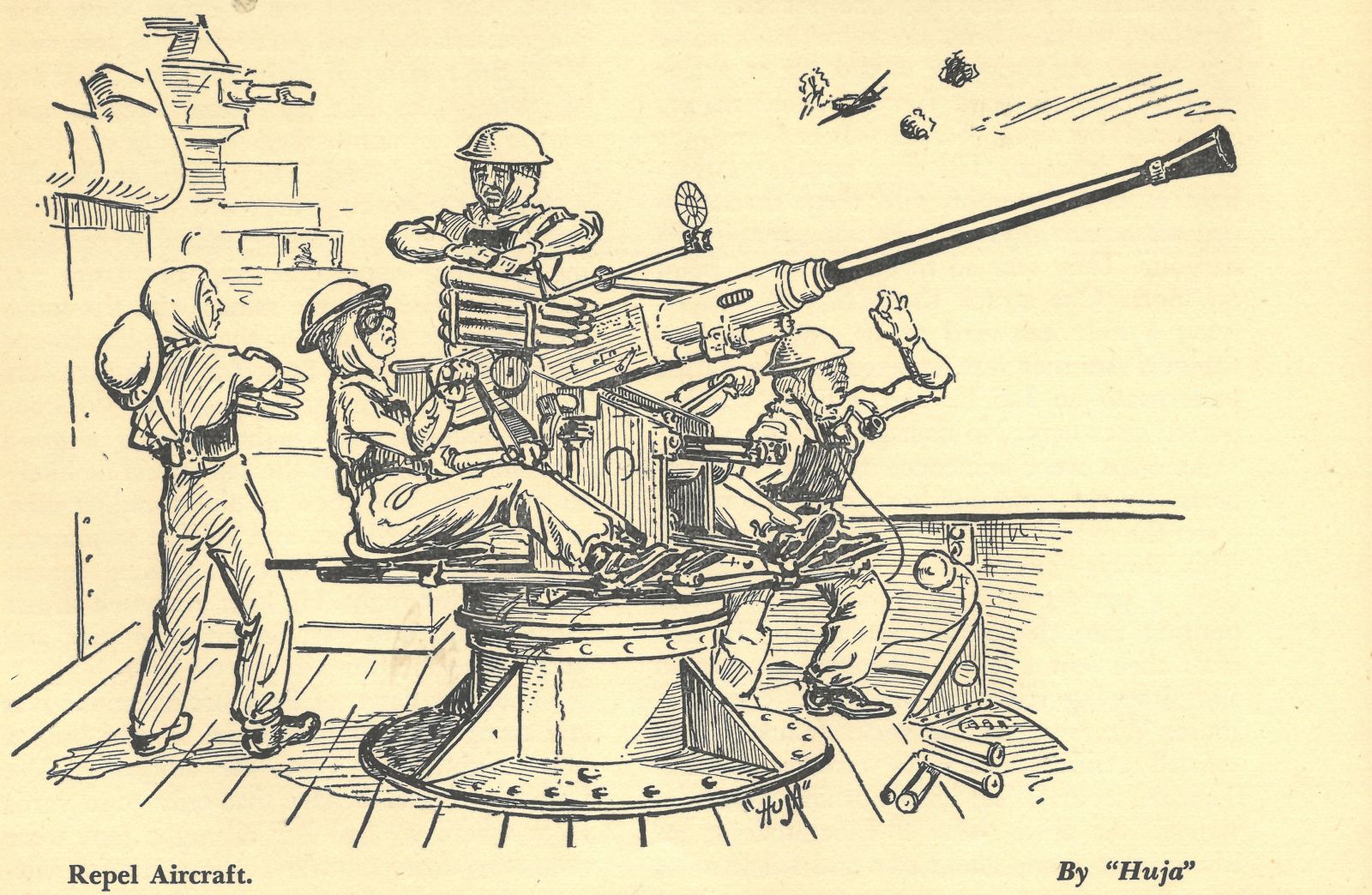
Repel Aircraft
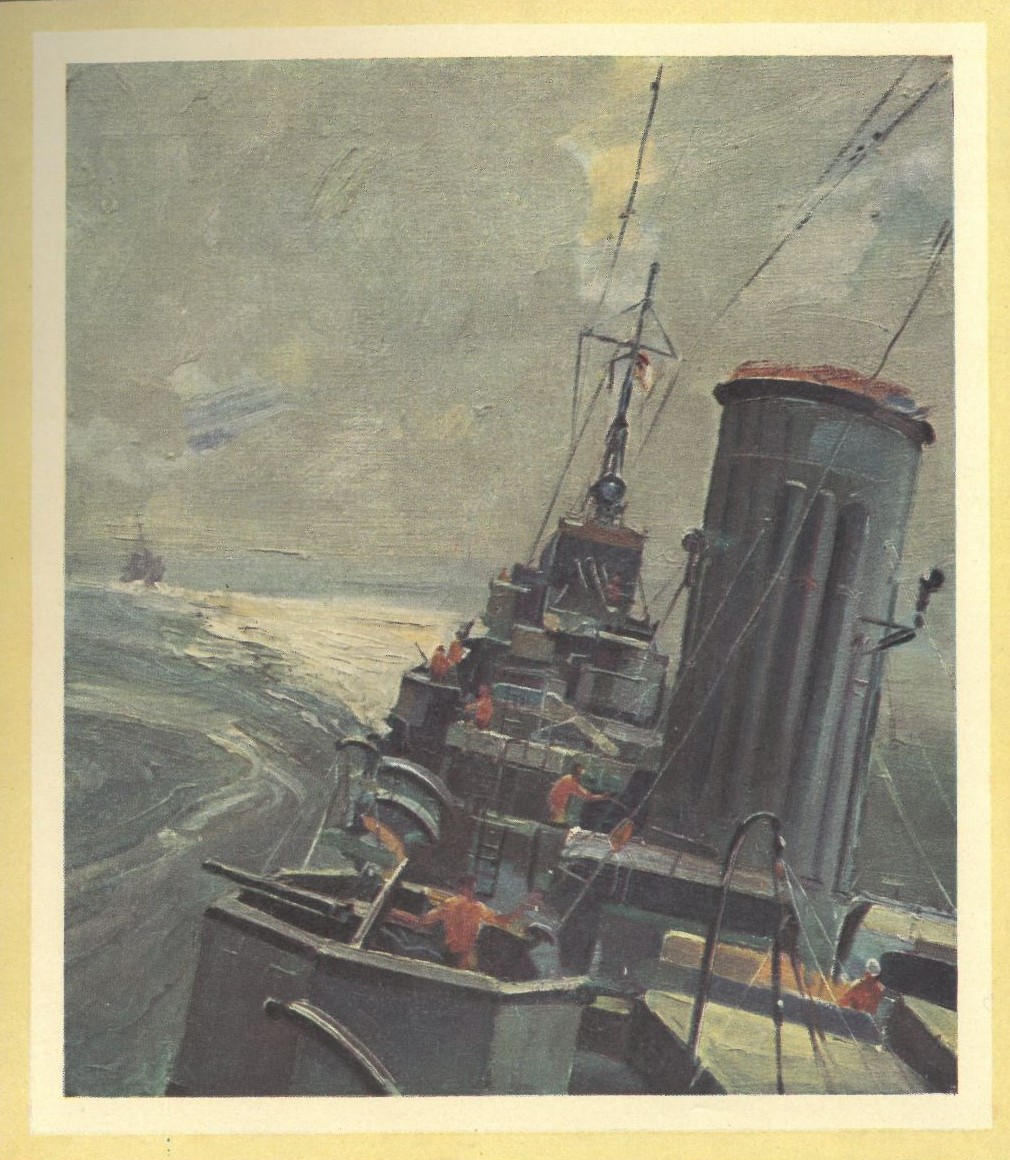
HMAS Arunta en route from the Admiralty Islands
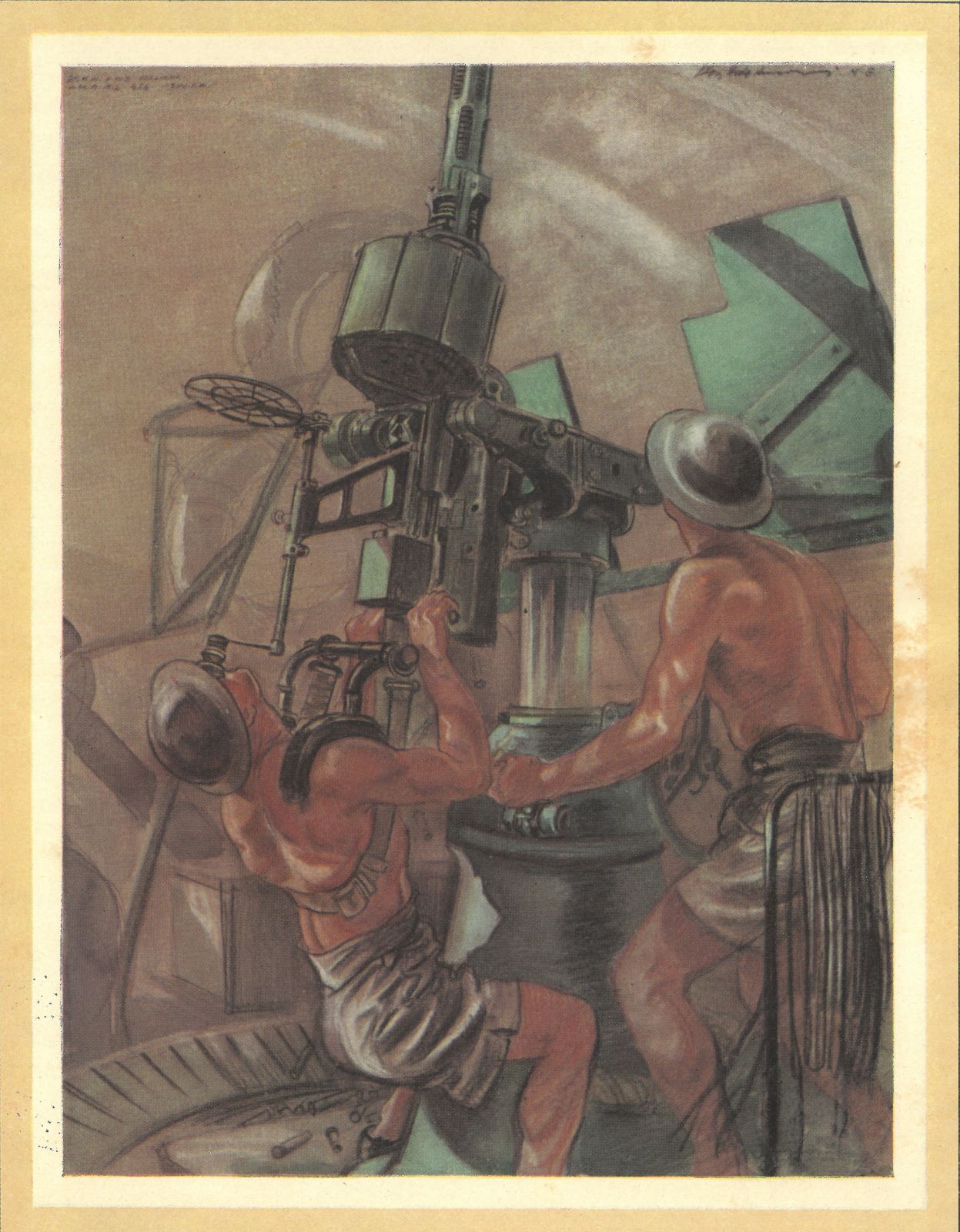
The Oerlikon Gunners
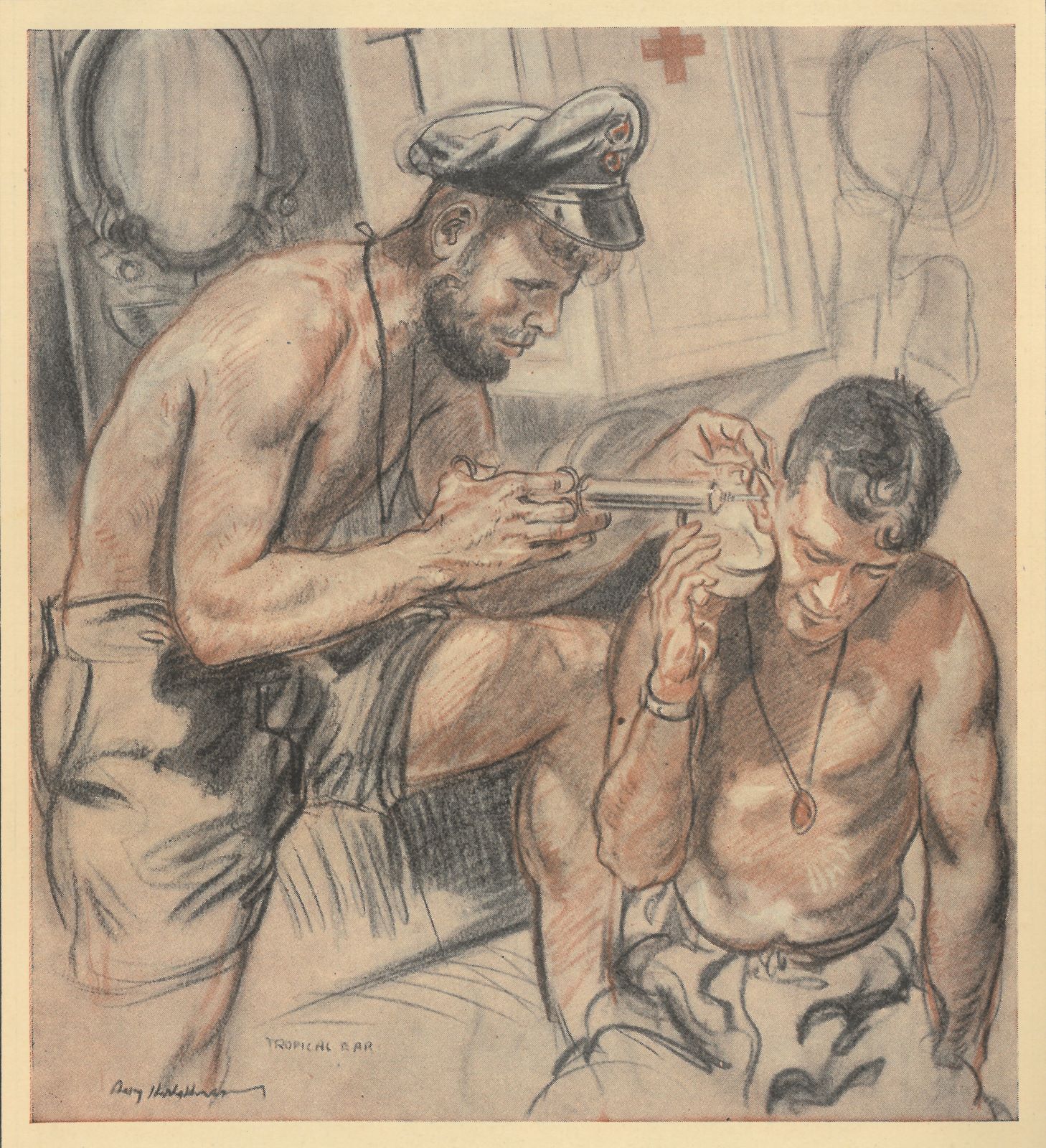
“Tropical Ear”. The SBA at work
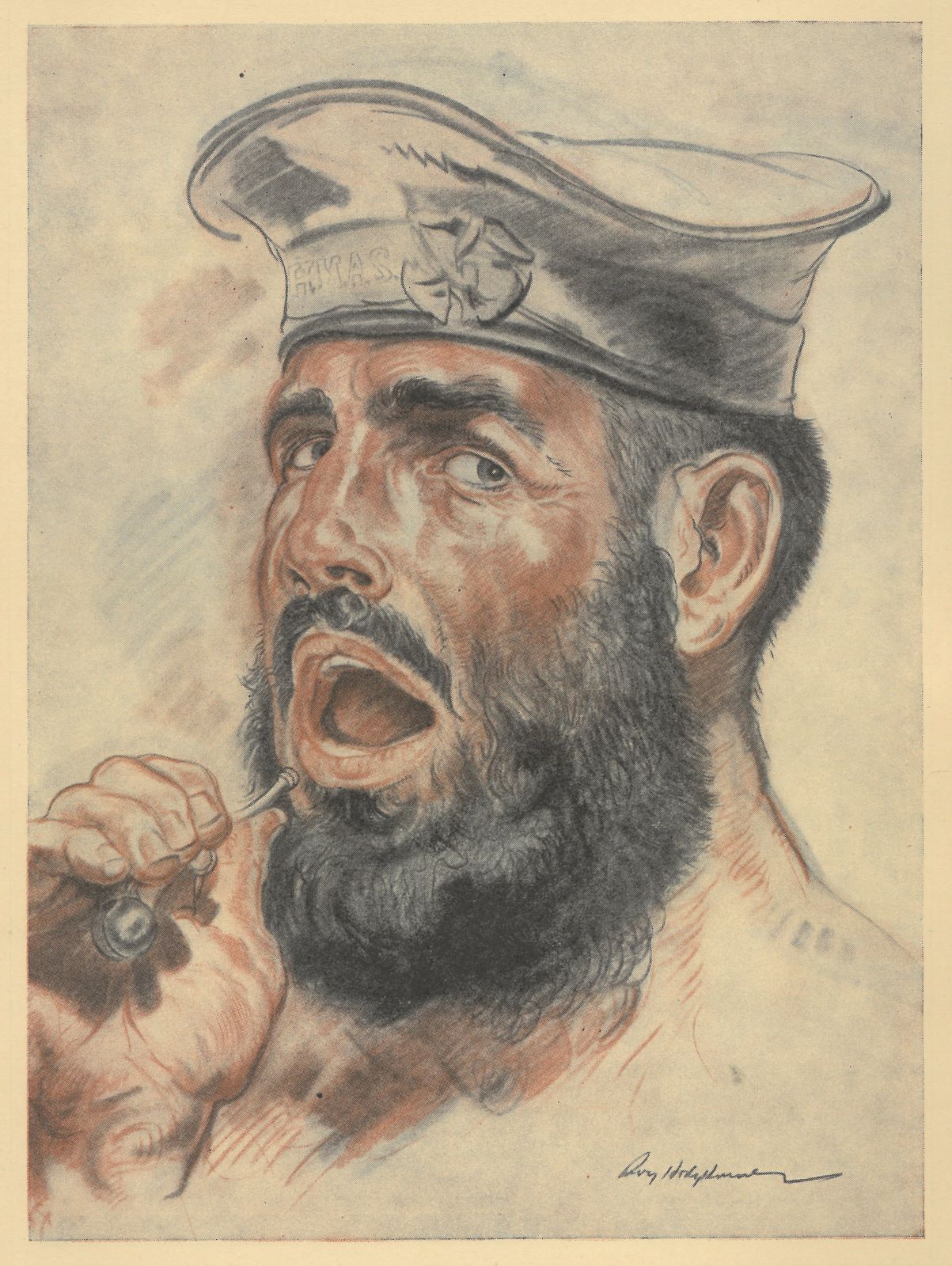
The Bos’n’s Mate
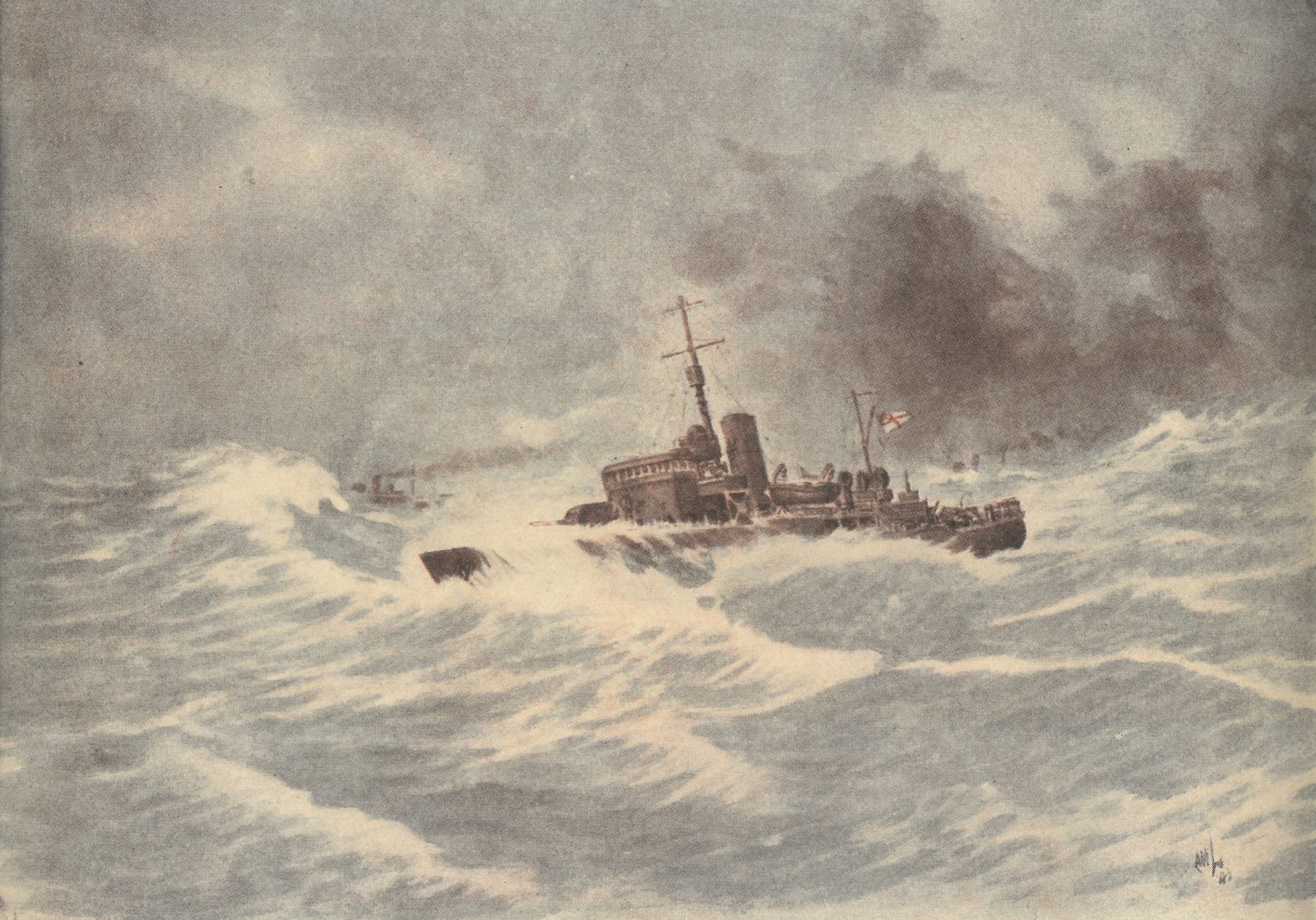
Corvette in Coral Sea
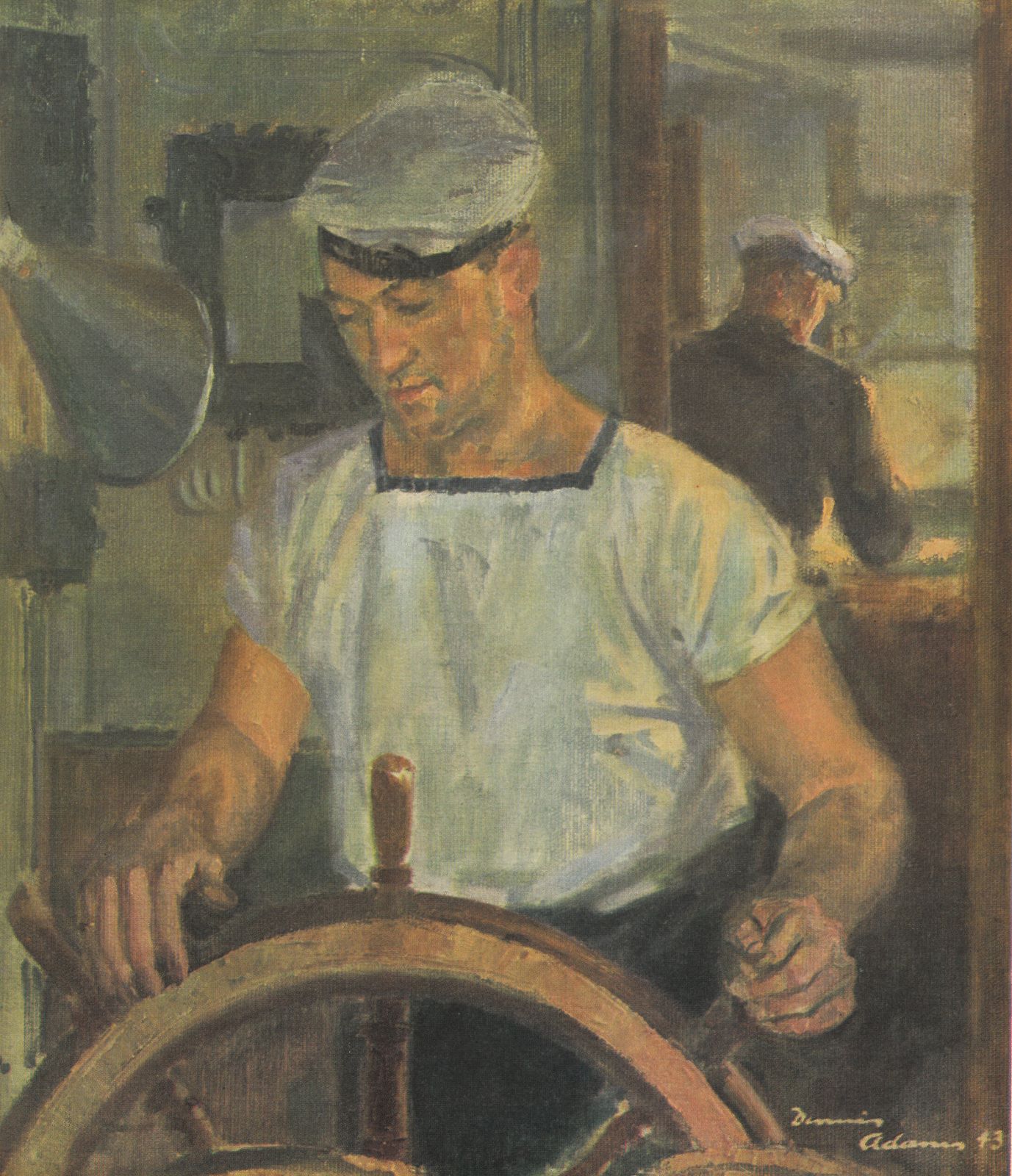
At the Wheel
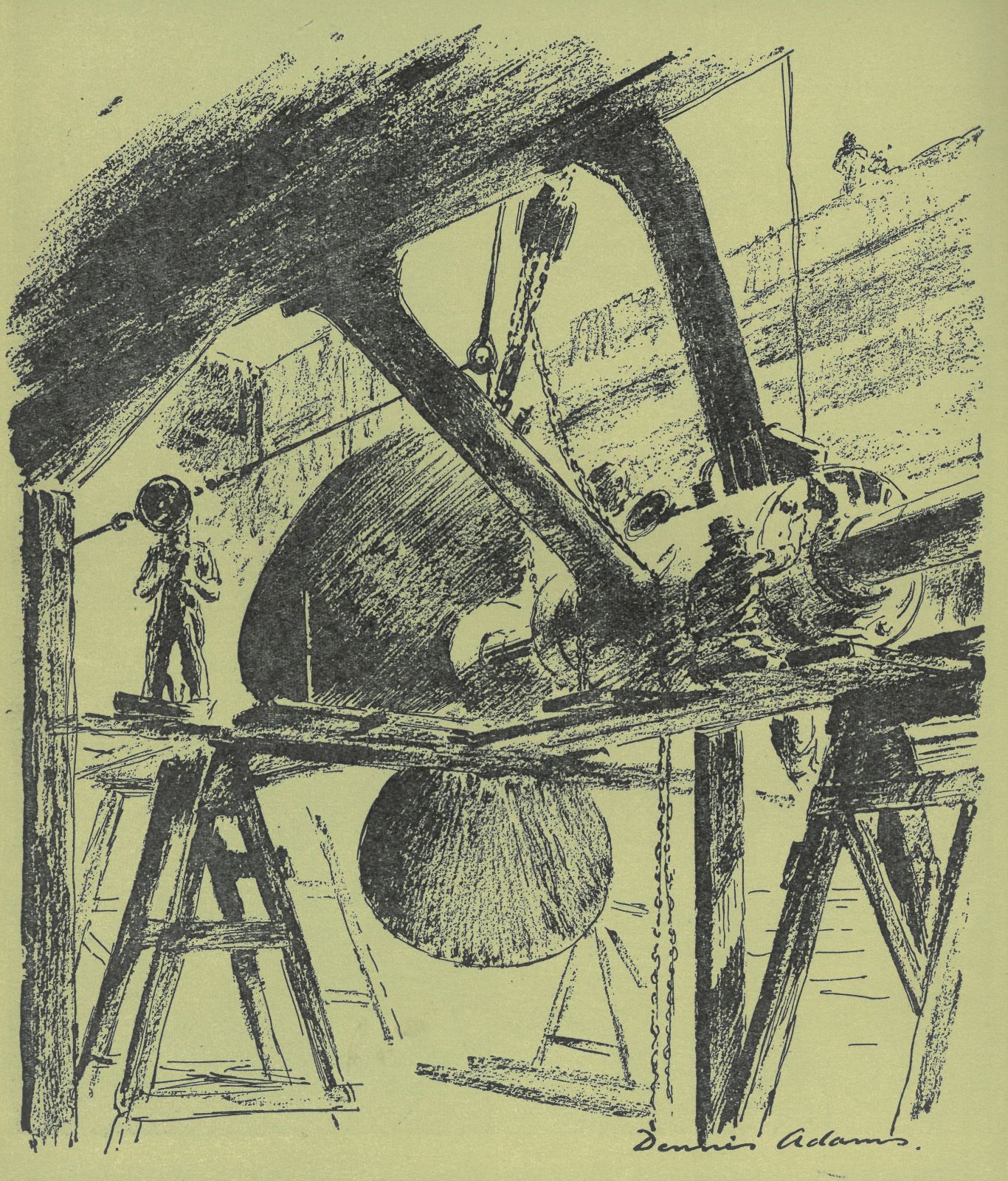
In Dry Dock
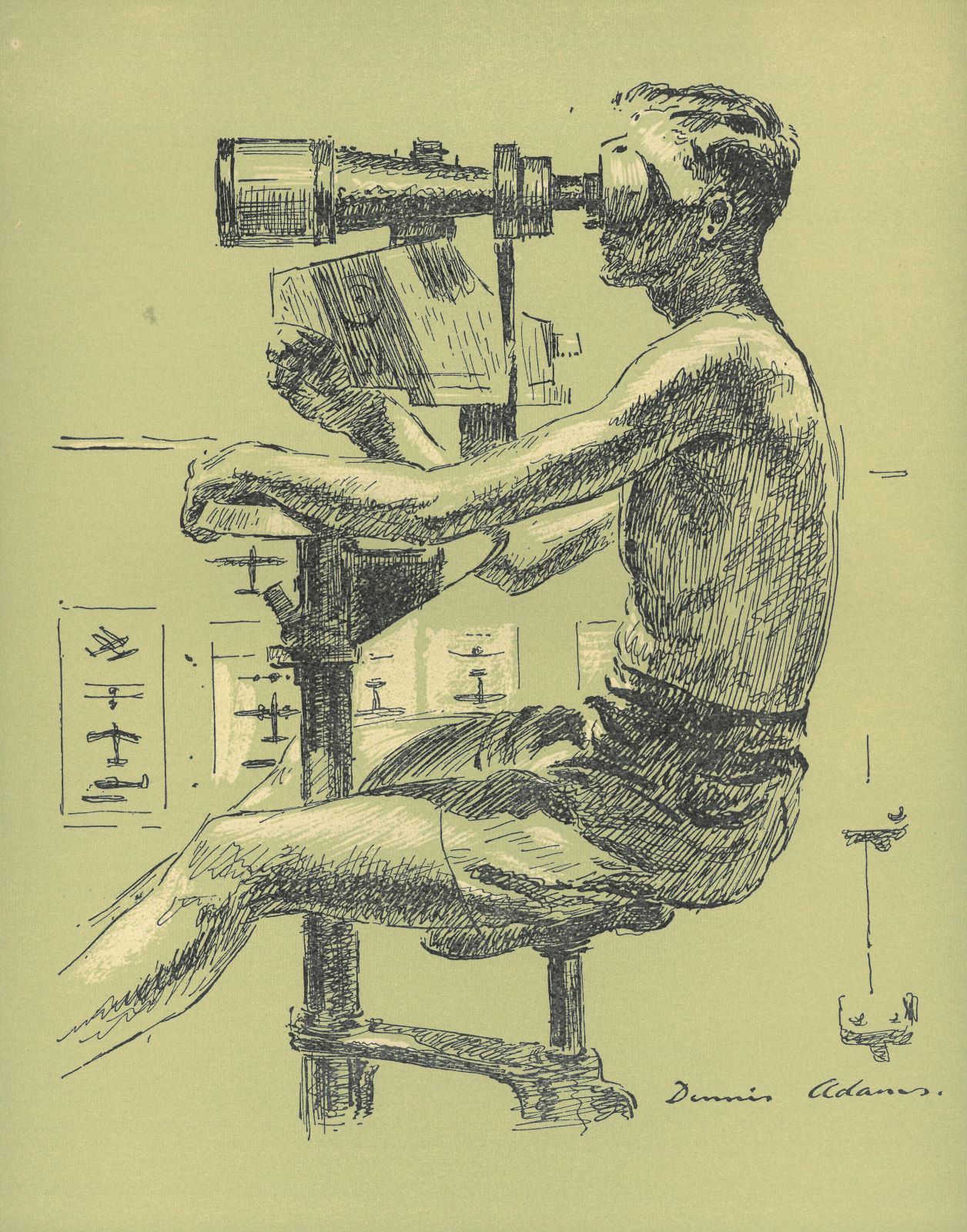
Starboard Lookout
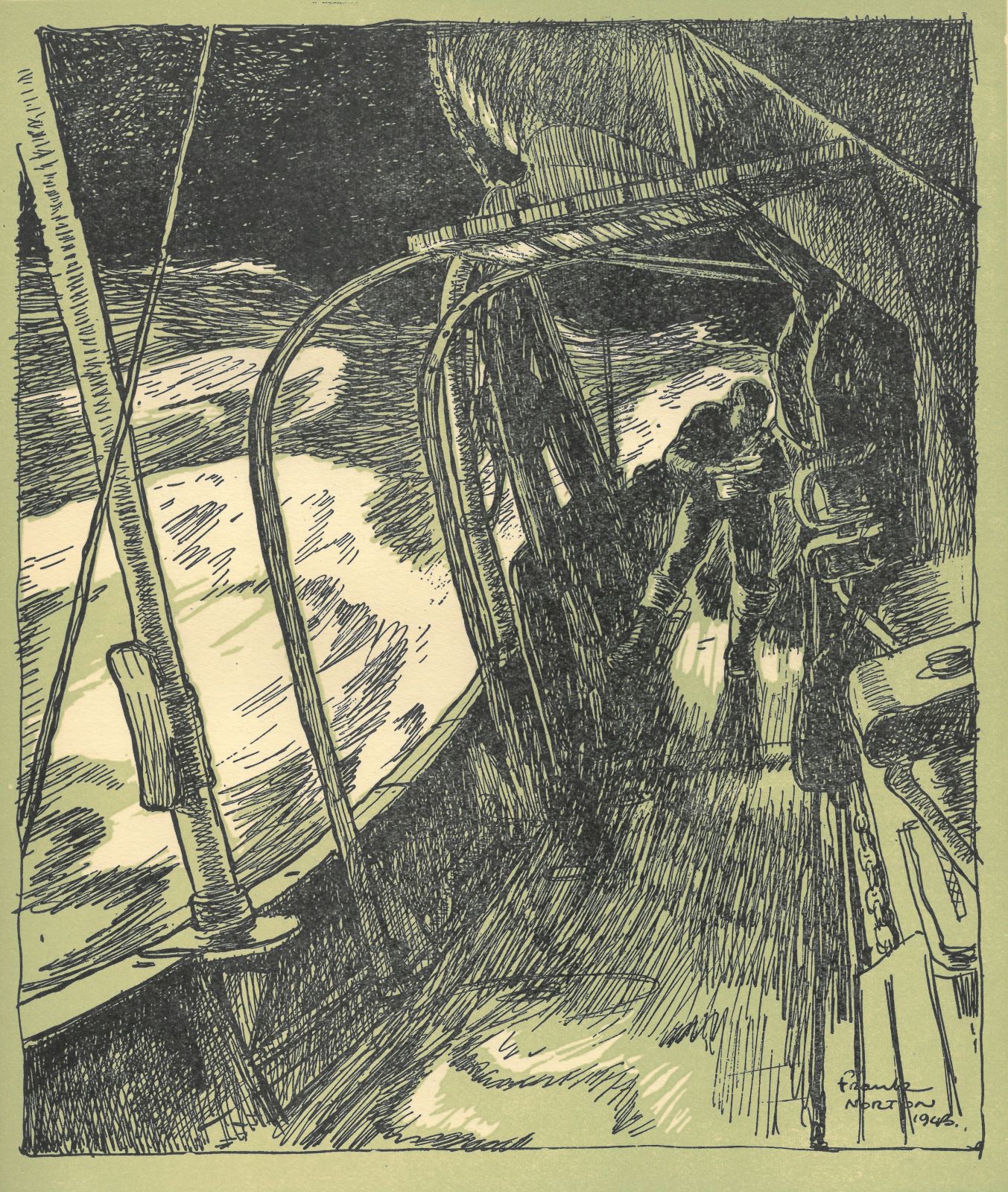
Hard Lying
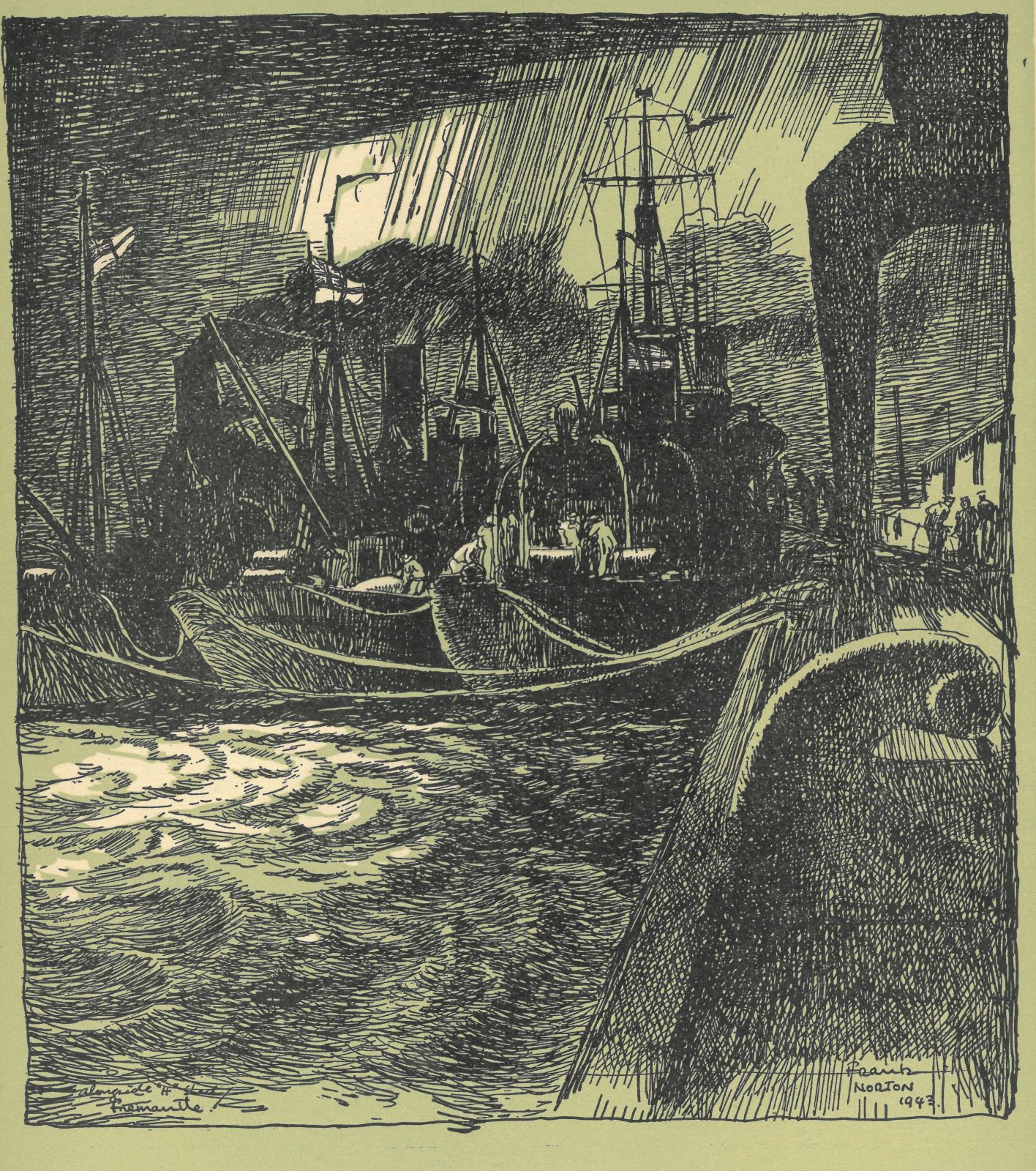
Sweepers Berth Fremantle
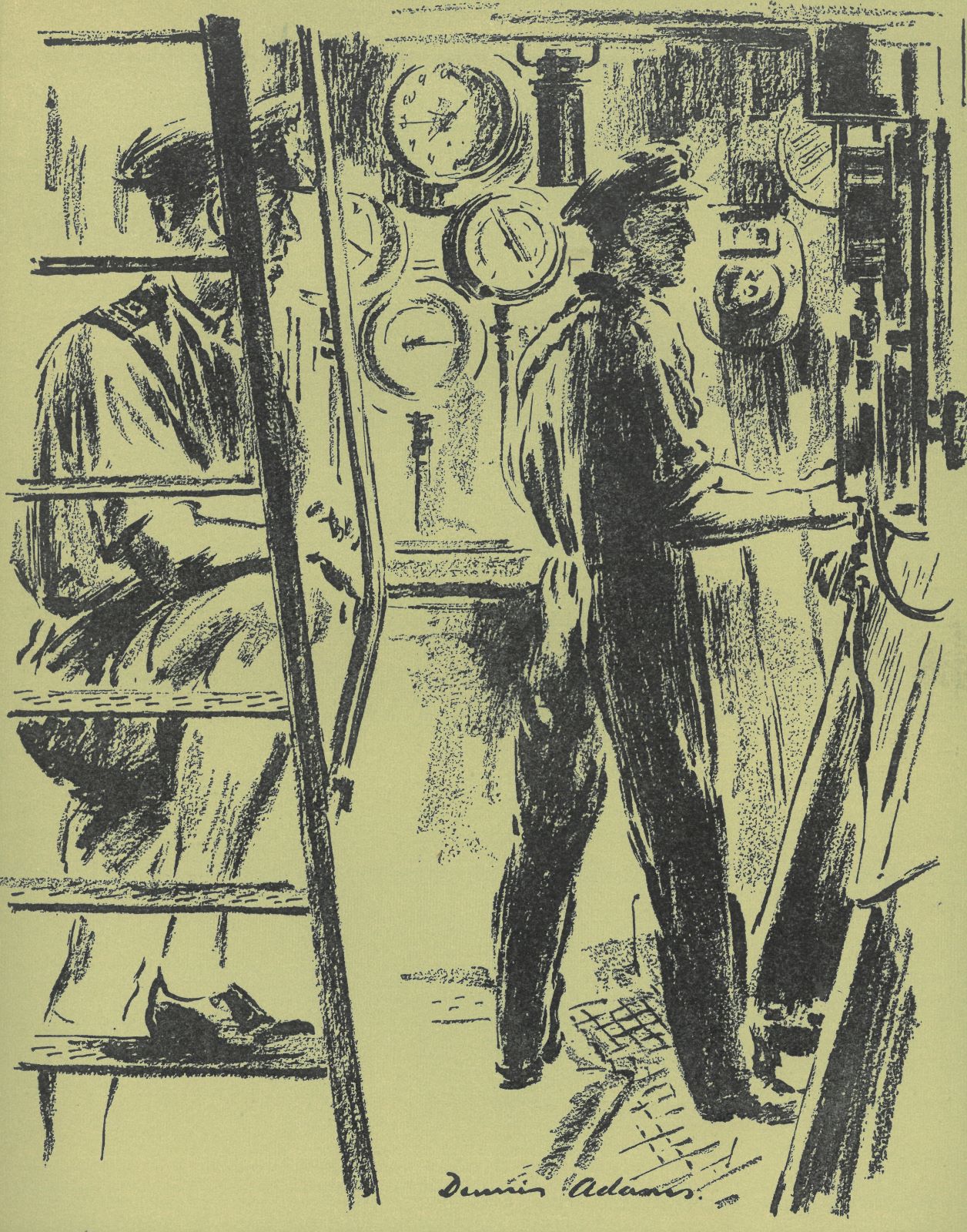
Corvette’s Engine Room

Hoisting the Motor Boat
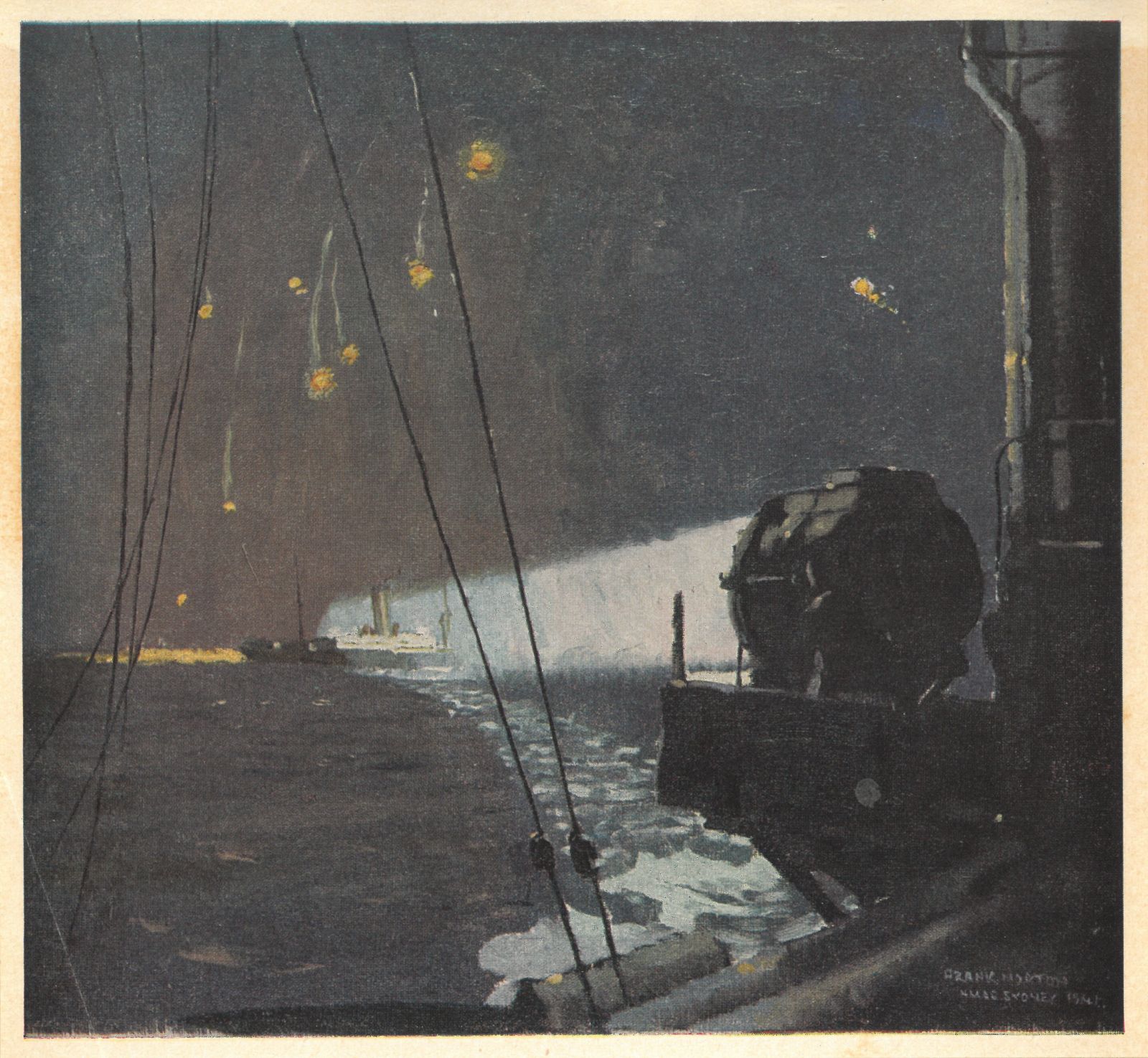
Night Encounter

Naval Telephonists Tobruk

In the Torpedo Workshop
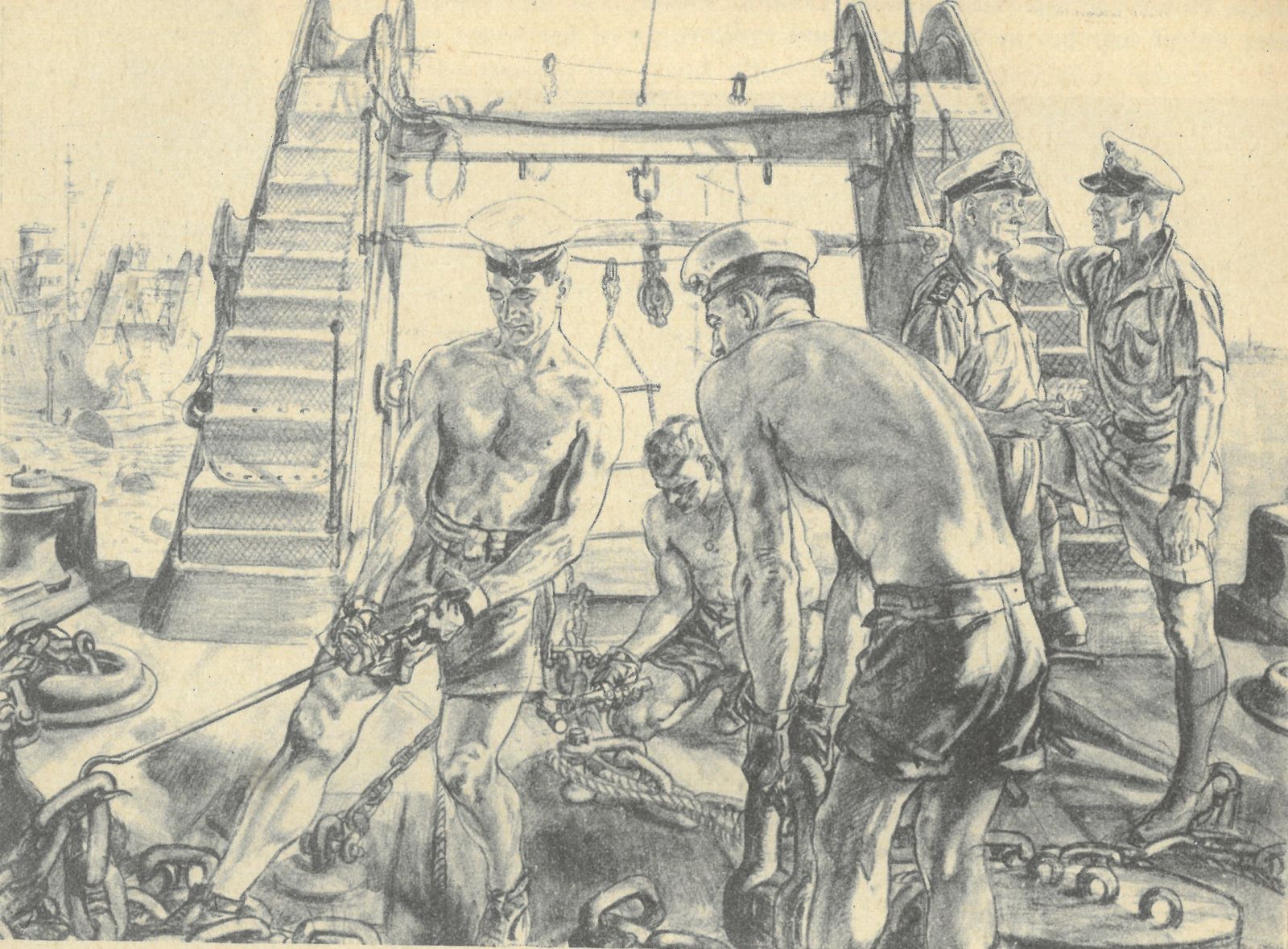
The Boom Defence Workers