
- Author
- Editorial Staff
- Subjects
- Ship histories and stories
- Tags
-
- RAN Ships
- HMAS Stalwart II
- Publication
- September 2025 edition of the Naval Historical Review (all rights reserved)


By late 1985 HMAS Stalwart had been serving as flagship of the RAN for almost four-and-a half-years. A versatile Australian-designed support vessel, originally described as an escort maintenance ship, Stalwart was homeported at Garden Island in Sydney and normally berthed at her EMS mooring on the eastern side of the naval base.
Stalwart was built at Cockatoo Island, launched on 7 October 1966 and commissioned into the RAN on 9 February 1968. For 17-years the ship, designated as a destroyer tender from 1969, was active around Australia and into Asian waters, conducting regular deployments with other fleet units and supporting a variety of front-line ships, right down to patrol boats and heavy landing craft.
Background
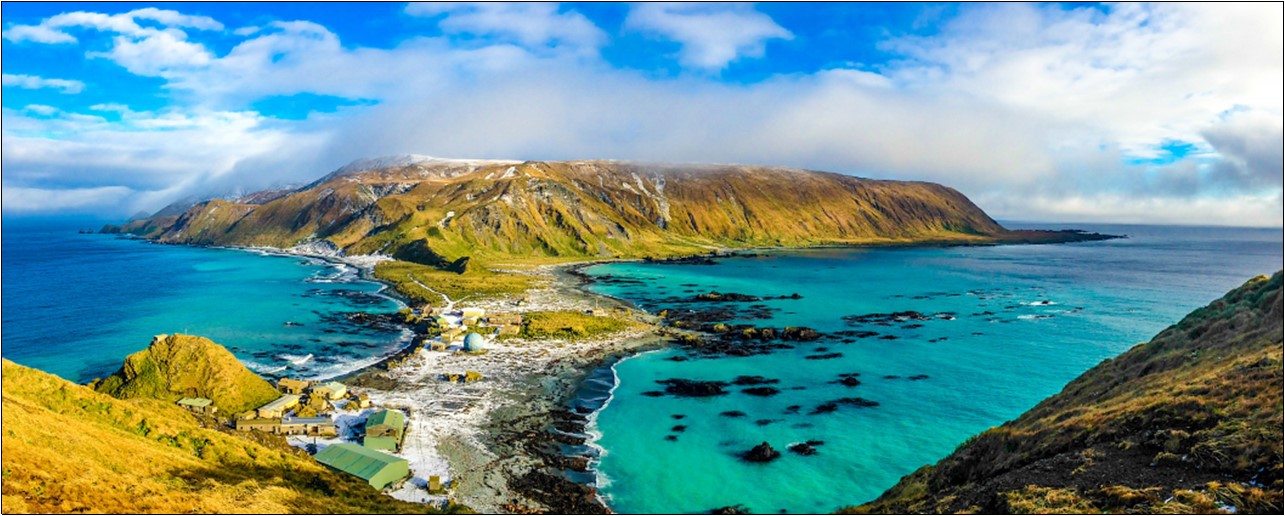
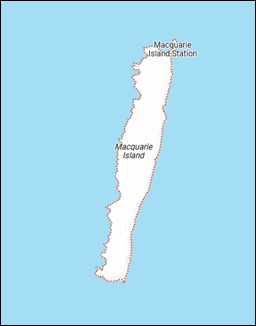
In 1985 Stalwart (CAPT Peter Ross) displayed her qualities as a flexible flagship. After ending her ‘steamy’ south-east Asia deployment, she immediately undertook a rescue dash to a much cooler Macquarie Island. This Australian sub-Antarctic territory, in the south-western Pacific Ocean, is about halfway between New Zealand and Antarctica. The tiny island had been governed as a part of Tasmania since 1880.
During her visit to the Philippines as part of the Asian deployment Stalwart’s crew was enjoying the delights of a sultry Subic Bay on 20 November, ready to return home via Darwin and Townsville. The ship had almost completed this deployment, which for the record, also included port visits to Singapore and Hong Kong. What the crew didn’t realise was that they were to receive orders to proceed to Macquarie island.
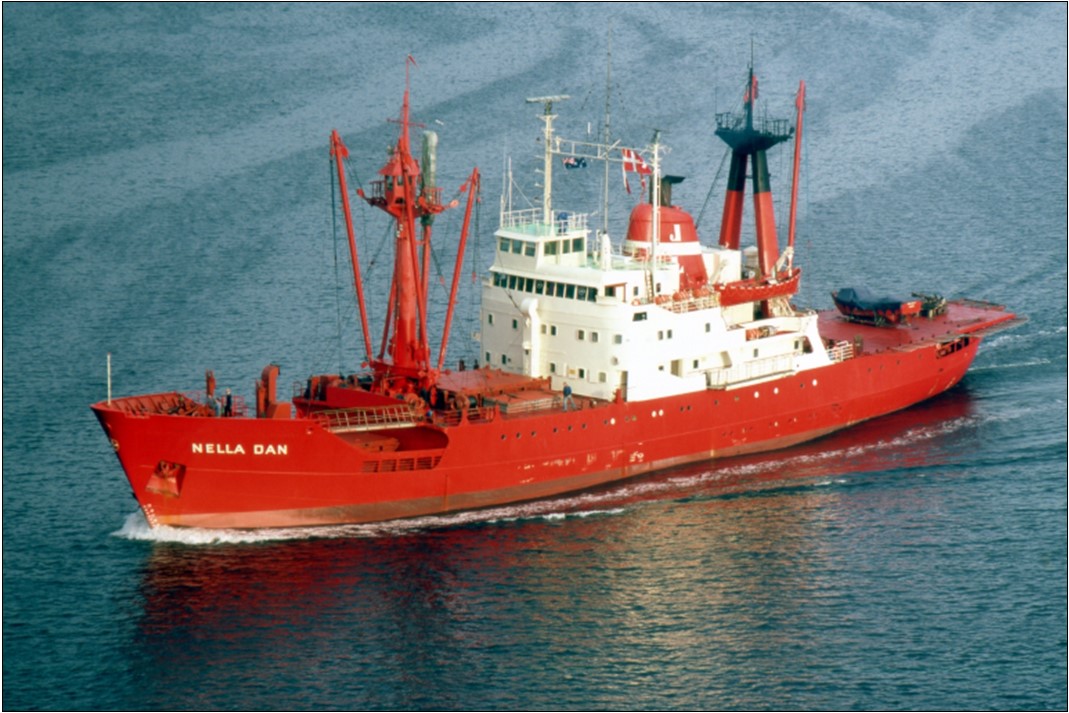
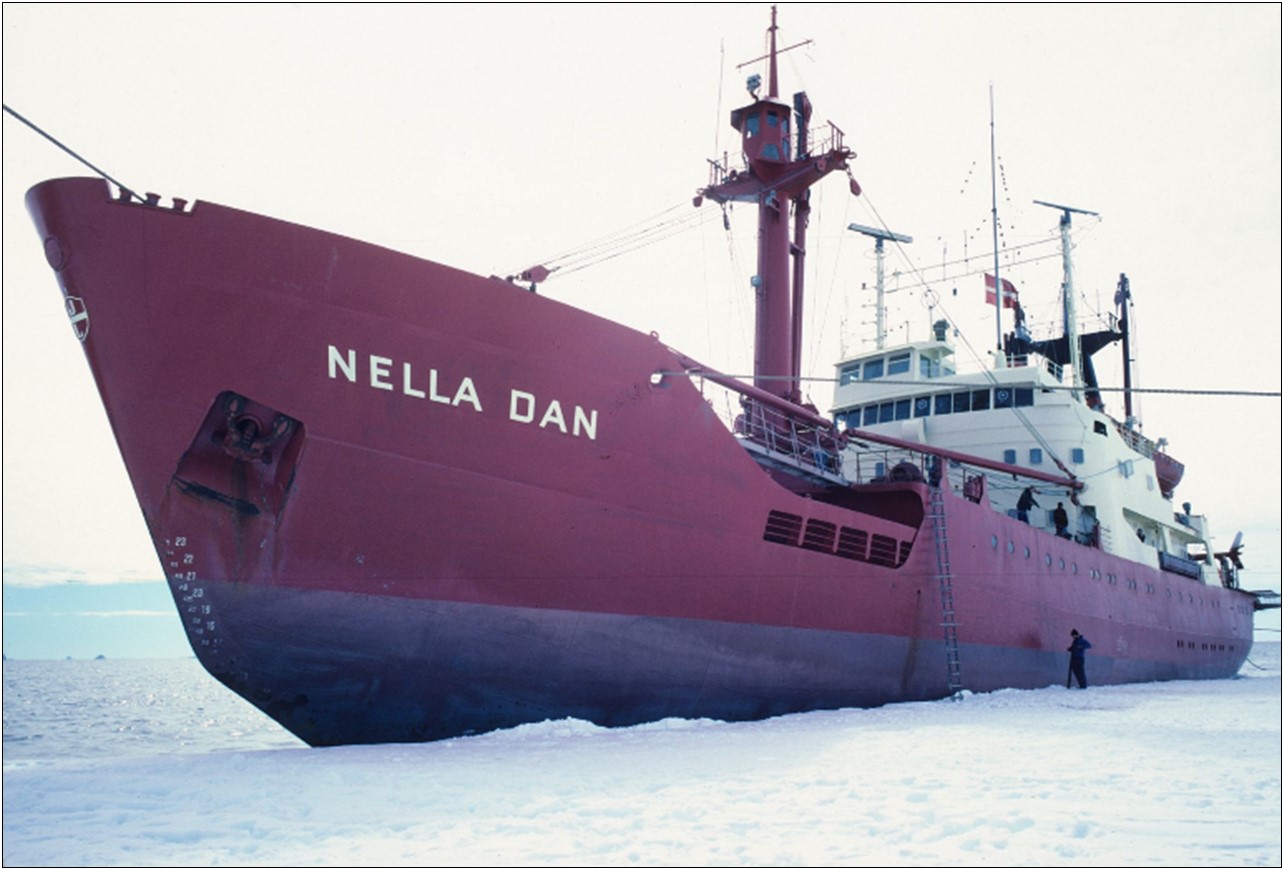
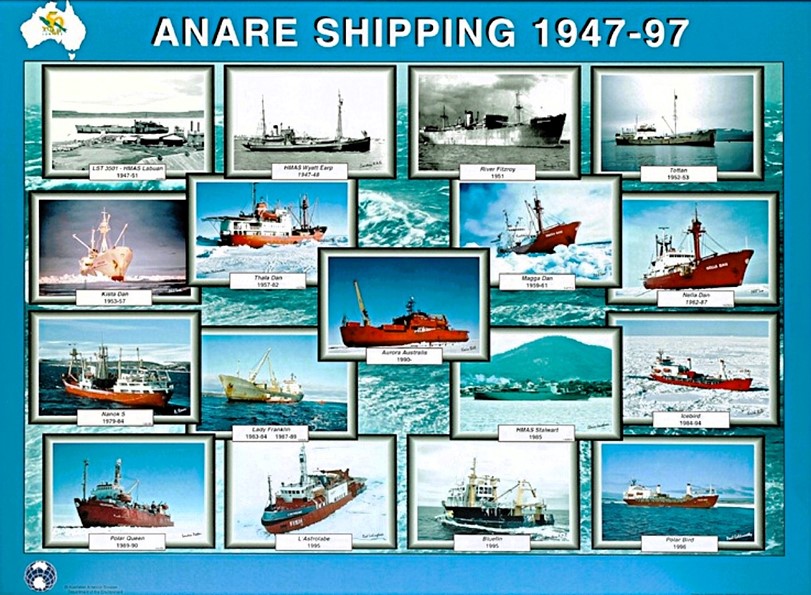
Shortly after Stalwart was tasked with resupplying the Australian National Antarctic Research Expedition (ANARE) base at Macquarie Island, 883-nautical miles southeast of Tasmania, known for its average temperature of four-degrees and wet weather 350-days a year. Originally the supply mission was to be undertaken by the commercial vessel Nella Dan, but she had been stranded in ice near the Antarctic continent since 28 October.
Without the assistance from their supply ship the Macquarie Island expeditioners may have been forced to remain on the island, short of essential equipment and supplies, until March or April 1986. However, this was not to be, with the RAN flagship soon steaming toward Jervis Bay and then Hobart to load the required supplies and replacement Antarctic division personnel.
Timeline
Wednesday, 20 November – After cutting short her planned port visits during the south-east Asian deployment, at short notice Stalwart proceeded at maximum economical speed to Jervis Bay.
Saturday, 30 November – Stalwart arrived in Jervis Bay at 1815 and anchored in the B1 anchorage in Jervis Bay having completed her long transit. Disembarkation of 87 personnel, including the Fleet Band, and unloading of light cargo began despite heavy rain.
Sunday, 01 December – The plan to offload heavy equipment was suspended at 0020 when both forward cranes became unserviceable. Repair attempts were made until 0400 when the ship weighed and proceeded towards Hobart, with various heavy stores still on board, as it had been determined that with judicious storage, there would still be enough space onboard for the resupply operation’s cargo.
Before departing a television news crew from Channel 10 Sydney was embarked, as well as Terry Galloway from Macquarie National News (2GB) and Australian Associated Press, along with the Fleet Public Relations Officer. A navy camera team from the Technical Training Unit 2 (TTU2) also joined to film the endeavour.
Monday, 02 December – During the passage south, repair efforts on the cranes continued and arrangements were made to embark a FAVCO crane expert from Hobart by helicopter. This was achieved at 0650 and the repairs to the cranes were completed with his assistance and advice. Stalwart was able to berth portside at No. 3 Macquarie Wharf, Hobart, at 1100 on the Monday. Embarkation of the ANARE stores, plus 210,000-litres of special Antarctic blend fuel oil began immediately, as did a series of conferences and discussions between ship staff members and specialist Antarctic Division officers. A number of the crew, as well as the embarked media travelled to ANARE’s headquarters at Kingston, a suburb just outside of Hobart, to receive cold-weather gear to allow these individuals to perform their roles ashore at Macquarie Island.
Media interest in the resupply operation proved quite high. While most of the media teams initially thought that the ship and her crew had been tasked to rescue the icebound motor vessel Nella Dan, interest did not wane once it was appreciated Stalwart was temporarily taking over her role. The general feeling was that people were pleased that the RAN operated ships that were flexible enough to undertake this type of contingency and that they could react quickly in such circumstances.
Tuesday, 03 December – Cargo loading, ranging from a tractor to frozen food continued during the afternoon and evening of Monday, 2 December, and into Tuesday. At 1000 a press conference was conducted on board. The loading of the ANARE cargo was completed at 1530.
Wednesday, 04 December – At 0730 a total of 39 expedition members under the guidance of Antarctic Division assistant director Mr. Richard Mulligan were embarked. The expedition and media personnel were ‘housed’ in the ship’s mess decks, with five female members accommodated in the recently vacated midshipmen’s cabins.
For the crew and Stalwart’s embarked visitors, the 0830 departure from Hobart was reminiscent of the sailing of an old passenger ship, complete with streamers provided by the expeditioner’s families. After these festivities, the ship exercised emergency and leaving ship stations, after which the ANARE passengers settled down for a two-day transit to Macquarie Island. Many expeditioners commented that it would be a vast improvement, compared to Nella Dan’s normal four-day passage time. Weather conditions for the voyage south were favourable with the area dominated by a slow moving high-pressure system. This was followed by a relatively deep low with its associated cold/intense winds.

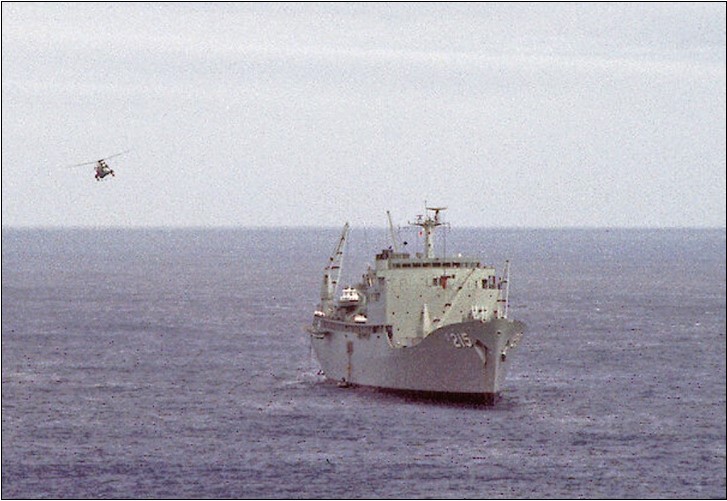
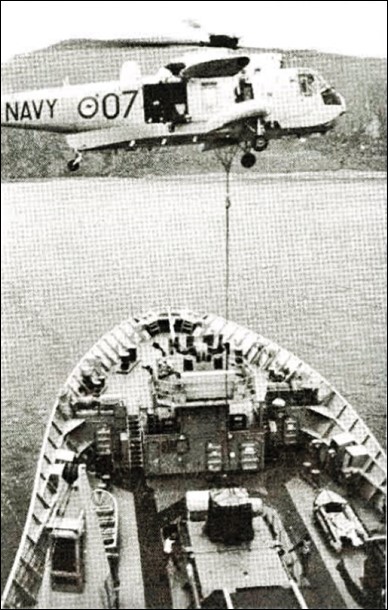
Friday, 06 December – After two days steaming from Hobart, Stalwart arrived at the ANARE station on Macquarie Island in the sub-Antarctic at 0830. For the 20 men and women on the island, the ship and her crew meant their first face to face contact with other Australians since October 1984. Prior to anchoring, Stalwart’s Sea King helicopter began the airlift of what would be the majority of embarked ANARE personnel to their shore base, with preparations in full swing to also deliver the large cargo load to the main settlement. By 1015, a fuel line had been set up between the ship and base, and pumping began.
Throughout the first day, temperatures remained bearable levels, somewhere between 5-9°c. The accompanying winds of up to 30-knots made the windchill factor a problem in many of the exposed positions. Visibility was generally good, with an occasional fine/misty rain. At 1100 the aft anchor was let go to reduce yawing, interfering with Stalwart’s helicopter operations. Cargo deliveries then continued until last light at 2030 and began again at first light at 0330 on Saturday, albeit in marginal conditions.
Saturday, 07 December – By 0400 the wind was gusting to 45-knots and at about 1000 backed south-westerly with the passage of a cold front and then gusted up to 65-knots. At about 0500 the ship’s helicopter aborted to take-off due to a faulty fuel computer, and investigations showed that the repair would take five-hours. As a result, the cargo disembarkation was suspended.
By 1130 it was apparent that the starboard anchor was dragging slowly during the stronger gusts and at 1230, after having returned the fuelling line to the shore, the ship shifted anchor. Disembarkation restarted in moderating conditions at 1730 and by the end of the day, 90% of cargo had been discharged.
Sunday, 08 December – After an early start the helicopter shuttle began with mostly bulky items being transferred. All but one lift was completed by 1330 when the helicopter started transferring pre-packed supplies and building materials to field huts on the island.
With the completion of fuelling and the required line tending, the ship dinghy was available to ferry limited numbers of the ship’s company to see Macquarie Island. Most were enchanted with it, with the weather during the day varying from driving rain to patches of dazzling sunshine. Crew members and the media were all recovered by 1600 and from 1800 embarkation of the departing expeditioners was conducted.
At 2040, while preparations were being made to leave, the last and most difficult lift, that of a meteorological radar and radome, was conducted from the well deck. This lift heralded the completion of over 132 ship-to-shore helicopter lifts, the transfer of 115 passengers and the lift of over 260,000-pounds (117-tonnes) of ANARE cargo, all by the versatile Sea King 907.
After re-embarking her helicopter, Stalwart weighed and proceeded at 2110, highlighted by an impromptu fireworks display by the islanders. Almost immediately on clearing Buckles Bay the ship encountered a heavily westerly swell which made some of Stalwart’s passengers quite uncomfortable.
Monday, 09 December – Course was shaped for Sydney after a planned helicopter diversion towards Hobart to offload media personnel and videotape was cancelled due to helicopter unserviceability.
The commanding officer, CAPT Ross, said he was pleased and impressed with the activities of the media representatives on board. During the resupply operations they went out of the way to get on well with both the expedition and the ship’s company. The media appeared to report very favourably on the ship in the RAN, and all enjoyed the whole mission.
Tuesday, 10 December – During the return passage to Sydney the media took over production of the ship’s video news, presenting an amusing, if not completely polished product. The ship entered a remarkable bank of thick sea fog when visibility was reduced to 150-yards, and did not properly clear it until 0430 the following morning, 11 December.
Thursday, 12 December – Stalwart approached Sydney during the early hours of the morning. Enroute, the ships Sea King was flown to Nowra with aviation stores and some flight personnel. It returned at 0720 carrying additional Channel 10 equipment and a technician, to enable the group already embarked to have a live broadcast of Stalwart’s entry into Sydney.
The ship entered Sydney Harbour at 0730, arriving at the EMS berth at 0800, with berthing completed by 0945. At 1000 Commodore Flotillas, CDRE Malcom Jackson RAN. arrived on board. Shortly after a press conference was conducted on the ship’s flight deck. Stalwart was greeted by a large contingent of families of the ship’s company and Antarctic personnel.
In summary
The day after arriving in Sydney the ship began unloading the ANARE cargo, with the final stores offloaded on Monday, 16 December.
For Stalwart, the year 1985 proved to be truly diverse, with the ship undertaking many roles and activities, from the initial refit, and including work-up, participation in major exercises, leading a successful overseas task group deployment, and her Macquarie Island resupply operation.