- Author
- Andrews, Grahame, (Honorary Life Member)
- Subjects
- Ship histories and stories, WWII operations
- Tags
-
- RAN Ships
- HMAS Matafele
- Publication
- September 2025 edition of the Naval Historical Review (all rights reserved)
Graeme Andrews describes the unknown fleet that performed the important supply route from Cairns to Darwin
.
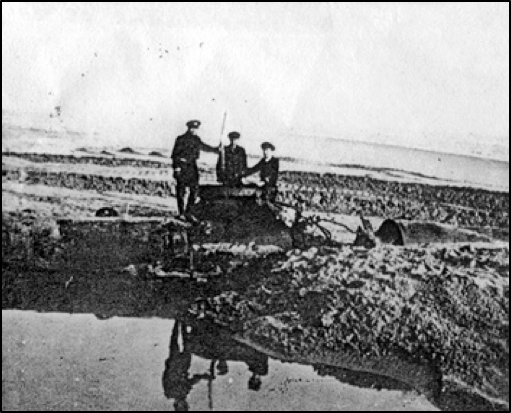
At 1000 on 19 February 1942 the Northern Territory port town of Darwin was heavily bombed by aircraft from Japanese aircraft carriers and from bases in Portuguese Timor. The port infrastructure was heavily damaged, and several merchant ships were left awash, creating access problems to the damaged port wharves. The bombing attack continued for many months and the seas to the north of Australia became dangerous places for merchant ships to be, escorted or not.
Darwin required regular supplies including food from the south but there was no railway beyond Katherine. The Stuart highway, south to Adelaide was mainly dirt which often became impassable
during the ‘wet season’ and the few airfields of the area were under regular attack. Although much of the civilian population had been evacuated there was still a great need for all types of stores, particularly those needed to support the defence build-up of the area.
Australia had too few large merchant ships to risk them on the long and dangerous haul from Fremantle, but there was a less risky, but still navigationally difficult route from Queensland, through the Torres Strait. Although suitable for small ships only this route was quickly in use. The Australian Naval Board and the Shipping Control Board acted quickly and took under control the movements of some small, relatively shallow draft cargo ships to service a supply route from Cairns to Darwin with a total distance of about 5,000-nautical miles overall.
Many small craft, including wooden-hulled Barrier Reef supply and excursion vessels, carried out one or more return voyages .

Ship list
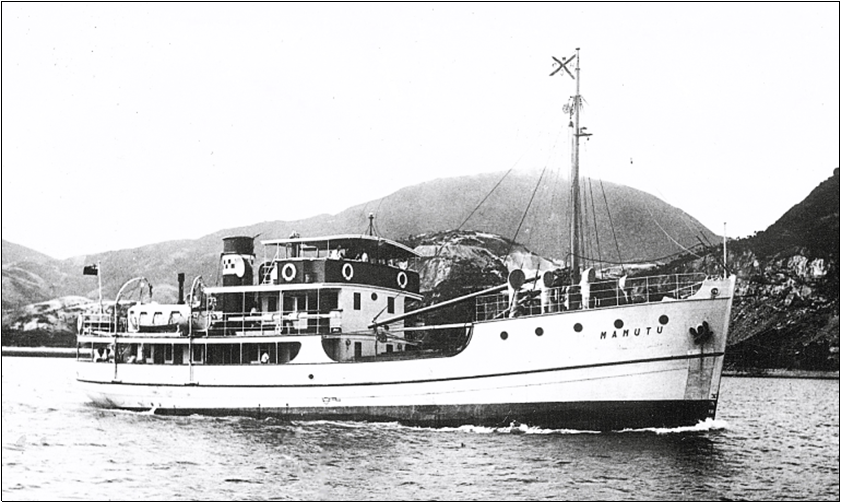
The main vessels employed were SS Alagna and MVs Babinda, Katoora, Kurimarau, Mamatu, Matafele and Muliama. According to an article in The Log magazine of May 1990, MV Mako (230-tons/1934) and the SS Mako were also involved. In March 1942, the heavily loaded MV Katoora (327-tons/1927), MV Mamatu (306-tons/1938), MV Matafele (335-tons/1938) and MV Muliama (669-tons/1937) sailed independently from Cairns to Thursday Island where they were taken under escort by one of the RAN’s Bathurst class corvettes. The four small ships successfully unloaded their cargoes in Darwin and returned safely. Because of bomb damage to the main wharf the vessels unloaded at the Civil Aviation Jetty near the naval oil tanks.
These lifeline vessels often sailed alone, sometimes with a distant RAAF escort or RAN close escort but usually returned unescorted. The former sugar lighter Katoora undertook five return voyages from the east to Darwin. She worked mainly from Thursday Island and Horn Island where an airfield had been built. Muliama made a return voyage every couple of weeks with aircraft fuel, rations, ordnance and general cargo. She also loaded supplies for the RAAF airfield at Millingimbi in northern Arnhem Land. Although one of the biggest of these ‘small’ ships Muliama was typical of the vessels involved. She was fitted with a Vickers .303 machine gun on either wing of the bridge and carried a larger 20mm Oerlikon gun, operated by an RAN-trained DEMS (Defensively Equipped Merchant Ships) gunner.
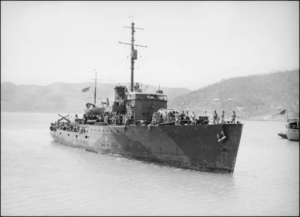
By the end of 1942 getting supplies to Darwin had become better organised with truck convoys working their way up from both Alice Springs and from Queensland. Japanese air attacks were still common and lethal. The RAN corvette HMAS Armidale (below) was sunk by air attack in the area on 21 December 1942 with heavy loss of life.
As the main Pacific war moved away from the immediate area of Darwin the small ships were needed elsewhere, and some were taken over by the RAN and commissioned as ‘de facto’ warships. Others were impressed by the US Army for use around the islands to the north of Australia.
Major units
The steamer Alagna was the largest of the group (730/1928). She was built in Grangemouth, Scotland as Malake for Burns Philp for use in that company’s island services. Then in 1939 she was sold to John Burke Ltd for use on their coastal service around Cape York. On the new Darwin run she averaged a round trip each fortnight with her main cargo being frozen meat. Her refrigeration capacity probably explains why a steam ship was used on that long run. She carried rifles and a Vickers machine gun for ‘protection.’ Alagna lasted until 1955 when she was sold and converted for use as a barge used in the construction of the Indooroopilly Bridge over the Brisbane River in 1957.
Babinda (659/1936) was a modern, engines aft, motor ship built in the United Kingdom for the Australian United Steam Navigation Co. Ltd. She had large hatches intended to load timber and other long items and was of obvious value for the carriage of larger defence equipment. Babinda came under government control at Sydney on 23 October 1941 and was in use on the Darwin service from March 1942 through 1943. She rarely came as far south as Townsville. Surviving this hazardous activity, she was returned to coastal work for her owners. She was sold in 1955 and then onto Indonesian owners about 10-years later.
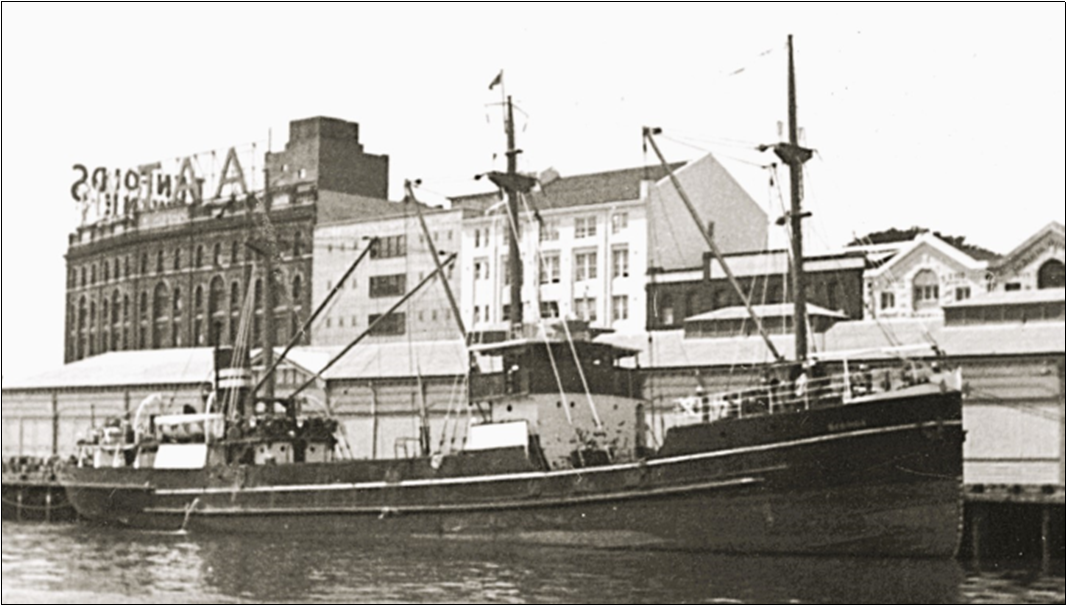
Katoora was built at Greenock, UK for the Adelaide Steamship Co. in 1927. She was the company’s first motor propelled lighter and was intended to carry cargo along rivers where the coastal ships could not float. With a shallow draught and large holds she was a useful addition to the Darwin run. As stated, she was part of the first Darwin relief convoy and completed five return voyages. She was subsequently taken over by the US Army Small Ships Section in November 1942. After the war ended, she was returned to her owners, for duties around Mackay and Mourilyan. In 1968 she was sold to Mornington Island Fisheries.
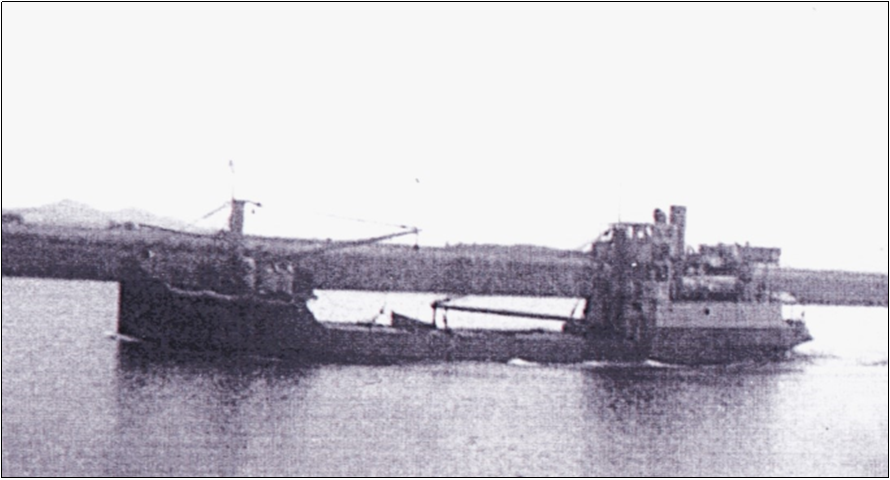
Kurimarau (288/1930) was built by the Hong Kong and Whampoa Dock Co. for Lever’s Pacific Plantations Pty. Ltd. She was intended for casual staff and passenger transport and for the carriage of copra. The vessel carried medical staff on regular inspections of the company’s staff in the various islands. As Japanese forces raced southward Kurimarau increased her normal passenger load of four to 70 and without suitable charts delivered them all to Townsville in safety.
Early in 1942 she was under the control of the British Ministry of Transport and was then passed over to the Australian Commonwealth Shipping Control Board from 5 June to 24 September 1942. In this period, she made an unknown number of round trips on the Darwin run and was then taken over by the US Army for use around New Guinea. She was attacked many times but suffered only minor damage. In 1947 Kurimarau was sold to the British Pacific Islands Protectorate and had several owners following that.
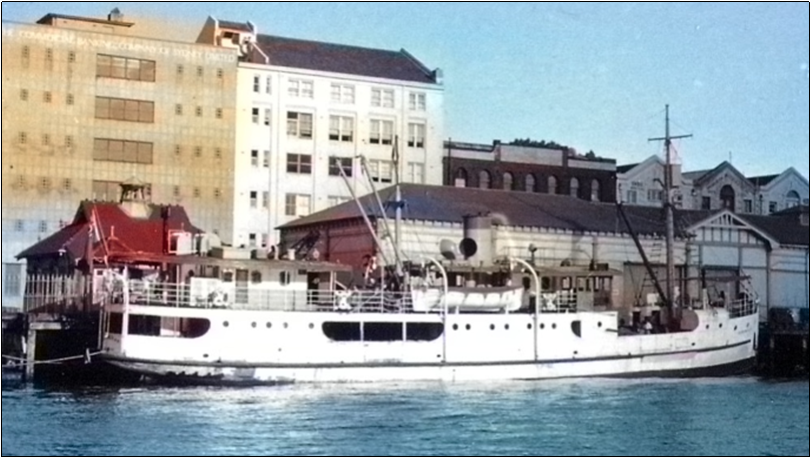
Muliama was also built in the Whampoa dockyard for Burns Philp and Co. and was intended to carry up to 500-tonnes of cargo and up to eight passengers on a six week return voyage from Rabaul to Manus Island and to ports on the New Guinea mainland. She could run at a steady 10-knots and worked the area until the Japanese attacked. From March 1942 until March 1946 she was operated for the Commonwealth Shipping Control Board, initially on the Darwin and return stores run. Seaworthy modern motor ships of 500-tonnes capacity were valued in the Pacific area conflict and Muliama remained busy. She returned to the island service, working from Sydney, including Lord Howe and Norfolk Islands, as her regular ports of call. In 1957 she was sold to Hong Kong owners.

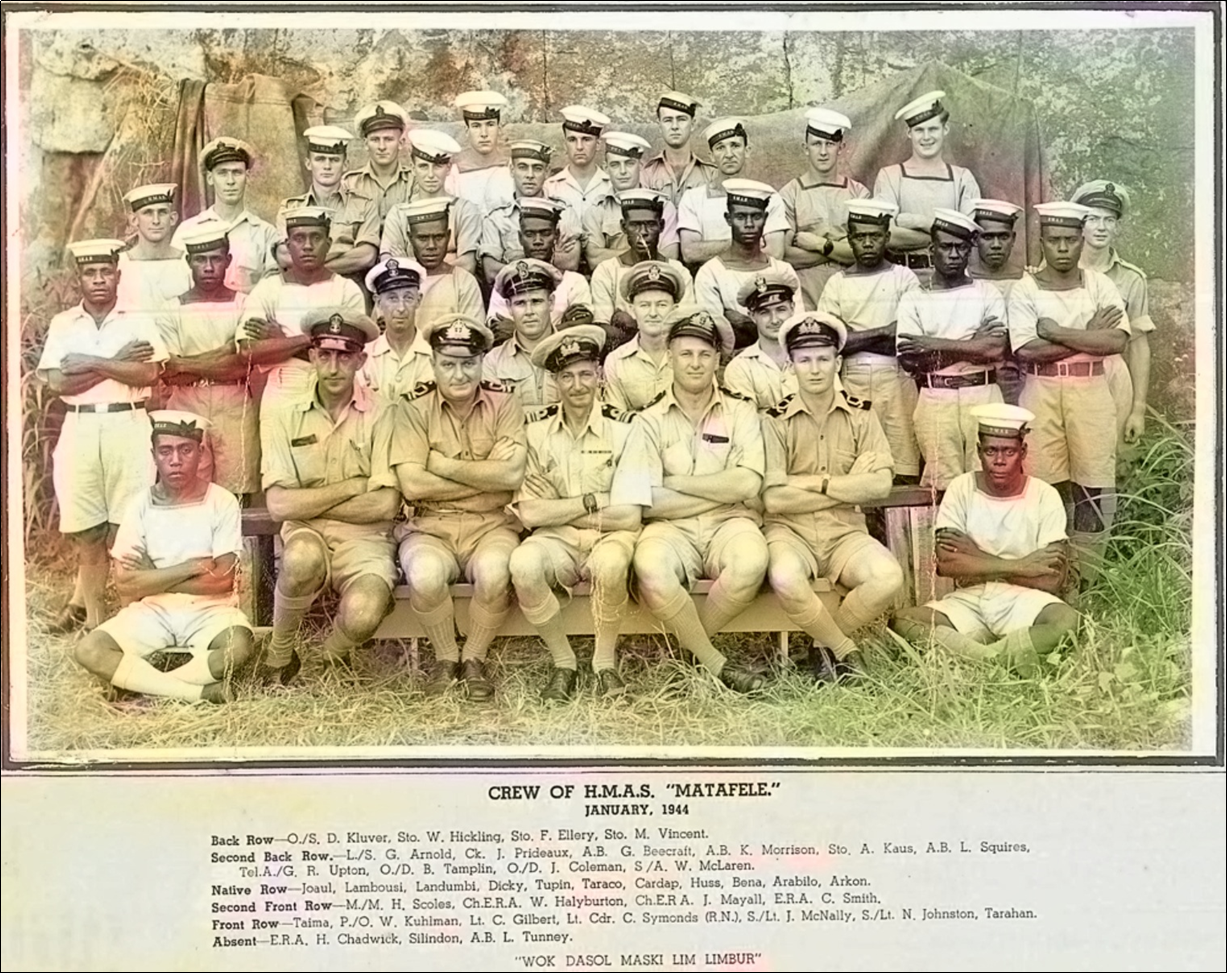
Matafele was also built for Burns Philp in Hong Kong for use in the Fiji area trade. She just sailed from Rabaul ahead of Japanese attack and reached Australia in January 1942. After service on the Darwin stores run, she was used in a similar role in the area around New Guinea before being commissioned by the RAN on 1 January 1943 as a naval stores carrier. As HMAS, she was fitted with one 12-pdr QF gun and five light machine guns. It was obviously not enough. In June 1944, heading from Townsville to Milne Bay, Matafele was lost at sea. It is assumed that she was sunk by Japanese attack in the Coral Sea. All 37 of her crew were lost without trace.
Mamatu was built of timber at Whampoa Dockyard for Burns Philp for use in the Solomon Islands trade. After duties on the Darwin run, the Commonwealth Shipping Board moved her to New Guinea area for the carriage of stores. On either the 6th or the 7th August 1942 she was attacked and sunk by the Japanese submarine RO33. The 140 survivors in the water were attacked by machine gun, leaving just one survivor to tell the story after the war.