• Skip to primary navigation
  • Skip to main content

Naval Historical Society of Australia

Preserving Australia's Naval History

  • Events
  • Account
  • Members Area
  • Volunteer
  • Donate
  • Contact us
  • Show Search
  • 0 items
Hide Search
Menu
  • Home
  • Research
    • Where to start
      • Research – We can help!
      • Self help
      • Naval Service Records
      • Library
      • Related Maritime websites
    • Resources
      • Articles
      • Videos
      • On This Day
      • Podcasts
      • Australian Military Ship Losses
      • RAN events on a  Google Earth Map
      • RAN Vessels – Where are they now?
      • Related Maritime websites
    • Other
      • Newsletters: Call The Hands
      • Occasional Papers and Historical Booklets
      • Books
      • HMAS Shropshire
      • Book reviews
    • Close
  • Naval Heritage Sites
    • World Heritage Listings
      • Cockatoo Island
    • National Heritage Listings
      • HMAS Sydney II and the HSK Kormoran Shipwreck Sites
      • HMVS Cerberus
    • Commonwealth Heritage Listings
      • Garden Island NSW
      • HMAS Watson
      • HMAS Penguin
      • Spectacle Island Explosives Complex NSW
      • Chowder Bay Naval Facilities
      • Beecroft Peninsula NSW
      • Admiralty House, Garden and Fortifications
      • HMAS Cerberus
      • Naval Offices QLD
      • Garden Island WA
      • Royal Australian Naval College ACT
      • Royal Australian Naval Transmitting Station ACT
    • NSW Heritage Listings
      • HMAS Rushcutter
    • Close
  • Naval Art
  • Tours & Cruises
    • Navy in Sydney Harbour Cruise, East
    • Navy in Sydney Harbour Cruise, West
    • Sydney under Japanese Attack – 1942
    • Rose Bay Naval History Walk
    • Tour Bookings
    • Close
  • About us
    • About Us
      • What we do
      • Our People
      • Office Bearers
      • Become a volunteer
      • Our Goals and Strategy
    • Organisation
      • Victoria Chapter
      • WA Chapter
      • ACT Chapter
    • Close
  • Membership
  • Shop
  • Become a volunteer
  • Donate
You are here: Home / Artworks / Sailors at work / Outfitting vessels at Tullochs

Outfitting vessels at Tullochs

by Robert Emerson Curtis

Dimensions:
39.2 cm x 29 cm
Medium:
Watercolour on paper
Place made:
Parramatta, Sydney
Date:
1945
Setting:
WW II (1939-1945)

Courtesy of the Australian War Memorial

Two ships are tied together at the outfitting berth and the work proceeds on the ‘internals’, superstructure and the engine room. Engineer workers, electricians, plumbers, joiners, crane drivers, painters and dockers are all on the job together at this stage.

  • About Robert Emerson Curtis

    Robert was born in Croydon, England in 1898. His family migrated to Australia, settling in Stanthorpe, Queensland. Both his parents and two sisters painted, and Curtis decided to study art via correspondence.

    In 1918, he moved to Brisbane where he worked as an illustrator and cartoonist for the Brisbane Mail. This work funded a trip to the United States in 1922, where Curtis studied art and undertook various commissions. Curtis returned to Australia in 1928, in time to record the construction of the Sydney Harbour Bridge.

    In 1940, Curtis gained permission from the Department of Information to depict activities in Commonwealth munition and aircraft factories. Curtis' reputation as an artist was enhanced when the Sydney Morning Herald published some of his drawings.

    In 1941, he joined the Department of Home Security, where he worked as a camouflage officer and was accredited for service with the RAAF. He was appointed Officer in Charge of Camouflage in New Guinea and seized every opportunity to record the activities of the Australian and American troops.

    In January 1945, Curtis accepted an appointment as an official war artist. He covered the civil and industrial war effort in Australia, as well as the activities of the service organisations. Much of his work depicts shipbuilding, a subject which gave him the opportunity to explore his interest in technological achievements. In these drawings, the men are dwarfed by the vessels upon which they work and yet are shown to be in control.

    The Australian War Memorial holds over two hundred works by Curtis.

    More paintings by Robert Emerson Curtis
  • About Sailors at work

    Since entering World War 1 in 1914 with 16 ships, two submarines and 3800 RAN personnel (including 850 from the Royal Navy) the number of serving personnel in the Royal Australian Navy has fluctuated depending on the strategic and shifting financial environment. Over more than a century, the RAN’s and people have seen action in every ocean of the world.

    Of the tens of thousands who have served, 2658 members have made the ultimate sacrifice defending Australia’s interests in warlike and peacetime operations across the globe.

    Fortunately, for the vast majority who served in periods of peace or survived periods of hostilities the experience was positive.

    In addition to their service in a particular category which involved specific duties, they also participated in communal duties such as coaling ship. Thus, the artworks included in this section relate to a mix of specialist and communal activities.

More reading

  • Additional resources for Sailors at work
    • The RAN - A Brief History, Sea Power Centre Australia
« Previous
Next »

Other works featuring Sailors at work

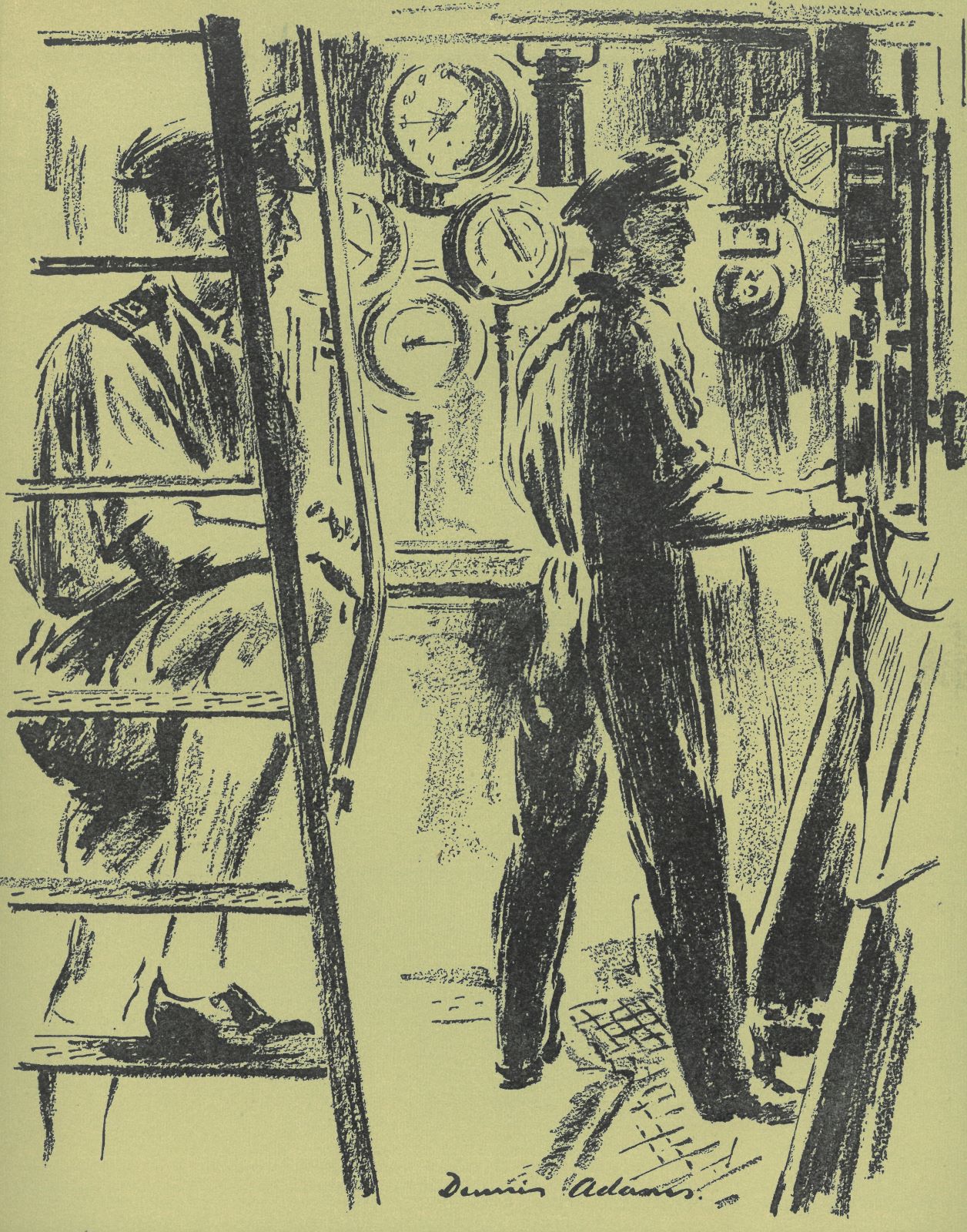
Near miss, HMAS Wagga [Milne Bay] by Dennis Adams

Near miss, HMAS Wagga [Milne Bay]

by Dennis Adams

The crew of HMAS Townsville Tying Up Under the Bow of HMAS Newcastle by Robert McRae

The crew of HMAS Townsville Tying Up Under the Bow of HMAS Newcastle

by Robert McRae

HMAS Tobruk by John J Heffill

HMAS Tobruk

by John Heffill

Unloading the Tobruk at Mogadishu wharf, Somalia by George Gittoes

Unloading the Tobruk at Mogadishu wharf, Somalia

by George Gittoes

Grounding of HMAS Voyager by John Papworth

Grounding of HMAS Voyager

by John Papworth

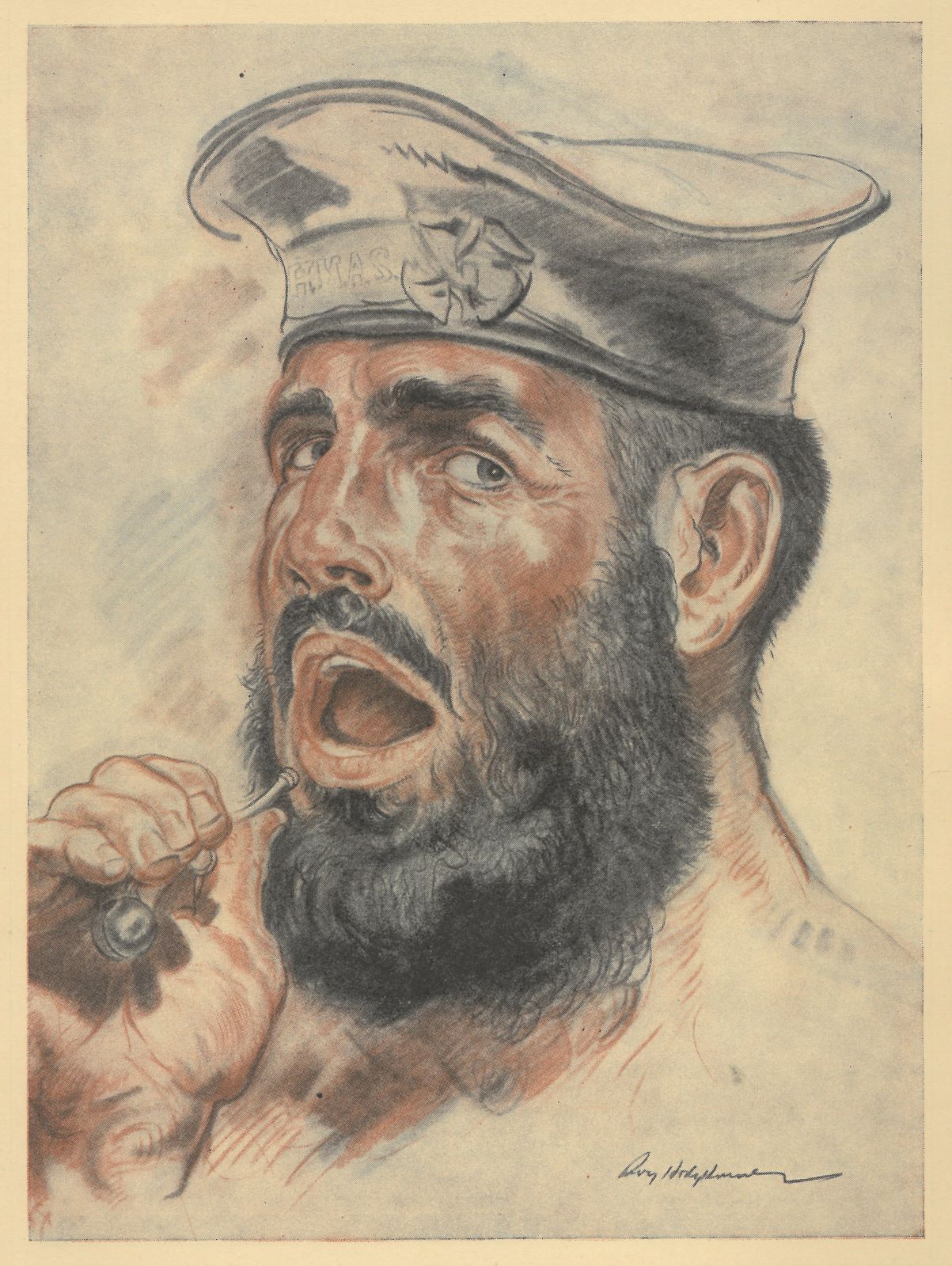
Operating ASDIC equipment by Roy Hodgkinson

Operating ASDIC equipment

by Roy Hodgkinson

Anti-submarine defences, Darwin by Roy Hodgkinson

Anti-submarine defences, Darwin

by Roy Hodgkinson

Essential Service Ship by John Downton

Essential Service Ship

by John Downton

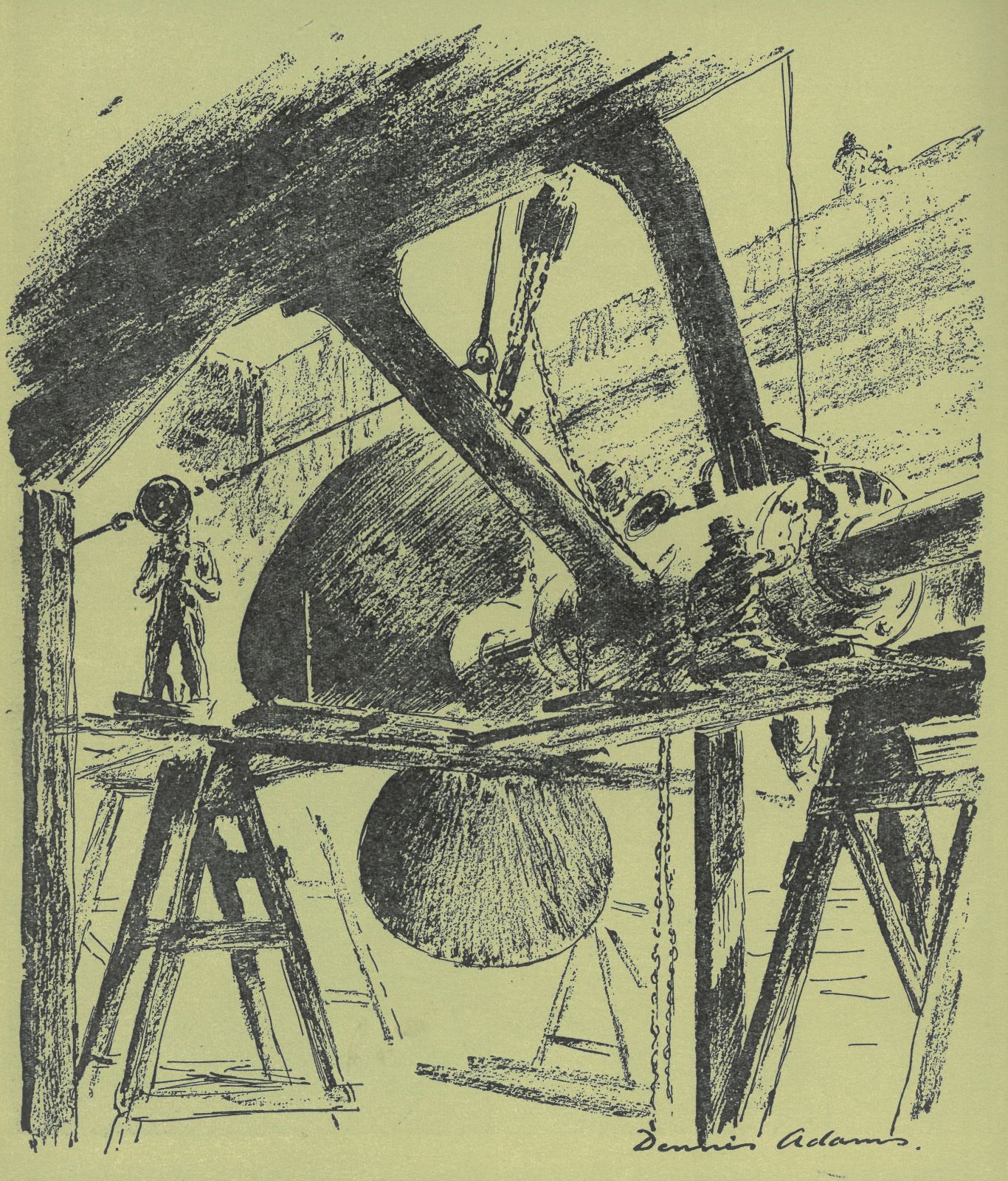
Depth charge, HMAS Swan by Dennis Adams

Depth charge, HMAS Swan

by Dennis Adams

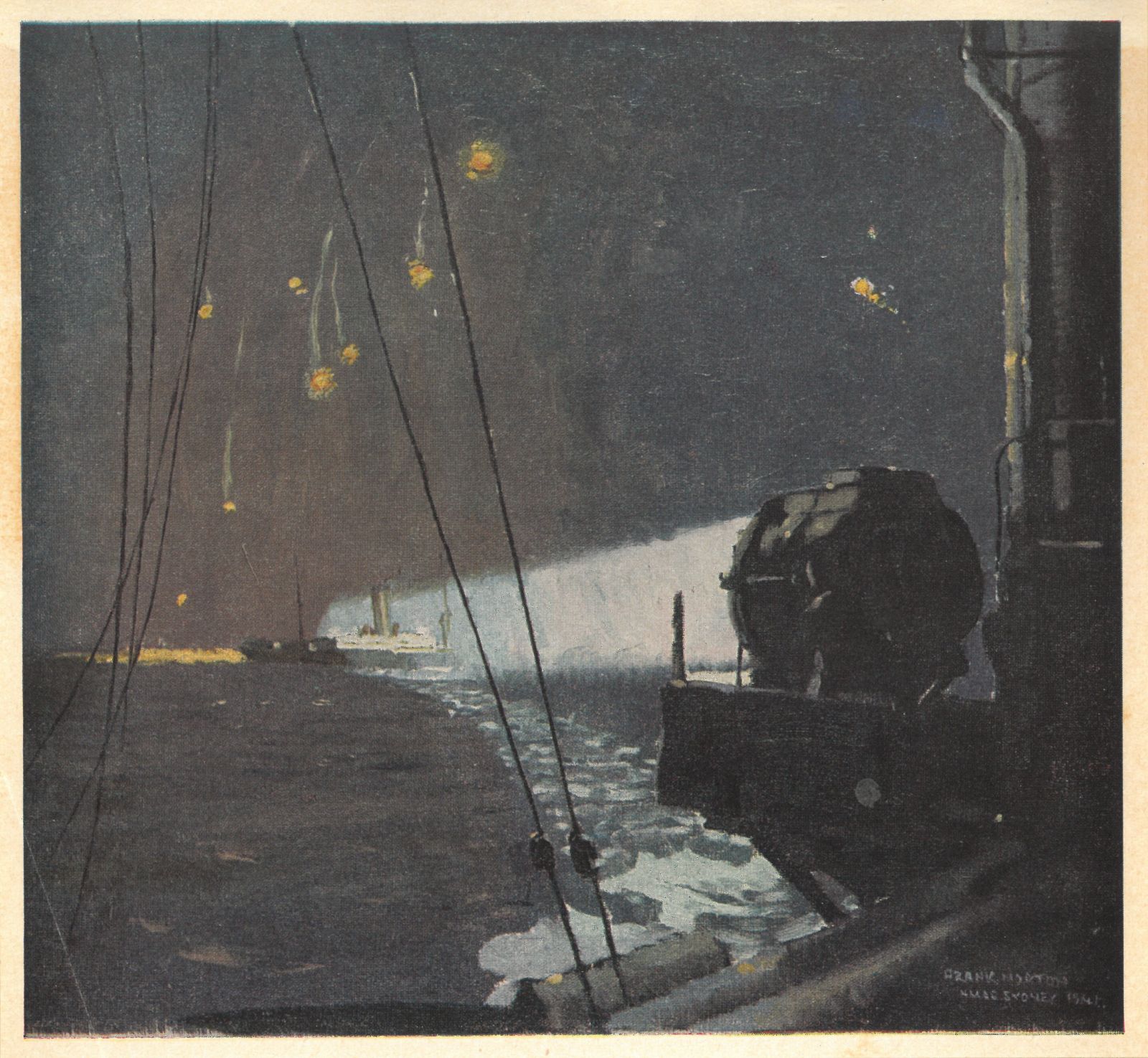
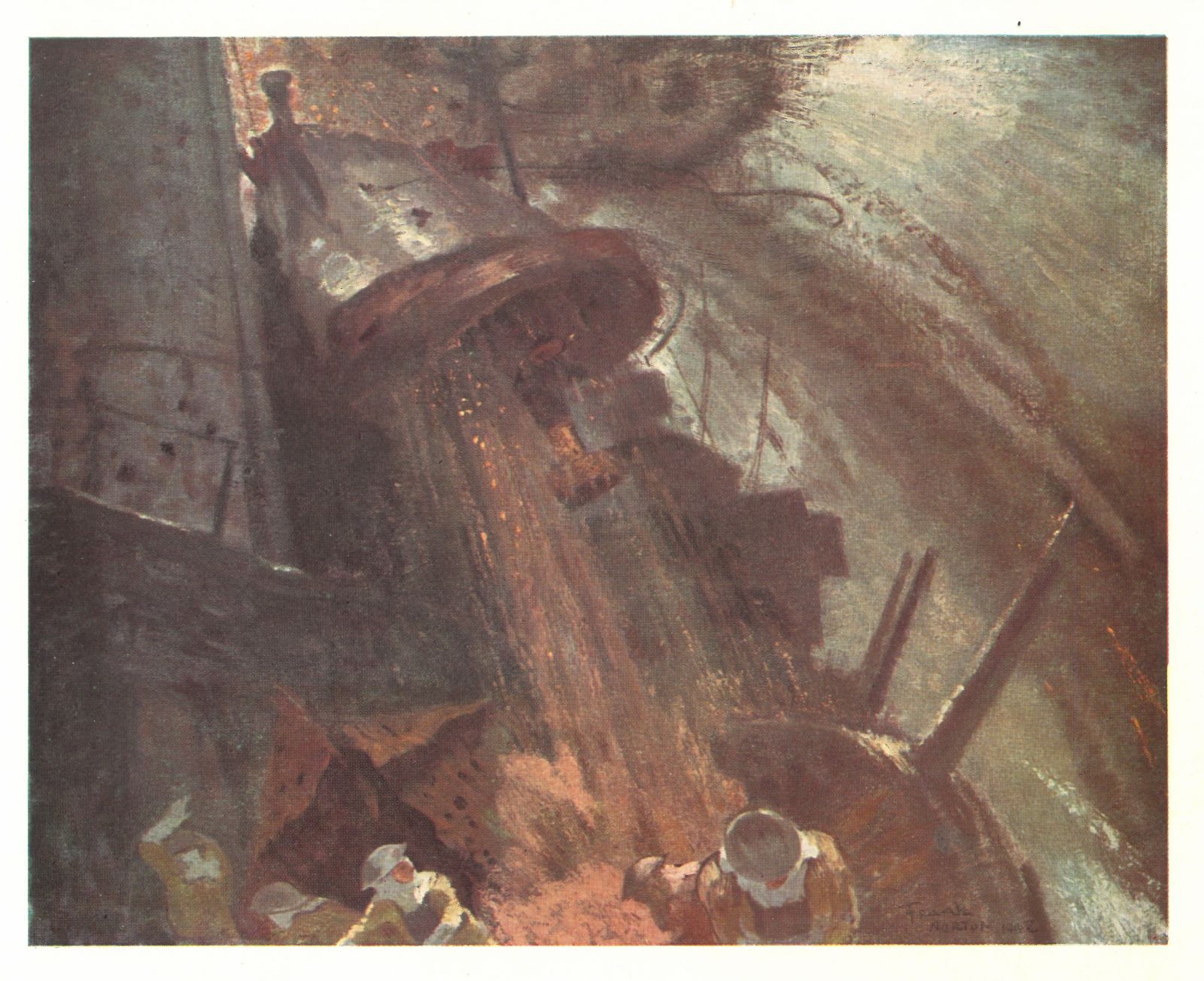
Camouflage, HMAS Sydney by Frank Norton

Camouflage, HMAS Sydney

by Frank Norton

Repairing turbines, HMAS Stuart

by Frank Norton

Superstructure, HMAS Shropshireby Dennis Adams

Superstructure, HMAS Shropshire

by Dennis Adams

Plotting room, HMAS Nepalby John Goodchild

Plotting room, HMAS Nepal

by John Goodchild

Transfer by bosun's chair by John Goodchild

Transfer by bosun’s chair

by John Goodchild

Torpedo overhaul on HMAS Napier by Roy Hodgkinson

Torpedo overhaul on HMAS Napier

by Roy Hodgkinson

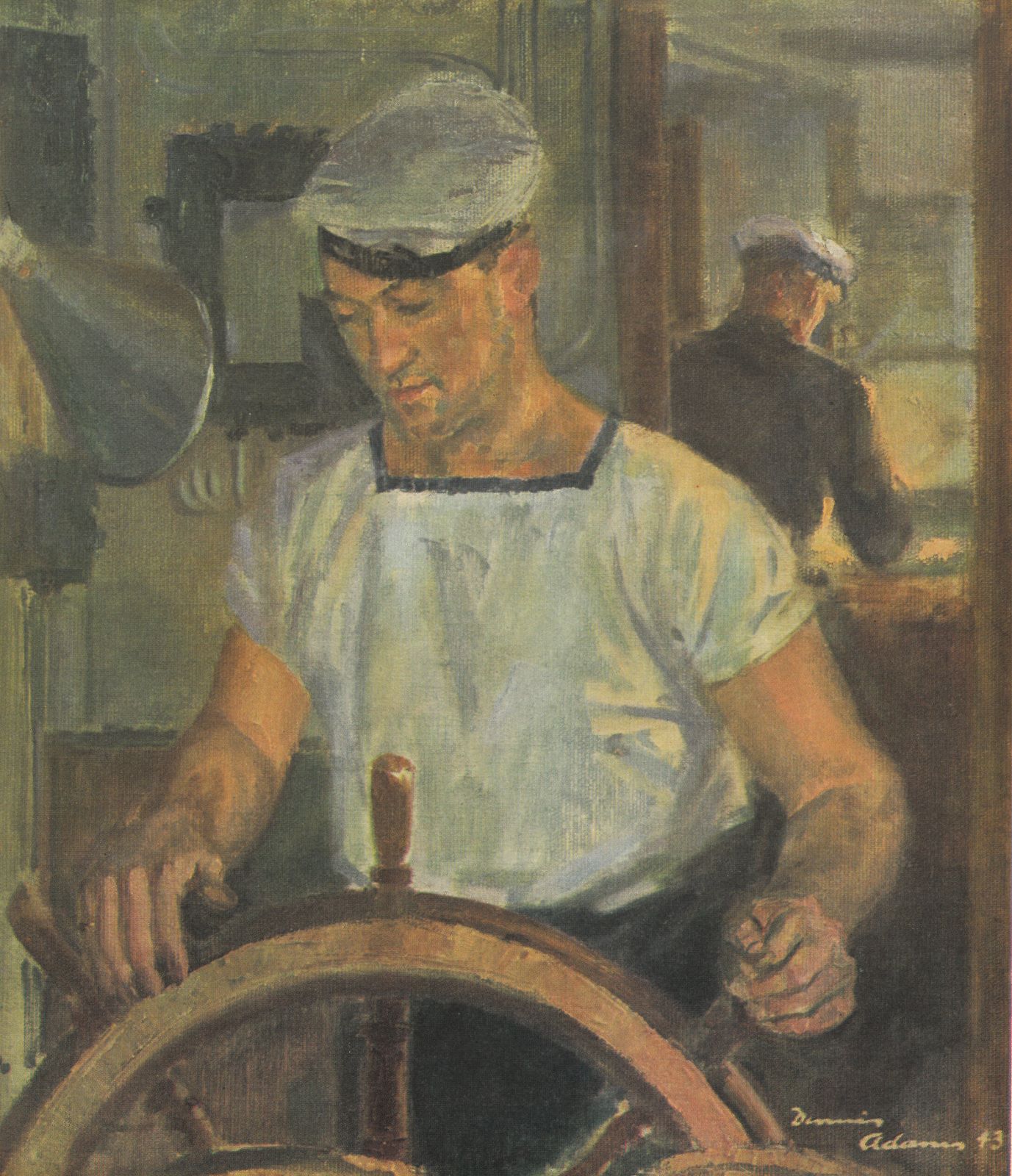
Compass Platform, HMAS Moresby (l) by Dennis Adams

Compass Platform, HMAS Moresby (l)

by Dennis Adams

Into safe hands by Darrell White

Into safe hands

by Darrell White

Prayers at divisions, HMAS Lonsdale by Rex Julius

Prayers at divisions, HMAS Lonsdale

by Rex Julius

Seaman peeling potatoes by Roy Hodgkinson

Seaman peeling potatoes

by Roy Hodgkinson

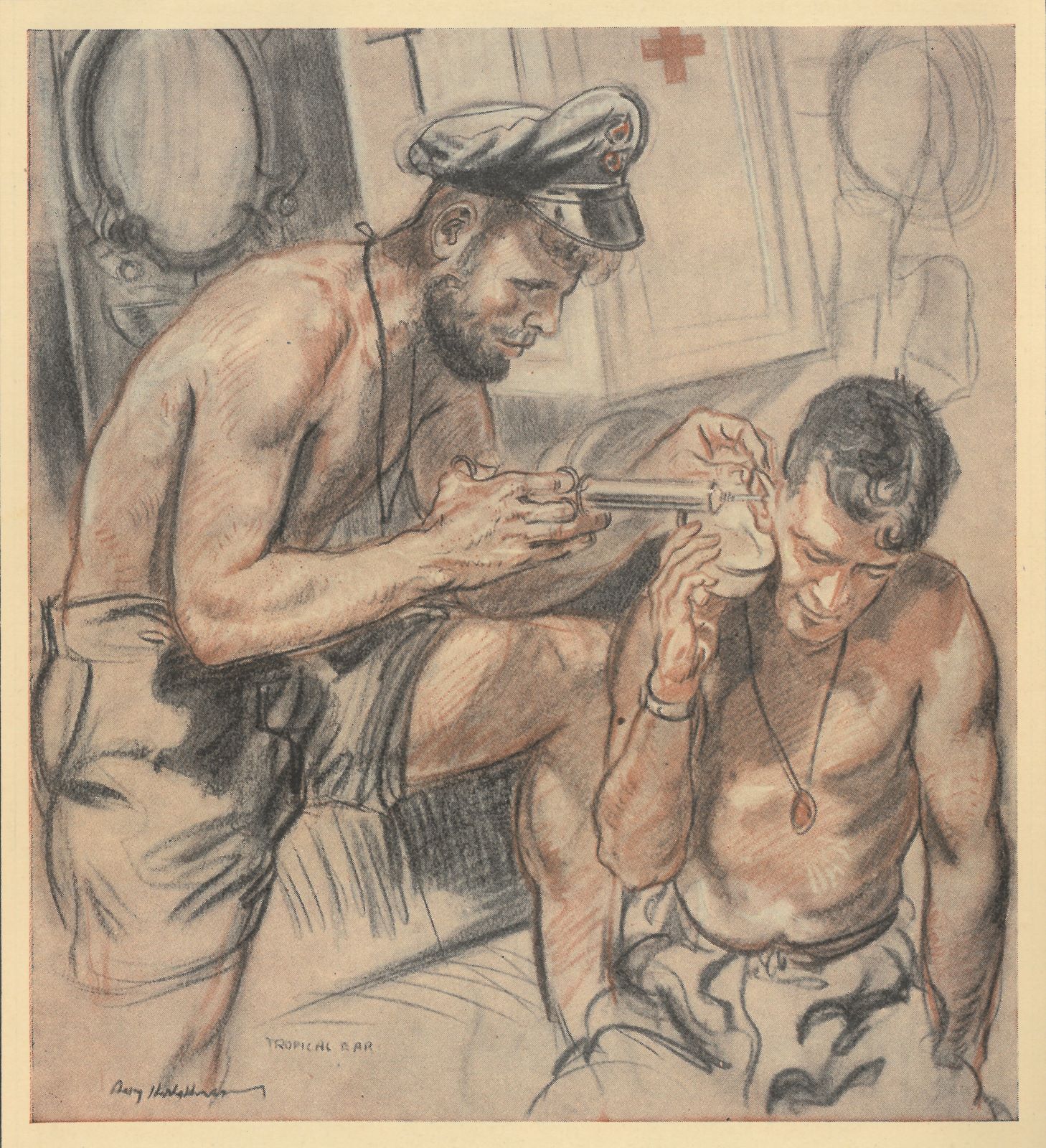
Ears being syringed by Roy Hodgkinson

Ears being syringed

by Roy Hodgkinson

  • Page 1
  • Page 2
  • Page 3
  • Go to Next Page »
Explore all Naval Art
  • Research – We can help!
  • Naval Heritage Sites
  • Explore Naval Art
  • About us
  • Shop
  • Events
  • Members Area
  • Membership Renewals Update
  • Volunteer
  • Donate
  • Contact us

Follow us

  • Facebook
  • YouTube
  • Members Area
  • Privacy Policy

Naval Historical Society of Australia Inc. Copyright © 2026