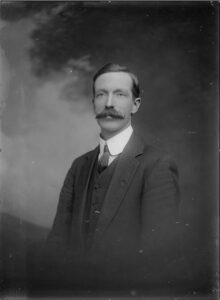
In the State Library of Victoria we have an amazing photographic collection of ship photo thanks to Allan Green. He was born in Daylesford, in the Central Victorian goldfields on ...
Naval history
Occasional Paper 36: HMAS Sydney (3) Delivery to Australia: 1949
Our thanks go to Debbie Irwin for the letter by her uncle, Stoker Mechanician James (Jim) Ashwood of HMAS Sydney (3) to his sister Nancy dated 8 May 1949 about ...
Occasional Paper 35: Loss of HMAS Parramatta (II): First Hand Accounts
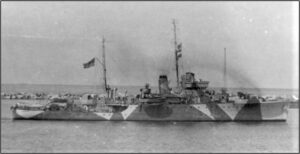
Recently the Naval Historical Society of Australia was favoured with two handwritten letters from survivors of the sinking of HMAS Parramatta (II) off Tobruk overnight 27 November 1941. The first ...
Occasional Paper 34: Paddle Steamer PS Weeroona
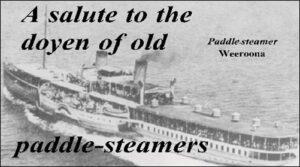
Recently the attention of the NHSA was drawn to the possibility of a paddle-steamer serving in the RAN. It appears that the closest was PS Weeroona built as a Port ...
Occasional Paper 33: HMAS Cerberus – Early History and Observations
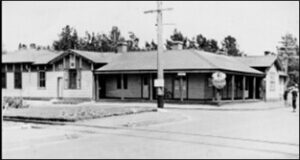
This paper was developed after locating a 1970 HMAS Cerberus Wardroom mess dinner menu. The menu included observations by prominent citizens about HMAS Cerberus and its location at Westernport amongst ...
Occasional Paper 32: HMAS Voyager (I) or What’s in a Coat of Paint?
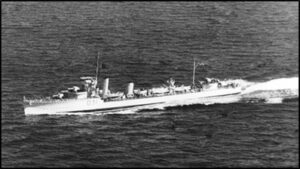
During WWII ships of the RAN were painted in a number of different colour schemes as these photos of Voyager illustrate and information on both peacetime and wartime camouflage paint ...
Occasional Paper 30: HMAS HOBART
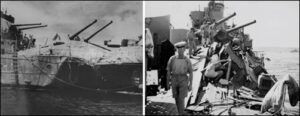
Several events concerning the three HMA Ships Hobart come together with a memorial and commemoration service at the Garden Island Chapel on Sunday 22nd July 2018 at 10.00am. HMAS Hobart ...
Occasional Paper 29: Captain Frederick Melbourne Piggott RD RNR
Captain Frederick Melbourne Piggott RD RNR was born in the UK in April 1915 and moved to Australia in 1943 where he trained young men to handle a Dutch submarine. ...
Occasional Paper 28: Cockatoo Island – An Historical Account
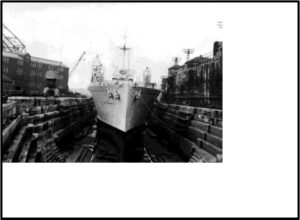
Cockatoo Island has a long association with the RAN. The Island has World HeritageListing and some additional information can be found on our website at https://www.navyhistory.org.au/naval-heritage-sites/cockatoo-island. This article has been ...
Occasional Paper 27: Royal Naval House, ‘Johnnies’: Some Personal Reminisces
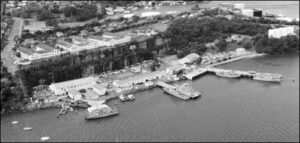
Royal Australian Naval House has always been known affectionately as ‘Johnnies’, although the origin of the name is hard to trace. From 1968 to 1970 a young Able Seaman Brian ...
Occasional Paper 26: Salvage of the German Seehunde Midget Submarine
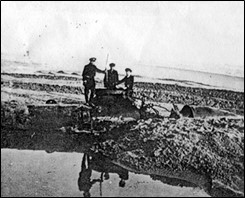
Roger Buxton, an active member of the Society’s Victorian Chapter obtained the original, report of the 1945 recovery of a German Seehunde class midget submarine by Lieutenant V J Steele ...
Occasional Paper 25: Recovery of German Bieber class Midget Submarine and Torpedo
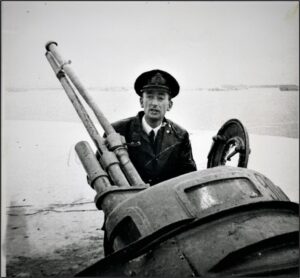
Roger Buxton, an active member of the Society’s Victorian Chapter has obtained two original, typed reports of the 1945 recovery of German Bieber and Seehund class midget submarines by Lieutenant ...
Occasional Paper 24: Sydney Harbour Minefield
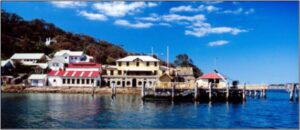
Through the Society’s relationship with the Australian National Maritime Museum, stories are shared between the two organizations. The following is an Article from ‘All Hands’ December 2017 edition, the Australian ...
Occasional Paper 23: HMAS Darwin Decommissioning
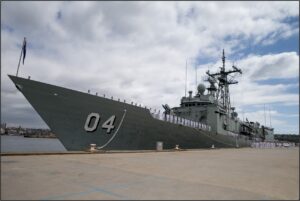
On 8 December 2017 the guided missile frigate HMAS Darwin was decommissioned in a ceremony at Fleet Base East, Garden Island in the presence of former crew and hundreds of ...
Occasional Paper 22: Attack Class Patrol Boats
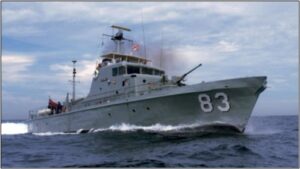
The following is an article from”All Hands” December 2017 edition of the Australian Maritime Museum Volunteers’ Quarterly Newsletter. By Wal Robson The museum’s popular patrol boat has a significant birthday ...
Occasional Paper 21: Battle of the Atlantic Memorial
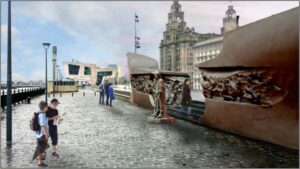
In January 2018 advice was received from a Society member that a Battle of the Atlantic memorial is to be constructed in Liverpool, as there is no dedicated memorial to ...
Occasional Paper 20: Surgeon LCDR Jack Rupert Law Willis, RAN 1888-1971 MB BS Melb
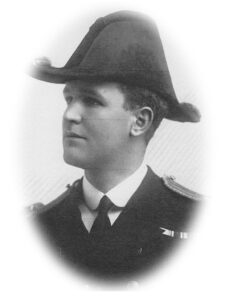
Surgeon LCDR Jack Rupert Law Willis, RAN 1888-1971 MB BS Melb These biographical notes on LCDR Jack Willis who served in HMAS Prince of Wales during World War 1 were ...
Occasional Paper 19: Surgeon Commander Alexander Ruan Caw, RAN MB BS. Adelaide 1879-1924
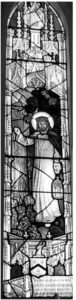
Surgeon Commander Alexander Ruan Caw, RAN MB BS. Adelaide. 1879-1924 These biographical notes on CMDR Alexander Caw who served in HMAS Australia during World War 1 were provided by Surgeon ...
Occasional Paper 18: ENSIGNS ASSOCIATED WITH SHIP BASED AT GARDEN ISLAND
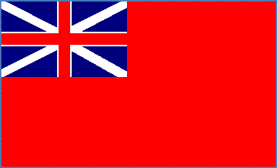
Flags have a long been a fascination of founding Society member Mr Norman Rivett as well as Garden Island in Sydney where he has worked and volunteered for more than ...
Occasional Paper 17: Fleet arrival in Sydney – 4 October 1913
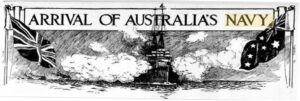
At an Imperial Conference held in 1909, it was decided to deploy toAustralian waters a naval unit consisting of at least a battle cruiser, three second class cruisers, six destroyers, ...
Occasional Paper 16: HMAS Australia and Atlantic rescue of Coastal CommandSunderland -1940
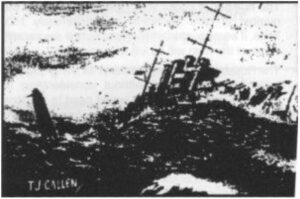
By LCDR Mac Gregory RANRetired On Monday 28th October 1940. I was serving as an eighteen year oldMidshipman in HMAS “Australia”, an 8 inch gun cruiser. At that time, ...
Occasional Paper 15: Battle of Bita Paka 11 September 1914
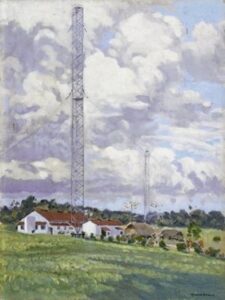
German New Guinea, colonised in 1884, maintained a wireless station at Bitapaka in New Britain. In 1914 the station was a target for Naval Reservists and others of the Australian ...
Occasional Paper 14: HMAS Canberra and the Battle of Savo Island
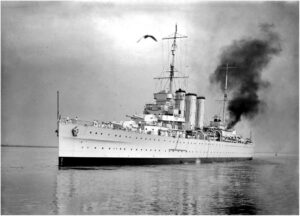
LCDR Mackenzie Jesse Gregory RAN Ret, (9/02/1922- 27/08/2014) was tomy mind a fine example of the qualities a Naval Officer needed to have. He could communicate well, wasa leader of ...
Occasional Paper 13: LOCAL AUSTRALIAN/USA SUBMARINE INITIATIVE HELPS TURN THE TIDE OF WAR AGAINST JAPAN IN 1942
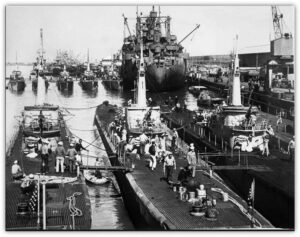
The following story provided by Commodore Bob Trotter OAM RAN (Ret’d), National President of the Submarine Association is about a little-known part of the shared Australia/USA submarine history which helped ...
Occasional Paper 12: PERSONAL EXPERIENCES: AFTERMATH OF JAPANESE SUBMARINE ATTACK: SYDNEY HARBOUR
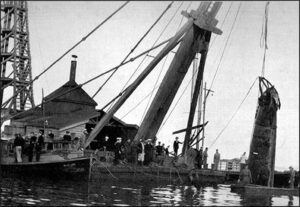
The following are accounts of individual contributions made by two remarkable people in the aftermath of the Japanese midget submarine attack in Sydney Harbour on 31 May1942. Actions by these ...